

Advanced LED LCD Screen Manufacturing: Technical Insights and Industry Best Practices
The advancement of LED LCD screen manufacturing has revolutionized display technologies globally, providing unparalleled image quality, energy efficiency, and product versatility. As a professional LED display engineer with extensive experience in the industry, I will provide an authoritative overview that highlights the critical technical parameters, manufacturing processes, and quality standards shaping modern LED LCD screens.
Understanding LED LCD Technology
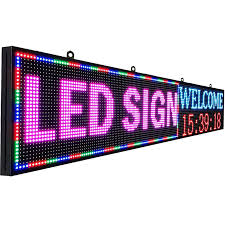
LED LCD screens combine the backlighting technology of light-emitting diodes (LED) with liquid crystal display (LCD) panels. This synergy leverages the excellent brightness and color performance of LED backlighting alongside the precise image rendering capabilities of LCD technology. Compared to conventional cold cathode fluorescent lamp (CCFL) backlights, LEDs offer higher brightness levels (up to 1000 nits or more), lower power consumption, and longer operational lifespans of approximately 50,000 hours (1).
The core of an LED LCD display involves an array of liquid crystal pixels that control light passage, modulated by a thin-film transistor (TFT) matrix to produce the correct image. Behind this array lies the LED backlight panel, which can be configured either as edge-lit or direct-lit:
- Edge-lit LED panels position LEDs around the screen edges, utilizing light guide plates to distribute light evenly. This offers slimmer form factors but may suffer from uneven brightness in some cases.
- Direct-lit LED panels place LEDs uniformly behind the entire panel, often equipped with local dimming zones that enhance contrast ratios dramatically by selectively controlling backlight intensity across screen regions.
Key Technical Parameters
1. Resolution and Pixel Density: Modern LED LCDs achieve resolutions up to 8K (7680×4320 pixels) with pixel densities exceeding 150 PPI (pixels per inch) for displays ranging from 20 inches to 65 inches, supporting superior detail and clarity required for professional and consumer markets alike.
2. Contrast Ratio: With advancements like HDR (High Dynamic Range) and local dimming, LED LCDs now reach contrast ratios beyond 1,000,000:1 in premium models, significantly improving black levels and color depth (2).
3. Color Gamut and Accuracy: Utilizing quantum dot enhancements and specialized phosphor layers, LED LCDs commonly support 95%+ coverage of NTSC color space and DCI-P3 gamut, meeting cinematographic and broadcast industry color standards (3).
4. Refresh Rates: Enhanced refresh rates of up to 120Hz (and beyond in gaming-oriented panels) ensure fluid motion rendering, critical for high-performance applications.
5. Energy Efficiency: Leveraging LED backlighting’s inherent energy-saving traits, contemporary LED LCDs often consume 20-40% less power than equivalent CCFL-backlit units, supporting global energy standards like ENERGY STAR and EPEAT certifications.
Manufacturing Best Practices and Quality Control
The production of high-quality LED LCD screens involves rigorous manufacturing processes, ensuring consistent performance and reliability. Key areas include:
- Cleanroom Environment: To prevent contamination during TFT and LCD panel fabrication, production occurs in ISO-certified cleanrooms with particle counts well below threshold limits.
- Precise LED Placement and Soldering: Automated surface-mount technology (SMT) machines ensure uniform LED placement and solder integrity, enhancing panel uniformity and durability.
- Backlight Uniformity Testing: Optical measurements using integrating spheres and luminance meters guarantee that backlight brightness and color temperature remain consistent across the panel.
- Thermal Management: Innovative heat dissipation solutions, including graphene-based layers and heat pipes, are integrated to maintain optimal operating temperatures, thereby extending LED寿命 and improving display stability.
- Compliance with Industry Standards: Leading manufacturers adhere to standards such as IEC 62368-1 (Safety Requirements for Audio, Video, and Information Technology Equipment) and ISO 9241-307 (ERGONOMIC REQUIREMENTS FOR OFFICE WORK WITH VISUAL DISPLAY TERMINALS) for performance and user safety assurance.
Case Study: Implementing Mini-LED Backlight in Professional Monitors
Many industry leaders have transitioned to mini-LED backlighting for enhanced brightness control and contrast. Mini-LEDs, which are significantly smaller than traditional LEDs (typically under 200 microns), enable thousands of individually addressable zones.
A notable example is Apple’s Pro Display XDR, which uses over 10,000 mini-LEDs to achieve 1600 nits of sustained brightness and a 1,000,000:1 contrast ratio, meeting the demanding requirements of professional photo and video editing (4). Such technical sophistication requires precise index-matching adhesives and advanced drive electronics to synchronize LED zones with liquid crystal elements, demonstrating the intersection of advanced materials science and LED engineering in the production chain.
Conclusion
Mastering LED LCD screen manufacturing demands a comprehensive understanding of both the underlying physics and practical engineering constraints. From selecting optimal LED types and configurations to ensuring strict quality control and adhering to international standards, the journey from raw materials to finished display is a multi-disciplinary endeavor.
Future developments are trending toward micro-LED and OLED hybrid displays, but LED LCD technology remains dominant due to cost-effectiveness, scalability, and matured manufacturing ecosystems. Engineers and manufacturers must continue innovating in areas such as localized dimming algorithms, ultra-high resolution scaling, and sustainable material sourcing to maintain competitive advantages.
By combining rigorous technical expertise with process excellence, the LED LCD industry is positioned to meet the expanding global demand for vibrant, energy-efficient displays suitable for everything from smartphones to large-scale digital signage.
References
1. U.S. Department of Energy, "Solid-State Lighting Research and Development," Energy Efficiency and Renewable Energy, 2023.
2. International Electrotechnical Commission, IEC 62368-1 Standard, 2021 Edition.
3. Society for Information Display, "Quantum Dot Displays," SID Symposium Digest, 2022.
4. Apple Inc., "Pro Display XDR Technical White Paper," 2019.













