

Advances and Best Practices in LED Display Manufacturing: Technical Insights and Industry Standards
In the rapidly evolving domain of visual display technologies, LED screens stand out for their superior brightness, energy efficiency, and versatility. As a professional LED display engineer with extensive experience in design, manufacturing, and quality assurance, I present a comprehensive overview of key advances, technical parameters, and industry best practices in LED display manufacturing. This article aims to guide international industry professionals and enthusiasts in understanding critical aspects that define modern LED display quality and reliability.
Fundamental Specifications and Metrics
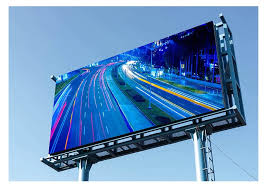
The performance of an LED display is framed by vital technical parameters:
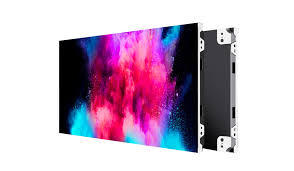
- Pixel Pitch: Defined as the distance from the center of one LED cluster to the next, pixel pitch influences resolution and viewing distance. Typical outdoor displays range from 4mm to 20mm, whereas indoor configurations often utilize pitches as fine as 0.9mm to 3mm. Narrower pitches lead to higher pixel densities and sharper images but require more precise manufacturing and higher component costs.
- Brightness: Measured in nits (cd/m²), brightness determines visibility under varying ambient lighting. Outdoor displays usually operate at 5,000 to 8,000 nits to ensure readability in sunlight, while indoor displays target 800 to 1,500 nits to reduce eye strain and conserve energy. High brightness LEDs also involve considerations for heat dissipation and power management.
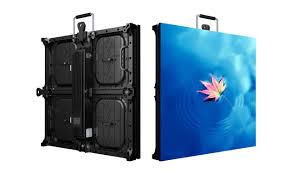
- Refresh Rate: This governs the smoothness and flicker-free performance of the display. A refresh rate of 1,920 Hz or above is standard for high-quality commercial displays to prevent flickering when filmed or viewed under artificial light sources.
- Color Accuracy and Contrast Ratio: Advanced LED modules incorporate fine-tuned RGB LEDs calibrated to industry color spaces such as Rec. 709 and DCI-P3, achieving vivid, accurate imagery. Contrast ratio, essential for picture depth, is often enhanced through pixel-level control and high dynamic range (HDR) techniques.
Manufacturing Advances
Recent advances in LED manufacturing technologies have transformed production capabilities and product quality:
1. Surface Mount Technology (SMT) Enhancements: Modern SMT lines allow for precise placement of LEDs and drive ICs on Printed Circuit Boards (PCBs) with micron-level accuracy. This precision reduces defects and enhances uniformity across large panels.
2. Automated Optical Inspection (AOI): Integration of high-resolution AOI systems ensures real-time detection of soldering faults, dead pixels, or placement errors during production, significantly improving yield rates.
3. Thermal Management Solutions: Effective heat dissipation is critical for prolonging LED lifespan and maintaining stable color output. Manufacturers increasingly apply innovative heat sink designs, high thermal conductivity materials, and active cooling where necessary.
4. Modular Design Approaches: The modularity of LED panels simplifies installation, maintenance, and scalability. Industry standards, such as IEC 62368 for safety and IEC 61966-2-1 for color management, are employed to guarantee interoperability and compliance.
Quality Control and Testing
Robust quality control is foundational to the manufacturing process:
- Burn-In Tests: Modules undergo extensive burn-in at elevated temperatures (typically 45°C to 65°C) for 48 to 72 hours to identify early failures.
- Weather Resistance Testing: Outdoor displays are subjected to IP65 or higher ratings for dust and water resistance, validated through environmental chamber testing replicating rain, dust, and UV exposure.
- Electromagnetic Compatibility (EMC): Compliance with EMC standards (such as CISPR 22, FCC Part 15) ensures displays do not emit or are susceptible to harmful electromagnetic interference.
Industry Case Studies
A notable project was the installation of a 10mm pixel pitch LED display on a landmark building facade in Singapore. Integration involved custom thermal optimization to withstand tropical humidity and heat. The final installation operated flawlessly for over three years with minimal maintenance, illustrating the importance of environment-specific engineering and rigorous testing.
Similarly, a high-resolution indoor LED wall installed in a European broadcasting studio employed 0.9mm pixel pitch panels paired with advanced color calibration systems. This implementation met demanding broadcast standards for color fidelity and refresh rates, demonstrating LED technology’s capability to meet professional-grade media production requirements.
Future Perspectives
Looking forward, trends such as mini-LED and micro-LED technologies promise even higher brightness, enhanced contrast ratios, and finer pixel pitches down to sub-millimeter scales. Integration of AI-based diagnostics and predictive maintenance systems will further optimize performance and reduce operational costs.
To conclude, successful LED display manufacturing depends on a synergistic approach encompassing precise technical specifications, advanced manufacturing techniques, rigorous quality control, and adherence to international standards. These factors not only ensure outstanding visual performance but also uphold reliability and safety in diverse application environments.
References:
- International Electrotechnical Commission (IEC) Standards, IEC 62368 and IEC 61966 series
- Society for Information Display (SID) Technical Papers
- LED Display Manufacturer Whitepapers (e.g., Unilumin, Leyard)
- IEEE Transactions on Components, Packaging and Manufacturing Technology













