

Advanced LED LCD Screen Manufacturing: Technical Insights and Industry Standards
In the rapidly evolving display technology sector, LED LCD screen manufacturing embodies a sophisticated fusion of precision engineering, material science, and cutting-edge production methodologies. As commercial and consumer demand surges for higher resolution, better color accuracy, and energy efficiency, industry experts continuously innovate to push the boundaries of LED LCD performance. This article distills the technical parameters, manufacturing challenges, and industry standards pivotal to expert practitioners and stakeholders alike.
At its core, an LED LCD display combines liquid crystal technology with LED backlighting, offering significant advantages over traditional CCFL (cold cathode fluorescent lamp) displays. The LED backlight systems employed can be categorized into edge-lit and direct-lit (full array) configurations. Edge-lit LED LCDs use LEDs positioned along the screen edges, directing light through waveguides, whereas direct-lit displays feature LEDs uniformly arranged behind the LCD panel, enabling local dimming and improved contrast ratios.
From a technical perspective, key parameters influencing LED LCD performance include:
- Resolution and Pixel Pitch: Standard resolutions range from Full HD (1920x1080) to 4K UHD (3840x2160) and beyond, with pixel pitch critical for pixel density and viewing distance optimization.
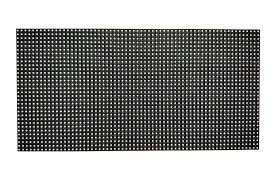
- Refresh Rate and Response Time: Typical refresh rates vary between 60Hz to 144Hz, with response times as low as 1ms in high-performance models to reduce motion blur.
- Contrast Ratio: Advanced LED backlighting, especially with full-array local dimming, can achieve contrast ratios exceeding 5000:1, vital for rendering deep blacks and vibrant images.
- Color Gamut and Accuracy: Compliance with color standards such as sRGB, Adobe RGB, and DCI-P3 is essential for professional-grade displays, demanding stringent calibration processes during manufacturing.
- Brightness Levels: Typical peak brightness ranges from 250 to 1000 nits, with HDR-enabled models often exceeding 600 nits to support high dynamic range content.
Manufacturing intricacies begin with the substrate preparation comprising high-grade glass or flexible substrates. The liquid crystal layer’s uniform dispersion, alignment by rub-coating, and precise cell gap control directly affect image quality. The integration of thin-film transistors (TFTs) fabricated using amorphous or low-temperature polycrystalline silicon (LTPS) technology underpins switching speed and power efficiency.
One of the manufacturing challenges is minimizing defects such as mura (uneven brightness) and dead pixels, which require automated optical inspection (AOI) systems meeting IPC standards for quality. In addition, encapsulation materials must be chosen to ensure durability and prevent moisture ingress, which can degrade performance.
Industry standards such as the International Electrotechnical Commission’s (IEC) IEC 61747 series and the Society for Information Display (SID) guidelines provide frameworks for display measurement and qualification. These standards govern optical characteristics, electrical safety, and environmental resilience, ensuring devices meet global market requirements.
Case studies from leading manufacturers such as Samsung and LG reveal the impact of innovations like quantum dot-enhanced LED LCDs, which substantially expand color gamut and brightness while preserving energy efficiency. Furthermore, incorporation of mini-LED backlighting technology, employing thousands of LEDs in a localized manner, enables finer contrast control and thinner panel profiles.
Environmental sustainability is another critical concern, with manufacturing processes increasingly adhering to directives like RoHS and REACH for hazardous substance restriction. Advances in recycling protocols for display components are gradually integrated to reduce e-waste footprint.
In conclusion, the manufacturing of advanced LED LCD displays demands an intricate balance of materials, process control, and adherence to rigorous technical standards. Continuous innovation driven by market trends and environmental considerations assures that LED LCD technology remains a cornerstone in the global display landscape, supporting applications from mobile devices to large-scale digital signage.













