

Advanced LED Display Manufacturing: Technical Insights and Industry Practices
In the rapidly evolving world of digital visual technology, LED displays have emerged as a pivotal solution for a diverse range of applications—from outdoor advertising and stadium screens to indoor control rooms and retail signage. The manufacturing of LED displays requires a meticulous integration of advanced engineering, quality materials, and stringent industry standards to ensure superior performance, durability, and outstanding visual experience.
Introduction
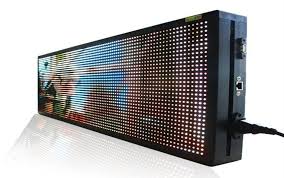
LED (Light Emitting Diode) display technology offers unmatched brightness, contrast, and energy efficiency compared to traditional display systems. With the global LED market projected to exceed USD 60 billion by 2027 (Market Research Future), understanding the manufacturing process, technical parameters, and quality assurance protocols is essential for professionals in the industry and buyers seeking high-performance solutions.
Main Body
1. Core Components and Materials
At the heart of any LED display lie the LEDs themselves, generally categorized by their size (e.g., SMD 3528, 5050), color (single or full RGB), and power rating. The choice of LEDs affects brightness levels (often measured in nits), color gamut, and lifespan. High-quality LEDs usually have a lifespan exceeding 100,000 hours with stable luminous output.
The printed circuit boards (PCBs), typically made of aluminum or FR4 materials, support thermal management—a critical factor. Efficient heat dissipation is vital to maintaining LED longevity and performance. Industry best practices include using thermally conductive substrates and heat sinks designed following IPC-2221 and JEDEC standards.
2. Manufacturing Process
Precision assembly and calibration dominate the manufacturing workflow. Surface mount technology (SMT) machines place LEDs on the PCB with micron-level precision to ensure uniform pixel density and alignment. Subsequent processes include soldering, testing, and coating for environmental protection—commonly involving conformal coatings per IPC-CC-830 standards.
3. Display Module and Cabinet Design
Modules, the building blocks of LED displays, must facilitate easy maintenance and replacement. Modular design with standard form factors (e.g., 320mm x 160mm) enables scalability. Cabinets housing these modules incorporate features such as weatherproofing (IP65 and above for outdoor use), robust mechanical frames (aluminum alloy), and advanced power supplies complying with UL and IEC safety certifications.
4. Calibration and Quality Control
Professional manufacturers implement multi-level quality control:
- Color Calibration: Ensures consistent color temperature and chromaticity coordinates across the entire display by using software that adjusts voltage and PWM for each LED pixel.
- Brightness Uniformity: Achieved by combining hardware consistency and dynamic software compensation, often targeting a deviation within ±5%.
- Reliability Testing: Includes heat cycle testing, humidity resistance per IEC 60068 standards, and electrical safety assessments.
5. Recent Innovations and Trends
Micro-LED and Mini-LED technologies represent frontiers in pixel density and energy efficiency. Transparent LED displays balance see-through transparency with brightness, suitable for retail windows. Additionally, HDR (High Dynamic Range) support and 10-bit color depth improve image fidelity.
Conclusion
The manufacturing of LED displays is an intricate blend of electronics, materials science, and precise engineering. Adherence to industry standards such as IPC, JEDEC, UL, and IEC ensures optimal product reliability and safety. Professionals in this field must stay abreast of innovations like miniaturization of LED chips and intelligent calibration algorithms to meet growing market demands for higher resolution, wider color gamut, and longer operational lifespan. Strategic investment in research and robust manufacturing practices is fundamental to delivering state-of-the-art LED display solutions that cater to diverse global applications.
As LED technology continues to advance, manufacturers and engineers are challenged to push the boundaries of display performance and durability while maintaining cost efficiency—a balance essential for sustaining the worldwide digital signage and display industry’s growth.













