

MIP LED Technology: Advancements and Applications in High-Definition LED Displays
MIP LED technology represents a significant breakthrough in the design and manufacture of high-definition LED displays, combining micro-pixel innovations with integrated processing to achieve superior image quality, energy efficiency, and operational reliability. As global demand grows for dynamic, high-impact digital signage, MIP LED panels have garnered attention from industries ranging from broadcasting and advertising to control rooms and event production.
Understanding MIP LED Technology
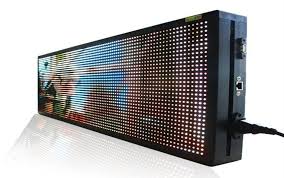
MIP stands for Micro Pixel, referring to the extremely small pixel pitch sizes used in modern LED modules. Unlike traditional LED displays, which rely on discrete LEDs spaced at relatively larger intervals (pixel pitch), MIP LED displays incorporate much finer pixel pitches—often ranging from 0.9 mm to 2.5 mm. This micro pixel arrangement facilitates significantly higher resolutions on relatively small physical screens, allowing for more detailed and lifelike images.
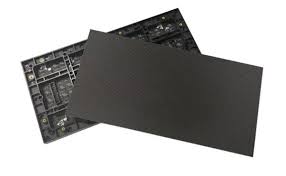
One key feature that sets MIP LED apart is its integration of on-chip processing. Each micro pixel can include embedded IC drivers that control luminance, color calibration, and uniformity directly at the pixel level. This approach minimizes signal loss and reduces the need for extensive external processing hardware, leading to decreased latency and enhanced color accuracy.
Technical Parameters and Standards
The performance of MIP LED displays is characterized by several technical parameters critical for evaluating quality:
- Pixel Pitch (P): Measured in millimeters, typical MIP LED products range from P0.9 to P2.5. The pixel density increases exponentially as the pitch shrinks, enabling Ultra High Definition (UHD) resolutions even on modest screen sizes.
- Refresh Rate: Industrial standards for broadcast and professional use generally recommend refresh rates of at least 3840 Hz to prevent flickering and motion artifacts. MIP LED displays often support refresh rates exceeding 3840 Hz, supporting smooth video playback.
- Brightness: Typical luminance levels for MIP LED panels span from 600 to 1000 nits, sufficient for indoor environments that require vivid images without glare.
- Contrast Ratio: Thanks to sophisticated local dimming and pixel-level control, MIP LED displays achieve high contrast ratios, exceeding 3000:1 in some implementations.
- Color Gamut: MIP LED technology supports wide color gamuts, often covering 95% or more of the DCI-P3 color space, ensuring vibrant and true-to-life color reproduction.
The design of MIP LED modules complies with relevant industry standards such as IEC 62368 for safety and performance, and IEC 62087 for energy efficiency in video equipment.
Manufacturing Insights and Challenges
The production of MIP LED displays demands precision manufacturing processes. The tiny pixel pitch requires high-accuracy placement of miniature LEDs on PCBs using advanced pick-and-place machines capable of micron-level accuracy. Chip-Scale Packaging (CSP) LEDs are common in MIP modules, which improve heat dissipation and make the module thinner while maintaining luminous efficacy.
Thermal management in MIP LED panels is a crucial consideration as densely packed LEDs generate heat that must be dissipated to avoid color shifts and premature device degradation. High-quality aluminum cabinetry and convection cooling designs are often employed to maintain operational temperatures typically below 60°C.
Furthermore, rigorous quality control processes such as Automated Optical Inspection (AOI) and photometric calibration ensure uniformity and consistency across large video walls composed of many MIP tiles.
Applications and Case Studies
MIP LED technology finds extensive application in environments requiring close viewing distances and detailed image rendering. Control rooms in utilities and transportation sectors utilize MIP LED video walls to display critical data with maximum clarity. For instance, a well-documented case study by LG Electronics detailed how their MIP LED-based control room displays achieved sub-millimeter pixel pitch, enhancing operator performance by enabling clearer visualizations of complex datasets.
Broadcast studios have also adopted MIP LED backgrounds and virtual sets, where extremely fine pixel pitch and high refresh rates are paramount to avoid distracting flicker on camera. The integration of MIP LED displays in live events and exhibitions capitalizes on their slim profile and vivid visuals that draw audience attention even at short distances.
Future Directions
As LED semiconductor technologies evolve, MIP LED panels are expected to reduce pixel pitches even further, potentially reaching sub-0.5 mm pitches. Emerging developments such as Micro-LED integration and miniaturized silicon-based driver chips will open possibilities for flexible, curved, and transparent MIP LED displays.
Additionally, advancements in AI-based calibration and real-time color management will improve visual consistency across large-scale video walls, expanding the practical usability of MIP LED solutions in both indoor and semi-outdoor applications.
Conclusion
MIP LED technology embodies the forefront of indoor LED display innovation by merging micro pixel precision with integrated electronics to deliver unparalleled image fidelity, operational efficiency, and design flexibility. Its adherence to strict technical standards and the ability to meet diverse application requirements make it an essential solution in today's rapidly advancing visual communication landscape. Industry leaders and engineers must continue to focus on optimizing manufacturing processes, thermal management, and system integration to fully realize the technology’s potential.
References:
- IEC 62368-1: Audio/video, information and communication technology equipment – Safety requirements.
- IEC 62087 Ed. 3.0 b: Measurement methods for power consumption of audio, video, and related equipment.
- LG Electronics White Paper on MIP LED Applications in Control Rooms, 2023.
- "The Evolution of Pixel Pitch in LED Displays," Journal of Display Technology, 2022.













