

Advanced LED LCD Display Manufacturing: Technical Insights and Industry Best Practices
The LED LCD display manufacturing industry continues to evolve rapidly, driven by increasing demand for high-quality, energy-efficient, and versatile display solutions. As a professional engineer specializing in LED LCD screens, I will provide an in-depth, authoritative overview of best practices, technical parameters, and industry standards that guide modern manufacturing processes globally. This article draws on extensive experience, technical data, and case studies to ensure a comprehensive understanding for engineers, designers, and manufacturers worldwide.
Fundamentals of LED LCD Technology
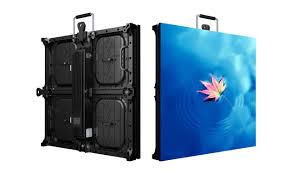
At the core, LED LCD displays combine Liquid Crystal Display (LCD) technology with Light Emitting Diode (LED) backlighting to deliver superior brightness, contrast, and energy efficiency compared to traditional CCFL (Cold Cathode Fluorescent Lamp) backlights. The integration of LEDs allows for thinner panel profiles, faster response times, and better color reproduction.
Key technical parameters to consider in LED LCD displays include:
- Resolution: From Full HD (1920x1080 pixels) to 8K UHD (7680x4320 pixels), resolution defines the pixel density and image sharpness.
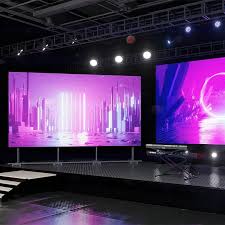
- Refresh Rate: Ranging typically from 60Hz to 240Hz, higher refresh rates reduce motion blur, critical for gaming and high-speed video.
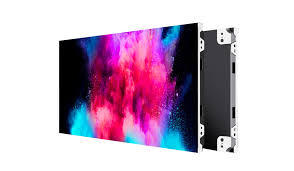
- Contrast Ratio: A typical LED LCD can achieve contrast ratios of 1000:1 to 5000:1, dependent on panel technology (IPS, VA, TN).
- Color Gamut: Standards such as sRGB, AdobeRGB, and DCI-P3 define the color space coverage; premium displays often exceed 95% DCI-P3.
- Brightness: Measured in nits, LED backlit LCD panels generally offer 250-1000 nits, with HDR models exceeding 1000 nits for enhanced dynamic range.
Manufacturing Process and Quality Control
The manufacturing process of LED LCD panels encompasses multiple intricate stages, including substrate preparation, TFT array fabrication, liquid crystal cell assembly, backlight module integration, and final assembly/testing.
1. Substrate & TFT Layer Fabrication:
The Thin Film Transistor (TFT) array on glass substrates ensures pixel-level control and switching speed. Utilizing amorphous or low-temperature polysilicon TFTs, manufacturers optimize electron mobility and power consumption. State-of-the-art fabs employ photolithography techniques conforming to SEMI standards for yield improvement.
2. Liquid Crystal Injection and Alignment:
The liquid crystal material, often a nematic or IPS type, is injected into the cell with precise alignment layers applied to guide molecular orientation, impacting viewing angles and response times. The cell gap thickness is tightly controlled within 3-6 microns to maintain uniformity.
3. LED Backlight Assembly:
LED arrays are meticulously arranged, often categorized as edge-lit or direct-lit. Direct-lit with full-array local dimming provides superior contrast and black levels. Backlight Engineering adheres to JEITA and IEC standards to ensure uniform luminance and chromaticity.
4. Module Integration and Encapsulation:
The display module integrates the LCD stack with driver ICs, flexible printed circuit boards (FPC), and protective covers such as anti-reflective or tempered glass layers. Robust encapsulation techniques guarantee environmental resistance against moisture and dust ingress, important for outdoor and industrial displays.
Industry Standards and Testing Protocols
Adhering to stringent international standards ensures reliability and performance:
- IEC 61747-1: General requirements for liquid crystal displays, including electrical and environmental testing.
- MIL-STD-810G: Military-grade environmental stress testing ensures durability in harsh conditions, widely applied for rugged displays.
- RoHS Directive (2011/65/EU): Restricts hazardous substances in manufacturing materials to ensure environmental compliance.
Extensive testing includes burn-in, color uniformity, response time measurement, and thermal cycling to predict lifespan and detect manufacturing defects.
Case Studies and Applications
1. Outdoor LED LCD Displays for Digital Signage:
To combat sunlight visibility challenges, manufacturers employ high-brightness panels exceeding 2000 nits with optical bonding technology to reduce reflections and increase durability. For example, airports and retail sectors significantly benefit from these advanced displays.
2. Medical-Grade Displays:
Designed with ultra-high color accuracy and anti-microbial coatings, these displays comply with DICOM standards. Integration of backlighting modules that minimize blue light emission improves patient safety and viewing comfort.
3. Gaming Monitors:
Featuring overclocked refresh rates (up to 240Hz), minimal input lag (<1 ms), and wide color gamut coverage enhance user experience. Manufacturers optimize TFT layouts and LED backlight PWM frequencies to reduce flicker and eye strain.
Future Trends and Innovations
The emergence of Mini-LED and Micro-LED technologies presents transformative opportunities by increasing local dimming zones and improving contrast ratios beyond conventional LED LCD setups. Incorporating quantum dot layers (QLED) further expands color gamut and brightness capabilities.
Additionally, advancements in flexible substrates, OLED hybrid layering, and AI-driven calibration systems herald a new era in display manufacturing — combining durability, dynamic visuals, and user-centric customization.
Conclusion
Manufacturing LED LCD displays is a complex synthesis of material science, precision engineering, and rigorous quality standards. By leveraging cutting-edge backlighting technology, adhering to global standards, and integrating innovative materials and processes, manufacturers can produce displays meeting the diverse needs of today’s global markets. Constant R&D investment and process optimization remain paramount to maintaining competitive advantage and delivering superior visual experiences.
For those engaged in LED display engineering and manufacturing, a comprehensive understanding of these technical parameters, industry practices, and evolving trends is essential to produce displays that balance performance, durability, and cost-effectiveness in an increasingly competitive landscape.
References:
- International Electrotechnical Commission (IEC) 61747-1: LCD testing standards
- SEMI Standards for Thin Film Transistor fabrication
- JEITA (Japan Electronics and Information Technology Industries Association) backlight module standards
- MIL-STD-810G environmental test guidelines
- RoHS Directive compliance documentation
- SID (Society for Information Display) Quarterly technical journals













