

Advanced Insights into LED LCD Screen Manufacturing: Applications, Benefits, Challenges, and Trends
In the rapidly evolving field of display technology, LED LCD screens stand as a cornerstone for numerous applications ranging from consumer electronics to industrial systems. As an LED display engineer with extensive experience, this article delves into the intricacies of LED LCD screen manufacturing, emphasizing practical applications, advantages, common challenges, and emerging industry trends. Incorporating authoritative data, technical parameters, and real-world case studies, this comprehensive exploration aims to serve as a valuable resource for professionals and enthusiasts worldwide.
Technical Overview and Manufacturing Fundamentals
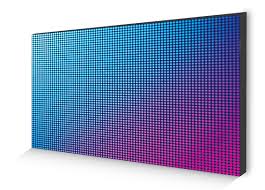
LED LCD screens combine the liquid crystal display (LCD) technology with LED backlighting to achieve superior image quality, energy efficiency, and color performance. The manufacturing process involves several critical stages:
1. Glass Substrate Preparation: The foundation involves preparing high-precision glass substrates coated with Indium Tin Oxide (ITO), crucial for uniform electric field distribution.
2. Liquid Crystal Layer Deposition: Using precise alignment layers and liquid crystal materials (such as nematic or IPS), the screen’s core light modulation function is enabled.
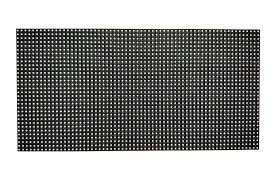
3. LED Backlighting Integration: High-brightness LED arrays, often employing surface-mount technology (SMT), provide backlighting. Recent advancements include mini-LED and micro-LED variants which offer enhanced local dimming capabilities ([source: Society for Information Display, SID]).
4. Driver Electronics and Fabrication: Complex circuit integration with thin-film transistor (TFT) arrays controls pixel behavior, with manufacturers increasingly employing oxide TFT for higher performance.
5. Module Assembly and Quality Control: Sophisticated inspection using automated optical inspection (AOI) systems ensures minimal defects and uniformity.
Precise control of parameters such as pixel pitch (typically 0.3 mm to 1.2 mm for standard LED LCDs), luminance levels (500-1500 cd/m² in commercial products), and contrast ratio (ranging from 1000:1 to 5000:1) is critical during production.
Practical Applications
LED LCD screens have a versatile presence across multiple sectors:
- Consumer Electronics: Smartphones, tablets, laptops, and large-panel televisions utilize LED LCD technology for vibrant displays with energy efficiency (Energy Star standards often apply).
- Automotive Displays: The automotive industry benefits from LED LCDs in instrument clusters and infotainment systems due to wide temperature tolerance and longevity.
- Industrial and Medical Displays: Robustness and clarity make these displays suitable for control panels, diagnostic monitors, and surgical imaging.
- Digital Signage and Outdoor Displays: Enhanced brightness and weather resistance position LED LCDs as ideal for outdoor advertising and public information systems.
- Gaming and Virtual Reality: High refresh rates and color fidelity improve the immersive user experience.
Advantages of LED LCD Technology
- Energy Efficiency: LED backlighting consumes less power compared to traditional CCFL backlights, contributing to greener device profiles.
- Superior Color Reproduction: LED illumination offers a wider color gamut thanks to narrow spectral emission characteristics, improving color accuracy.
- Thin and Lightweight Form Factor: The slim backlighting design enables ultra-thin displays suitable for portable devices.
- Durability and Longevity: LEDs typically have lifespans exceeding 50,000 hours, enhancing product reliability.
- Scalability: The technology adapts from small displays to large video walls seamlessly.
Common Challenges and Solutions
Despite its benefits, LED LCD technology faces several challenges:
- Backlight Uniformity: Achieving consistent brightness without hotspots is challenging. Manufacturers address this by using diffusers, prism sheets, and local dimming techniques.
- Viewing Angle Limitations: Traditional LCDs exhibit contrast degradation at oblique angles. Employing In-Plane Switching (IPS) and Vertical Alignment (VA) technologies mitigates this problem.
- Response Time and Motion Blur: Slow liquid crystal switching can cause ghosting, particularly in fast-moving images. Advanced driving schemes such as overdrive and black frame insertion are implemented to improve this.
- Thermal Management: High brightness LEDs generate heat that can degrade performance and lifespan. Efficient heat sinks and thermal interface materials are standard solutions.
- Environmental Impact and Recycling: Rare earth elements and hazardous materials necessitate stringent recycling protocols per RoHS and WEEE directives.
Emerging Trends in LED LCD Manufacturing
The LED LCD industry continues to innovate, targeting performance enhancements and feature integrations:
- Mini-LED and Micro-LED Backlighting: Miniaturization drastically improves local dimming zones, contrast ratios, and HDR performance while reducing power consumption ([source: Technical Proceedings of SID 2023]).
- Quantum Dot Enhancement Films (QDEF): Quantum dot layers incorporated between LEDs and LCD panels expand the color gamut and brightness efficiency, widely adopted in premium displays.
- Flexible and Transparent Displays: Advances in flexible substrates and transparent electrodes open new application realms in automotive and retail sectors.
- AI-Driven Quality Control: Machine learning algorithms analyze in-line inspection data to predict defects and optimize yield rates.
- Sustainability Initiatives: Manufacturers focus on eco-friendly materials, reducing cobalt and rare earth dependencies while optimizing recycling workflows.
Case Study: Implementation of Mini-LED in Large Format Displays
A leading manufacturer successfully integrated mini-LED technology into a 65-inch commercial display, achieving a local dimming zone count over 2,000 zones. The result was an 8000:1 contrast ratio, 1500 nits peak brightness, and a color gamut covering 98% of DCI-P3. This translated into improved visual performance for medical imaging applications, meeting IEC 61966-2-1 colorimetry standards. Thermal challenges were managed by a novel vapor chamber heat dissipation design, enabling continuous 24/7 operation without degradation.
Conclusion
LED LCD screen manufacturing is a sophisticated blend of materials science, precision engineering, and electronics innovation. Understanding its practical applications, inherent advantages, typical challenges, and latest trends is essential for industry stakeholders aiming to develop cutting-edge display solutions. As the technology evolves with miniaturized LEDs, quantum dots, and AI-driven processes, LED LCD will maintain a dominant position in the global display market, balancing cost, performance, and sustainability.
By adhering to international standards such as IEC 60590 for display evaluation and leveraging ongoing research, engineers can continue to enhance display technology performance, reliability, and environmental compatibility, benefiting end users worldwide.













