

Advanced LED Display Manufacturing: Technical Insights and Industry Standards
The rapid evolution of LED display technology has revolutionized multiple industries, from advertising and entertainment to transportation and public safety. As a seasoned LED display engineer, I aim to provide an authoritative and insightful overview of LED display manufacturing, focusing on technical parameters, industry standards, and practical considerations for optimizing performance and reliability.
1. Overview of LED Display Technology
LED (Light Emitting Diode) displays leverage semiconductor diodes that emit light when electric current flows through them. These displays differ significantly from traditional LCDs by offering superior brightness, color saturation, and contrast ratios. The two main types of LED displays are direct-view LED (also known as LED video walls) and LED-backlit LCD panels.
2. Technical Parameters and Their Significance
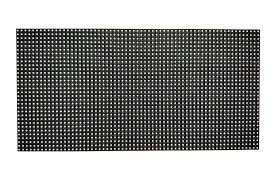
Performance and quality hinge on key technical parameters:
- Pixel Pitch: Defined as the distance from the center of one LED cluster to the next, measured in millimeters (mm). Smaller pixel pitch (e.g., 0.9mm to 2.5mm) enables higher resolution and sharper images, ideal for close-viewing environments like control rooms and broadcast studios.
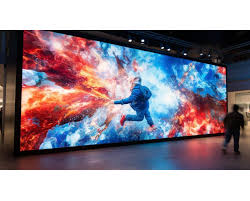
- Brightness: Measured in nits (cd/m²). Outdoor displays typically require brightness levels above 5,000 nits to maintain visibility under direct sunlight, as per the SID (Society for Information Display) standards. Indoor displays usually operate between 600–1,200 nits.
- Refresh Rate: Expressed in Hertz (Hz), a higher refresh rate (>= 3,000Hz) minimizes flickering and enhances motion clarity, essential for video applications and broadcast environments.
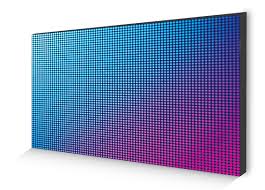
- Contrast Ratio: The ratio between the luminance of the brightest white and the darkest black the display can produce. High contrast ratios (greater than 3,000:1) improve readability and image depth.
3. Industry Standards and Compliance
Strict adherence to industry standards ensures durability, safety, and interoperability:
- IEC 62087: Defines methods for measuring power consumption of video displays, helping engineers optimize energy efficiency.
- RoHS (Restriction of Hazardous Substances): Mandates the limitation of hazardous chemicals in electronic manufacturing to ensure environmental safety.
- IP Rating (Ingress Protection): For outdoor LED panels, an IP65 or higher rating protects against dust and water ingress, extending device longevity under harsh weather conditions.
- ANSI and ISO Standards: Used for color calibration and ensuring color accuracy across different display types.
4. Manufacturing Best Practices
A rigorous quality assurance process is vital. This includes:
- Bin Sorting of LEDs: LEDs are sorted by luminous intensity and chromaticity to ensure visual uniformity across the display.
- Automated Optical Inspection (AOI): Utilized to detect defects such as dead pixels or soldering issues in early manufacturing phases.
- Thermal Management: Integration of heat sinks and thermal interface materials prevents overheating, which can degrade LED lifespan. Optimal operating temperature ranges from -20°C to +50°C depending on the application.
- Calibration and Testing: Post-assembly color and brightness calibration using specialized software ensures that the display meets desired performance metrics before shipping.
5. Case Study: Large-Scale Outdoor LED Installation
A recent project involved manufacturing a 15,000-square-foot outdoor LED video wall with 2.5mm pixel pitch and brightness exceeding 6,000 nits. Challenges included ensuring uniform brightness across such a large surface and resistance to extreme weather conditions. Implementing a modular design with IP68-rated cabinets and redundant power supplies resulted in 99.99% uptime and excellent image fidelity, as confirmed by rigorous onsite testing.
6. Future Trends
The LED display industry is experiencing convergence with AI technology and IoT integration. Smart displays capable of adapting brightness and color temperature in real-time according to environmental conditions are becoming standard. Innovations in Mini-LED and Micro-LED technology promise even higher pixel density and energy efficiency.
7. Conclusion
The manufacturing of LED displays demands a deep understanding of semiconductor physics, precision engineering, and adherence to international standards. Engineers and manufacturers must continually innovate while maintaining stringent quality controls to meet the increasingly sophisticated demands of global markets. Knowledge of technical parameters, coupled with practical experience in manufacturing processes, forms the cornerstone of successful LED display production.
For professionals seeking to optimize LED display solutions, it is crucial to align design parameters with application requirements and regulatory compliance for maximum performance and reliability.
References:
- Society for Information Display (SID) Standards
- IEC 62087 – Methods of Measurement of Power Consumption
- Restriction of Hazardous Substances (RoHS) Directive
- ANSI Color Standards
- Case Study – Samsung LED Display Solutions Whitepaper, 2023













