

Advanced LED Display Manufacturing: Technical Insights and Industry Best Practices
In the rapidly evolving landscape of digital signage and display technology, LED displays have become the cornerstone of modern visual communication. From outdoor billboards to indoor advertising screens and control rooms, LED display manufacturing demands precise engineering, cutting-edge materials, and rigorous quality standards to ensure optimal performance and longevity.
Technical Parameters and Materials
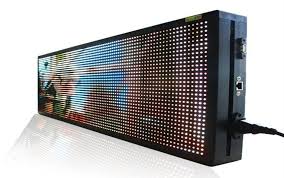
At the heart of LED display manufacturing lies the choice of LED components, driver ICs, and substrates. High-quality SMD (Surface-Mounted Device) LEDs such as the commonly used SMD 0603, 0805, and 1921 packages offer excellent brightness and color uniformity. Key parameters include:
- Pixel Pitch: Ranges typically from 0.9mm to 20mm, directly influencing the pixel density and viewing distance. For indoor applications, pixel pitch between 0.9mm to 4mm ensures high-resolution imagery, whereas outdoor displays favor larger pitches like 10mm to 20mm for readability at longer distances.
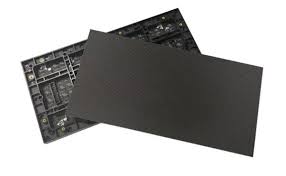
- Brightness: Indoor LED panels typically offer a brightness of around 800 to 1,200 nits, while outdoor displays exceed 5,000 nits to combat sunlight reflections. High brightness ensures clear visibility without compromising energy efficiency.
- Refresh Rate: A refresh rate of at least 3,840 Hz is industry-preferred to eliminate flickering, critical for video content and live broadcasts to maintain visual comfort.
- Viewing Angle: Manufacturing employs LEDs with wide horizontal (~160°) and vertical (~140°) viewing angles, ensuring uniform image quality over broad spectrums.
The PCB (Printed Circuit Board) materials, typically FR4 or metal-core PCBs, play a crucial role in heat dissipation. Advanced LED panels leverage aluminum substrates to maintain low operating temperatures, extending LED life expectancy beyond 100,000 hours per industry standards (such as those from the Illuminating Engineering Society).
Manufacturing Process Insights
State-of-the-art LED display manufacturing integrates SMT lines, automated optical inspection (AOI), and quality control checkpoints aligned with ISO 9001 certification requirements. Key process stages involve:
1. LED Binning: LEDs are sorted based on luminance and chromaticity according to the ANSI/NEMA binning standards, ensuring color uniformity across the panel.
2. Pick and Place: Precision machinery places LEDs with micrometer accuracy on PCBs, critical for pixel alignment and consistency.
3. Reflow Soldering: Controlled soldering processes reduce thermal stress and prevent component damage, improving yield rates and panel reliability.
4. Module Assembly: Modules are assembled with integrated driver ICs and power supplies. Considering protection ratings like IP65 or higher, modules intended for outdoor use include waterproof encapsulation and corrosion-resistant coatings.
Industry Standards and Quality Assurance
International standards such as IEC 62368-1 (Safety of Audio/Video Equipment) and RoHS (Restriction of Hazardous Substances) compliance guide the design and material selection process to meet environmental and safety requirements. Manufacturers utilize burn-in testing and thermal cycling to validate endurance under extreme operational conditions. Key performance indicators include color uniformity (Delta E< 3), contrast ratio (>3,000:1), and grayscale linearity.
A notable case study in the industry involved the deployment of 4K resolution LED displays in a major airport terminal, where the adoption of ultra-fine pixel pitch technology combined with high refresh rate drivers enabled smooth video streams and real-time flight information display, enhancing passenger experience significantly.
Future Trends and Innovations
Looking forward, the LED display industry is embracing integration with AI-powered calibration tools, enabling real-time color correction and diagnostics, thus simplifying maintenance and improving display consistency across large video walls. The rise of microLED technology promises even higher brightness, lower power consumption, and finer pixel control, though current manufacturing complexity and costs remain challenges.
In summary, LED display manufacturing demands a multidisciplinary approach combining materials science, electronic engineering, and rigorous quality control to deliver vibrant, reliable, and durable digital screens. Manufacturers adhering to international standards, leveraging advanced assembly technologies, and focusing on precise optical characteristics establish themselves as leaders in this highly competitive market.













