

Comprehensive Insights into LED LCD Screen Manufacturing: Standards, Technologies, and Applications
The LED LCD screen industry stands at the forefront of display technology innovation, combining the backlighting advantages of LEDs with the sophisticated liquid crystal display (LCD) panel technology. As a professional LED display engineer with years of expertise in LED and LCD manufacturing, this article aims to provide an authoritative and comprehensive overview of LED LCD screen manufacturing, including technical parameters, industry standards, production processes, and practical applications. This knowledge is critical for engineers, manufacturers, and decision-makers who seek to optimize screen performance and reliability.
Understanding LED LCD Screen Structure and Working Principle
An LED LCD screen fundamentally integrates an LCD panel that modulates light with an LED backlight that serves as the illumination source. Unlike traditional cold cathode fluorescent lamp (CCFL) backlights, LED backlights provide superior energy efficiency, thinner panel thickness, enhanced brightness, and better color gamut. Typical LED backlighting types include edge-lit and direct-lit configurations, each suiting different product form factors and performance criteria.
Key technical parameters for LED LCD screens include:
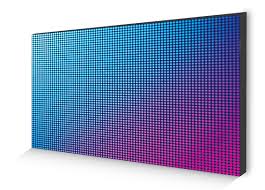
- Resolution: Common resolutions range from Full HD (1920x1080 pixels) to 8K (7680x4320 pixels) for advanced applications, impacting image clarity and pixel density (measured in pixels per inch, or PPI).
- Brightness: Typical LED LCD panels offer brightness levels from 250 cd/m² (nits) for indoor use to over 1000 cd/m² for outdoor and specialized applications. High brightness is critical for readability under ambient light.
- Contrast Ratio: A vital parameter describing the ratio between the brightest white and the darkest black a screen can display. Industry-leading LED LCDs achieve contrast ratios exceeding 1000:1, enhanced further through local dimming zones in direct-lit backlights.
- Color Gamut: Measured against standards like sRGB, Adobe RGB, or DCI-P3, a wider gamut ensures more vivid and accurate colors, indispensable for professional media production.
Manufacturing Standards and Industry Protocols
Quality and reliability in LED LCD screens rely on adherence to stringent standards. The International Electrotechnical Commission (IEC) and the Society for Information Display (SID) prescribe criteria for electrical safety, electromagnetic compatibility, durability, and optical performance.
For instance, IEC 60950-1 ensures electrical safety compliance for information technology equipment, while IEC 62368-1 addresses audio/video and IT equipment security. In manufacturing, quality control processes often follow Statistical Process Control (SPC) methods to maintain consistency in pixel defect rates, luminance uniformity, and color accuracy.
Advanced Manufacturing Processes
The LED LCD screen production involves multiple complex steps:
- Glass Substrate Preparation: High precision glass substrates undergo cleaning, coating with alignment layers, and deposition of thin-film transistors (TFTs), which control individual pixel states via voltage modulation.
- Liquid Crystal Injection: The liquid crystal material is injected into the cell between the glass substrates under controlled temperatures and vacuum conditions to eliminate air bubbles.
- Backlight Assembly: LEDs are organized into arrays behind or around the LCD panel. Advanced manufacturing incorporates mini-LED or micro-LED backlights featuring thousands of tiny LEDs, enabling local dimming and dramatically improving contrast ratios.
- Optical Enhancements: Films such as diffusers, polarizers, and brightness enhancement films (BEFs) optimize light distribution and minimize reflection.
Reliability and Testing
Durability testing under conditions like temperature cycling, humidity exposure, and vibration is mandatory, especially for screens used in critical fields such as aviation and medical imaging. Luminance degradation, color shift, and pixel response time are key parameters assessed through accelerated life tests.
Applications and Market Trends
LED LCD screens are ubiquitous across consumer electronics, medical displays, automotive dashboards, aerospace instrumentation, and digital signage. Increasing demand for ultra-high-definition displays alongside trend shifts toward flexible and transparent displays pushes the industry towards innovations like quantum dot enhancement films (QDEF) and organic LED (OLED) hybrid technologies.
Case Study: Implementation of Mini-LED Backlighting in High-End Monitors
Recent industry cases demonstrate mini-LED backlighting's effectiveness in delivering superior HDR (High Dynamic Range) capabilities. By employing thousands of independent dimming zones, monitors achieve peak brightness surpassing 1600 nits with a local contrast ratio exponentially superior to conventional LEDs. This enhances visual experiences in professional photo editing, medical diagnostics, and gaming applications.
Conclusion
The manufacturing of LED LCD screens is a multidisciplinary integration of materials science, optics, electronics, and software control. Meeting international standards and embracing cutting-edge technologies such as mini-LEDs and quantum dot films ensure that LED LCD displays continue to evolve, delivering exceptional performance, durability, and versatility in diverse applications worldwide.
For engineers and manufacturers aiming to excel in this field, meticulous adherence to standards, continuous innovation, and comprehensive testing regimes remain the cornerstone of building credible, high-performance, and reliable LED LCD screens.













