

Comprehensive Guide to LED LCD Screen Manufacturing: Technical Insights and Industry Standards
The manufacture of LED LCD screens represents a critical intersection of electronic engineering, materials science, and precision manufacturing. As global demand for high-quality displays escalates, understanding the intricacies of LED LCD screen production is paramount for professionals seeking to optimize quality, efficiency, and performance.
Introduction
LED LCD screens combine Liquid Crystal Display (LCD) technology with Light Emitting Diode (LED) backlighting to deliver superior visual performance in a range of applications, from consumer electronics to industrial and commercial displays. This integration enhances brightness, contrast ratio, and energy efficiency, catering to the evolving needs of modern display users. The manufacturing process involves meticulous component selection, assembly, calibration, and testing—each stage requiring high expertise to meet international standards such as IEC 62368-1 and ISO 9241-307.
Main Body
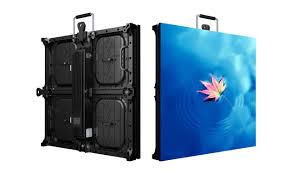
1. Core Components and Technical Parameters
The essential components of an LED LCD screen include the LCD panel, the LED backlight module, a driver circuit, and protective layers. The LCD panel comprises liquid crystals sandwiched between two polarized glass substrates. The LED backlight contributes key advantages over traditional cold cathode fluorescent lamps (CCFL), offering a narrower color gamut of typically up to 72-100% NTSC, higher luminance levels commonly within 250-1000 cd/m² depending on application, and enhanced energy efficiency capable of reducing power consumption by 20-40%.
Particularly critical is the LED backlight's configuration—regional dimming techniques and edge-lit vs direct-lit designs impact uniformity and contrast. For example, direct backlighting with more uniform LED distribution enables higher local dimming zones, which significantly improve the contrast ratio, often exceeding 3000:1 in premium displays.
2. Manufacturing Process Overview
LED LCD manufacturing begins with substrate preparation where ultra-smooth glass panels are cleaned and coated. Advanced photolithography patterns the thin-film transistors (TFTs) that control pixel illumination. Quality demands precise alignment to ensure pixel integrity and uniformity. After the TFT array is complete, liquid crystals are injected into the cell under vacuum using materials such as nematic liquid crystals for their fast response times.
The assembly phase integrates the LED backlight module, typically comprising blue LEDs combined with yellow phosphor or RGB LEDs for color mixing. Manufacturers often employ automated optical inspection (AOI) and colorimeter devices to validate the uniformity of luminance and chromaticity across the entire panel. According to Society for Information Display (SID) guidelines, deviations beyond ±5% in luminance can degrade user experience and are grounds for rejection.
Encapsulation with optical films including polarizers, retarders, and diffusion layers ensures optimal light transmission and viewing angles, typically targeting a Minimum Contrast Ratio (MCR) of 1000:1 and viewing angles upward of 178° horizontally and vertically.
3. Quality Control and Testing Standards
To comply with international quality standards, LED LCD manufacturers subject products to rigorous testing regimes. These include thermal cycling tests to assess durability under temperature fluctuations from -20°C to 60°C, humidity tests following IEC 60068-2-78, and drop or vibration tests to simulate real-world conditions. The calibration process is standardized under the International Color Consortium (ICC) profiles, ensuring consistent color reproduction across factories and devices.
Industry case studies illustrate that continuous improvements in assembly automation and backlight uniformity measurement have reduced screen failure rates from 3% to below 0.5% in recent years. Such quality control enhancements are pivotal in sectors like medical displays, aviation, and automotive dashboards where reliability is non-negotiable.
4. Emerging Trends and Technological Innovations
Recent advancements include mini-LED and micro-LED backlighting, offering higher pixel density and localized dimming zones that surpass traditional LED LCD capabilities. These innovations deliver contrast ratios exceeding 1,000,000:1 with peak brightness reaching 2000 cd/m², aligning closely with HDR (High Dynamic Range) standards such as HDR10 and Dolby Vision.
Moreover, manufacturing processes are increasingly adopting AI-driven inspection systems that leverage machine learning to detect micro-defects unseen by human operators, boosting yield and reducing waste.
Conclusion
The manufacturing of LED LCD screens embodies a complex synergy of high-precision engineering, rigorous testing, and innovative design. Through adherence to established standards and incorporation of cutting-edge technologies, the industry continues to enhance display performance and reliability. For professionals engaged in this field, continuous learning about materials, process control, and emerging innovations is vital to maintaining competitive advantage and delivering products that meet the global market's demanding specifications.
By focusing on key factors such as component quality, backlighting configuration, rigorous testing, and emerging mini-LED technologies, manufacturers can achieve superior LED LCD screen products that satisfy stringent international standards and user expectations in diverse environments.













