

Comprehensive Guide to LED Display Screens: Design, Manufacturing, and Industry Applications
The evolution of LED display technology has transformed visual communication, advertising, and information sharing across numerous industries globally. As a professional LED display engineer with extensive experience in manufacturing and deploying LED LCD screens, this article delves deeply into the core aspects of LED display systems: from design principles and manufacturing processes to technical specifications and practical applications. This comprehensive guide aims to provide an authoritative, detailed, and practical resource, enriched by industry standards and case studies, for manufacturers, system integrators, and end-users seeking to enhance their understanding and application of LED display technology.
Understanding LED Display Technology
LED (Light Emitting Diode) displays operate by illuminating tiny semiconductor light sources, providing superior brightness, contrast ratios, and color rendition compared to traditional LCD or projection methods. The core component, the LED pixel, can be composed of single-color LEDs in monochrome displays or three sub-pixels (Red, Green, Blue) in full-color displays. These pixels collectively render images, texts, and videos with high clarity and vibrancy.
Key Technical Parameters
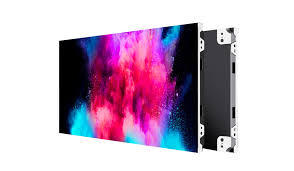
1. Pixel Pitch: Defined as the distance (in millimeters) between the centers of adjacent pixels, pixel pitch is pivotal in determining viewing distance and image resolution. Smaller pixel pitches (e.g., 0.9mm – 2.5mm) are suited for close-range indoor applications with high resolution, such as control rooms and broadcasting studios. Larger pitches (e.g., 4mm – 10mm or more) are common in outdoor billboards or stadium screens where viewing distance is greater.
2. Pixel Density: Expressed in pixels per square meter, pixel density directly influences image sharpness. For example, a pixel pitch of 1.5mm corresponds approximately to 444,444 pixels per square meter, enabling ultra-high-definition (UHD) displays.
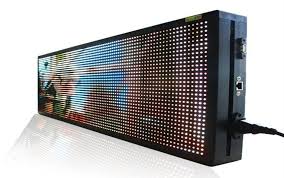
3. Brightness: Outdoor LED displays typically require brightness levels between 5,000 and 7,500 nits (cd/m²) to overcome ambient sunlight, while indoor displays function optimally at 800–1,500 nits. Brightness uniformity and lumen efficiency are critical for energy consumption and image consistency.
4. Refresh Rate: This is the frequency at which the image is updated per second. Higher refresh rates (≥ 1920 Hz) reduce flicker and improve compatibility with various video sources and cameras, essential for broadcasting and live event use.
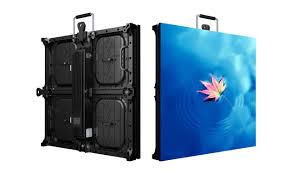
5. Contrast Ratio: An indicator of how well the display differentiates dark and light areas. LED technology boasts contrast ratios exceeding 3,000:1, much higher than LCD.
6. Viewing Angle: The horizontal and vertical viewing angles are often 140°–160°, ensuring consistent image quality across wide audiences.
Manufacturing Processes and Quality Control
The manufacturing of LED displays integrates several critical phases:
- Module Assembly: LED chips mounted on printed circuit boards (PCBs) require precision placement. Automated machine placement ensures positional accuracy within ±0.05mm, crucial for seamless displays.
- Soldering and Encapsulation: Techniques such as surface-mount technology (SMT) and resin encapsulation protect LEDs and enable water resistance (IP65 rating and above).
- Calibration: Post-assembly calibration adjusts each LED’s brightness and chromaticity to ensure color uniformity across the screen, often employing high-precision spectrometers and software tools following the CIE 1931 color space standards.
- Environmental Testing: LEDs and modules undergo rigorous tests—temperature cycling, humidity resistance, UV exposure—to comply with standards such as IEC 60529 for IP ratings and MIL-STD-810 for environmental durability.
- Panel Integration: Assembled modules are integrated into panels with power supply units, signal receivers, and control processors. These panels must maintain mechanical flatness within ±0.5mm to avoid display distortions.
Industry Standards and Certifications
Conformance with international standards underlines the credibility and quality of LED display products:
- IEC 62717: Specifications for LED modules used in signage, detailing mechanical, optical, and electrical characteristics.
- RoHS and REACH Compliance: Limits hazardous substances usage, ensuring environmental safety.
- UL and CE Marking: Ensures electrical safety and electromagnetic compatibility (EMC).
- Energy Star and ISO 9001: Indicate energy efficiency and quality management systems adherence.
Emerging Technologies: Mini-LED and Micro-LED
Innovations like Mini-LED and Micro-LED are revolutionizing display engineering:
- Mini-LED: Involves using thousands of small LEDs as backlighting for LCD panels, enhancing contrast and local dimming. Pixel pitches can reach 0.2mm, suitable for ultra-thin TVs and monitors.
- Micro-LED: Futures an ultra-high pixel density directly emitting self-luminous pixels without needing backlighting. Micro-LED displays promise exceptional brightness (>10,000 nits), faster response times, and minimal power consumption, marking the next frontier for smartphones, AR/VR devices, and large-format displays.
Applications Across Industries
1. Outdoor Advertising: Large-scale LED billboards leverage high brightness and weather-resistant design, ensuring visibility even under direct sunlight. Examples include Times Square displays using pixel pitches around 10mm, delivering impact on an urban scale.
2. Control Rooms and Command Centers: Highly detailed indoor LED walls with pixel pitches of 0.9–2.5mm provide real-time monitoring and analytics.
3. Sports Arenas and Entertainment Venues: Combining wide viewing angles and compact designs, LED displays deliver immersive experiences for audiences and broadcasters alike.
4. Retail and Exhibitions: Interactive LED displays enable dynamic brand experiences through touch integration and real-time content updates.
5. Transportation and Public Information Systems: Weatherproof LED panels inform passengers with adaptable content in train stations and airports.
Case Study: Deploying a 4K LED Video Wall in a Broadcast Studio
A leading broadcast network required a video wall capable of UHD resolution, excellent color accuracy, and flicker-free performance under camera capture conditions. Employing a 1.5mm pixel pitch direct-view LED wall, the installation featured:
- Calibration per ITU-R BT.709 and Rec. 2020 color standards
- Refresh rates above 3840 Hz to avoid flicker artifacts
- Custom-designed heat dissipation solutions maintaining operation between 20°C and 35°C
- Compliance with IEC 62368 for safety and EMC standards
Post-installation, the network achieved a significant improvement in broadcast quality and operational reliability, showcasing the practical benefits of precision-engineered LED solutions.
Maintenance and Lifecycle Considerations
Proper maintenance extends the LED display lifespan, typically 50,000 to 100,000 operational hours, depending on usage and environmental factors. Routine tasks include:
- Cleaning to avoid dust and moisture accumulation
- Monitoring power supply stability to prevent damage
- Firmware updates and calibration re-checks
LED displays also feature modular designs, facilitating easy replacement of faulty modules without dismantling the entire panel.
Conclusion
The LED display industry combines intricate engineering, rigorous quality control, and innovation to meet modern demands for vibrant, reliable visual communication. Understanding the technical parameters, manufacturing precision, and application-specific requirements enables stakeholders to select and implement LED display systems effectively. As technology advances towards micro-LED and beyond, new opportunities for resolution, efficiency, and versatility will arise, shaping the future of digital displays worldwide.
For professionals seeking to optimize LED display performance or manufacturers aiming to meet international standards, embracing these principles is essential for success.
References:
- IEC 62717 LED modules for general lighting – Performance requirements
- International Telecommunication Union (ITU-R) BT.2020 and BT.709 Color Standards
- MIL-STD-810 Environmental Engineering Considerations and Laboratory Tests
- J. P. Suspension et al., "Advances in Micro-LED Display Technology," Journal of Display Technology, IEEE, 2023
- "LED Displays: The Complete Guide," Digital Signage Today, 2022













