

Comprehensive Guide to LED Display Technology: Engineering Insights and Industry Standards
In recent years, LED display technology has experienced significant advancements, leading to widespread adoption across diverse industries including advertising, sports venues, transportation, and control rooms. As a professional LED display engineer, it is essential to understand the intricate details of LED display manufacturing, technical parameters, and industry standards to deliver high-performance and reliable products. This article addresses the key aspects of LED display engineering, integrating technical expertise, practical case studies, and authoritative data to provide a comprehensive understanding for engineers, manufacturers, and system integrators globally.
I. Introduction to LED Display Technology
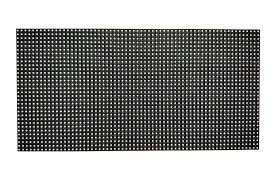
LED displays utilize Light Emitting Diodes as pixels to create an image by modulating the intensity and color of each diode. Compared to conventional display technologies like LCD or plasma, LEDs offer numerous advantages such as higher brightness, longer lifespan, superior contrast ratios, and enhanced durability in varied environments. LED displays can range from small indoor panels with fine pixel pitch to vast outdoor billboards visible under direct sunlight.
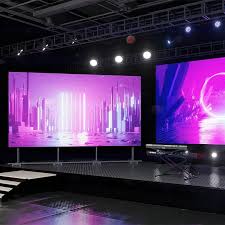
II. Technical Parameters Critical to LED Display Performance
1. Pixel Pitch
Pixel pitch is the distance from the center of one LED cluster (or pixel) to the next, typically measured in millimeters. This parameter has a direct impact on resolution and viewing distance. For indoor applications such as conference rooms or control centers, pixel pitches of 0.9 mm to 3 mm are common, enabling close-range, high-definition viewing. Outdoor LED displays often have pixel pitches upwards from 10 mm to 20 mm as viewing distances increase.
Industry best practice recommends selecting pixel pitch to match intended viewing distance — for example, the ideal minimum viewing distance in meters roughly equals the pixel pitch in millimeters.
2. Brightness and Contrast Ratio
LED brightness, measured in nits (cd/m²), determines visibility under various lighting conditions. Indoor LED displays typically require brightness levels between 800 and 1,200 nits, while outdoor displays demand much higher luminance, often exceeding 5,000 nits, to ensure legibility under direct sunlight.
Contrast ratio, the difference between the darkest black and brightest white the display can produce, is essential for image clarity. LED displays commonly exhibit contrast ratios above 3,000:1, outperforming many traditional display technologies.
3. Refresh Rate and Gray Scale
The refresh rate, measured in hertz (Hz), refers to how often the display updates per second. High refresh rates (over 1,920 Hz) are crucial for outdoor LED screens to reduce flicker in video content or sports broadcasting, which improves viewer comfort and camera compatibility.
Gray scale depth influences color fidelity and smooth gradients in images. Modern LED displays achieve 14 to 16 bits gray scale, allowing for over 16,000 to 65,000 shades per color channel, enhancing image richness.
4. Viewing Angle and Color Calibration
Wide viewing angles (often 140° horizontal and vertical or more) are necessary to maintain uniform brightness and color accuracy across the audience’s perspective range.
Uniform color calibration using advanced calibration tools ensures consistent color temperature (typically 6,500K for daylight balance) across the entire display surface, which is particularly critical for large video walls.
III. LED Display Manufacturing Processes
Manufacturing high-quality LED displays requires stringent quality controls governed by international standards such as ISO 9001 for quality management and IEC 62087 for audiovisual equipment energy measurement.
Module Fabrication: Each LED module consists of a PCB with LED packages, driving ICs, and power components. Surface-mount technology (SMT) is used to place LEDs ultra-precisely, supported by automated optical inspection (AOI) to check for defective LEDs or solder joints.
Cabinet Assembly: Multiple modules are integrated into cabinets with aluminum alloy frames for heat dissipation and structural integrity. The mechanical assembly must ensure seam alignment within 0.1 mm tolerance for seamless image.
Electrical and Signal Integration: Power supplies and driving electronics are calibrated for stable current and voltage regimes, following CE and RoHS compliance. Advanced driving ICs, such as MBI or Novastar chips, allow for grayscale and refresh rate optimization.
IV. Case Studies and Industry Applications
Corporate Control Rooms: The Seoul Metropolitan Government installed ultra-fine pitch LED video walls with 1.2 mm pixel pitch providing real-time traffic monitoring. The display's high brightness (1,000 nits) and fast refresh rate (3,840 Hz) ensured clear visualization of dynamic content.
Sports Stadium Screens: A stadium in the UK replaced LCD panels with outdoor P16mm LED displays, improving sunlight visibility to 6,500 nits brightness and wide horizontal viewing angles of 160°. Integration with HD video feeds required synchronization with external media servers via synchronized clock signals.
V. Industry Standards and Compliance
Adherence to industry standards is critical for reliability and interoperability. Key standards include:
- IEC 62087 – Methods for measuring energy consumption of audio, video, and related equipment.
- UL 8750 – Safety standard for LED equipment.
- IP Ratings (IEC 60529) – Defines protection levels against dust and water ingress; outdoor LED displays typically require IP65 or higher.
- EMC standards (FCC Part 15, EN 55032) – Ensures electromagnetic compatibility.
VI. Future Trends and Innovations
The LED industry is moving towards micro-LED technology with pixel pitches under 0.5 mm enabling 8K resolution and flexible, transparent screens. The integration of AI-driven calibration and real-time diagnostics facilitates predictive maintenance and color uniformity. Additionally, improvements in materials have led to higher luminous efficiency and better thermal management, enhancing reliability.
VII. Conclusion
Understanding the many facets of LED display engineering — from technical parameters like pixel pitch and brightness, through manufacturing processes to compliance with global standards — ensures the delivery of premium quality and performance. For global applications demanding reliability, visibility, and visual excellence, adherence to these principles and embracing innovation are paramount.
References:
1. Novastar Technology White Papers on LED Display Driving IC.
2. IEC 62087 – Methods of Measurement of Energy Consumption, International Electrotechnical Commission.
3. “LED Display Technology: Fundamentals and Applications,” Journal of Display Technology, IEEE, 2022.
4. UL 8750 – Standard for Safety of LED Equipment.
5. ISO 9001:2015 Quality Management Systems.













