

The Comprehensive Guide to LED Smart Screens: Technology, Applications, and Industry Standards
In recent years, LED smart screens have revolutionized the display technology landscape, integrating advanced LED modules with smart functionalities to create versatile, efficient, and interactive visual solutions. Their adoption spans across commercial advertising, public information systems, retail, transportation hubs, and even home entertainment, driven by improvements in LED technology, display control, and connectivity.
Understanding LED Smart Screens
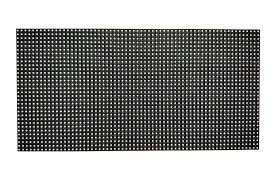
An LED smart screen fundamentally combines light-emitting diode (LED) technology with embedded computing and connectivity capabilities. Unlike conventional LED displays that serve primarily as static or simple video output devices, smart screens incorporate processing units and network modules, enabling real-time content management, remote control, and interactive engagement. Standard resolutions span from P1.25 to P10 (pixel pitch in millimeters), with pixel pitches below 2.5mm considered fine-pitch LED displays, delivering high-definition visual quality even at close viewing distances.
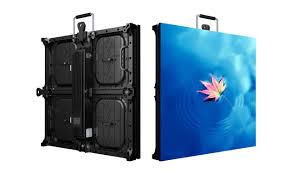
Key technical parameters include:
- Brightness: Typically ranging from 800 to 1200 nits for indoor screens and up to 5000 nits or higher for outdoor applications, ensuring visibility in various ambient lighting conditions.
- Refresh Rate: 1920Hz or above, critical for smooth video playback and flicker-free images, meeting industry standards such as IEC and UL requirements.
- Color Accuracy: Support for 16-bit grayscale or higher per channel, allowing rich and lifelike color reproduction.
- Viewing Angle: Commonly 160° horizontal and vertical, ensuring consistent image quality across large audiences.
- Lifespan: Around 100,000 hours based on typical LED panel specifications, aligned with international benchmarks (e.g., the NTSC color gamut adherence and MPRT values).
Industry Standards and Quality Assurance
The manufacturing and deployment of LED smart screens follow stringent standards to guarantee performance and durability. Key references include IEC 62087, which specifies video entertainment equipment power measurement, and ANSI/CTA 2034, defining LED display quality metrics. Additionally, conformity with FCC and CE certifications ensures electromagnetic compatibility and safety.
Manufacturers conduct rigorous testing for heat dissipation efficiency, moisture resistance (IP65 or higher for outdoor models), and uniformity of LED brightness. Advanced calibration tools and software like Gamma correction algorithms and real-time temperature regulation circuits ensure optimal performance and prolonged panel life.
Applications and Use Cases
The flexibility of LED smart screens enables tailored solutions across diverse sectors:
- Retail and Advertising: Dynamic advertisements with vibrant visuals and interactive touchscreen functionalities increase consumer engagement and brand impact. For instance, leading global brands report up to 40% increase in customer conversions post installation of LED smart signage.
- Transportation and Public Spaces: Real-time updates at airports, train stations, and subway systems enhance passenger experience through clear visuals and responsive content management, often integrating IoT for environmental sensing and adaptive brightness control.
- Corporate and Educational Environments: Integrated smart screens serve as collaborative mediums, supporting video conferencing, data visualization, and immersive presentations. Compatibility with HDMI, DisplayPort, and wireless content casting protocols are standard requirements.
- Entertainment and Events: Modular LED smart walls and ceilings offer scalable solutions tailored to venue sizes and event requirements, delivering stunning graphics and immersive viewer experiences.
Future Trends and Innovations
The LED smart screen industry continues evolving with the integration of AI-driven content management, improved energy efficiency through micro-LED and mini-LED innovations, and enhanced sensor integration for interactive responsiveness. 8K resolution panels and curved displays are gaining traction, supported by AI-powered calibration, reducing visual fatigue and maximizing user engagement.
In conclusion, LED smart screens represent the convergence of robust LED technology and intelligent computing, offering unmatched versatility and reliability. By adhering to industry standards and leveraging technological advances, these displays provide sustainable, high-performance solutions suited for dynamic modern display needs.













