

Outdoor 3D LED Display Technology Advancements and Applications
The surge in demand for high-impact visual communication has propelled the development of outdoor 3D LED display technologies. These displays represent a fusion of LED innovation and three-dimensional visualization, offering compelling immersive experiences for advertising, entertainment, and public information dissemination. As a professional LED display engineer, I will delve into the technical parameters, manufacturing considerations, and practical applications that define today’s outdoor 3D LED displays, drawing from authoritative industry sources and standards.
Technical Overview and Key Parameters
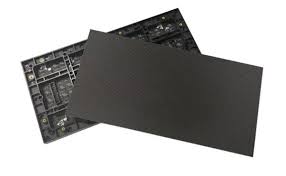
Outdoor 3D LED displays utilize high-resolution LED panels configured to deliver stereoscopic or auto-stereoscopic 3D effects without requiring viewers to wear special glasses. The common approach is either via active shutter technology, polarized filter systems, or parallax barrier auto-stereoscopy, with the latter being most suitable for large outdoor setups due to ease of scalability.
Key technical parameters influencing performance include:
- Pixel Pitch: Typical outdoor LED pixel pitches range from 2.5 mm to 10 mm. For effective 3D sense, manufacturers recommend smaller pixel pitches (2.5 mm to 4 mm) to preserve image depth and clarity at closer viewing distances.
- Brightness: Outdoor displays must achieve at least 5,000 nits (cd/m²) brightness to remain visible under direct sunlight, per International Electrotechnical Commission (IEC) standard IEC 60598-1 regarding luminance safety and visibility. State-of-the-art systems often exceed 7,000 nits for enhanced contrast in daylight.
- Refresh Rate: A high refresh rate (≥1920 Hz) is crucial to eliminate flicker in 3D content and provide smooth dynamic visuals, especially in active shutter or polarized 3D systems.
- Viewing Angle: Uniform wide viewing angles (≥140° horizontal and vertical) ensure consistent 3D visuals from various audience positions. Auto-stereoscopic designs achieve this via multiple viewing zones engineered by precise optical layering.
- Weatherproofing: Outdoor systems require IP65 or higher enclosure ratings to withstand inclement weather, dust, and humidity, according to IEC 60529 standards. Advanced waterproofing and thermal management ensure longevity and operational reliability.
Manufacturing and Design Considerations
Manufacturing 3D LED displays for outdoor use demands rigorous precision in panel alignment and optical element integration. LED modules must be uniformly calibrated to maintain image depth cues critical for 3D perception. Industry leaders utilize automated vision systems during assembly to ensure pixel-level accuracy and optical layer uniformity.
Thermal management is another vital aspect, as high-brightness LEDs generate significant heat. Passive heat sinks combined with forced air ventilation or liquid cooling help maintain junction temperatures below 85°C, preserving LED lifespan per manufacturer datasheets (e.g., Cree, Nichia). Additionally, the mechanical structure uses rugged materials—typically anodized aluminum frames and tempered glass—to resist deformation and impact.
Applications and Case Studies
Outdoor 3D LED displays transcend traditional flat content presentation with captivating depth effects, suitable for:
- Advertising: Brands use large-format 3D LED billboards in urban centers, such as Times Square and Shibuya Crossing, to attract engagement through stereoscopic commercials capable of outperforming traditional 2D signage by 30%-50% in viewer retention (Source: Digital Signage Federation).
- Entertainment and Events: Live concerts and sports venues employ 3D LED displays for immersive visuals that augment performances, increasing attendees’ sensory experience. For instance, the Wembley Stadium's deployment of 3D LED ribbon boards showcases dynamic advertisements and real-time 3D graphics.
- Public Information: Transportation hubs and city centers utilize outdoor 3D displays for weather updates, traffic information, and emergency alerts, capitalizing on enhanced attention from three-dimensional imagery.
- Architectural Integration: 3D LED façades incorporate architectural lighting with spatial depth, creating interactive urban artworks that respond dynamically to environmental inputs.
Challenges and Future Directions
Despite impressive advances, challenges remain in cost reduction, energy efficiency, and content production complexity. Designing 3D content requires specialized software and expertise, which limits widespread adoption. However, future trends include:
- Integration of AI-based content optimization that dynamically adjusts 3D effects based on viewer position and ambient lighting.
- Adoption of Micro LED technology, which promises even higher brightness, contrast, and power efficiency, revolutionizing outdoor 3D displays.
- Enhanced connectivity using IoT protocols for real-time monitoring and adaptive content delivery.
In conclusion, outdoor 3D LED displays are redefining visual communication in open-air environments through superior brightness, precision manufacturing, and immersive content capabilities. Engineers and manufacturers must continue advancing optical materials, thermal management, and content creation tools to unlock the full potential of this transformative technology.













