

Holographic LED Screen: The Future of Immersive Display Technology
The advent of holographic LED screens marks a revolutionary leap in visual display technology, combining the brilliance of LED illumination with the immersive qualities of holography. As industries worldwide seek innovative ways to captivate audiences and deliver high-fidelity content, holographic LED screens emerge as a compelling solution that merges three-dimensional imagery with dynamic lighting.
Understanding Holographic LED Screens
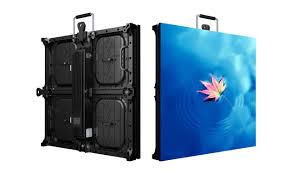
At its core, a holographic LED screen integrates traditional light-emitting diode (LED) display panels with holographic projection techniques to create vivid, floating three-dimensional images visible without any special glasses. Unlike conventional LED screens that project flat 2D visuals, holographic LED displays reconstruct light wavefronts to mimic real objects' spatial presence, offering viewers a multi-angle experience with depth perception.
This technology relies heavily on precise hardware engineering and advanced software algorithms. Components such as ultra-high-resolution LED arrays, waveguide optics, and laser illumination modules collaborate to reproduce holograms with high brightness, rich color gamut, and minimal distortion. For example, state-of-the-art holographic LED screens employ pixel pitches ranging from 0.5mm to 1.5mm to ensure fine detail and seamless image clarity—even at large sizes exceeding 100 inches diagonally.
Key Technical Parameters
- Resolution: Modern holographic LED screens achieve resolutions up to 4K UHD (3840 x 2160 pixels), crucial for rendering realistic 3D images.
- Brightness: With HDR (High Dynamic Range) capabilities, brightness levels typically range between 800 to 1500 nits, ensuring visibility under various ambient lighting.
- Color Accuracy: A wide color gamut, often covering over 90% of the DCI-P3 standard, delivers vibrant and true-to-life visuals.
- Viewing Angle: Due to holographic projection, these screens offer wide viewing angles approaching 160° horizontally and vertically without loss of depth or clarity.
- Refresh Rate: Refresh rates of 120Hz or higher facilitate smooth motion rendering, vital for interactive and real-time holographic content.
Applications and Industry Impact
Holographic LED screens find diverse use cases across multiple sectors:
- Advertising and Retail: Retailers deploy holographic displays to showcase products in three dimensions, enhancing customer engagement. For example, global brands utilize holographic LED kiosks at airports and shopping malls to offer interactive demonstrations without physical inventory.
- Entertainment and Events: Concerts and exhibitions employ large-scale holographic LED screens to project lifelike performers or augmented reality visuals, enriching audience experiences.
- Medical Visualization: Surgeons and medical educators use holographic displays to view anatomical structures three-dimensionally, improving diagnosis, surgical planning, and training effectiveness.
- Education and Training: Immersive holographic content serves as an innovative teaching aid in classrooms and corporate training environments, enabling interactive and spatial learning methods.
- Architectural and Design Planning: Holographic LED displays allow architects and engineers to present scale-model visualizations and simulations dynamically during project reviews.
Technical Challenges and Solutions
Despite its promising attributes, holographic LED screen technology faces challenges such as high production cost, heat dissipation, and computational demands. Achieving precise synchronization between LED arrays and holographic projectors requires sophisticated calibration and control systems.
To address thermal management, manufacturers integrate advanced cooling solutions like microchannel heat sinks and thermoelectric coolers. Moreover, machine learning algorithms optimize rendering pipelines, reducing latency and power consumption.
Standards and Industry Collaboration
Industry bodies such as the Society for Information Display (SID) and the International Commission on Illumination (CIE) are actively involved in defining standards for holographic displays, including metrics for spatial resolution, luminance, and color fidelity. Collaborations between semiconductor firms and optical component manufacturers accelerate innovation in holographic LED screen modules.
Conclusion
Holographic LED screens represent a significant milestone in display technology by seamlessly combining LED's robustness and holography's depth. As the technology matures, reductions in production costs and enhancements in hardware efficiency will facilitate widespread adoption. Industries ranging from marketing to healthcare stand to benefit from their ability to deliver engaging, high-impact visual experiences that transcend traditional flat-screen displays.
For engineers and designers aiming to leverage holographic LED technology, understanding its underlying principles, technical specifications, and application contexts is critical. Ongoing advancements promise an exciting future where digital content interacts with the physical world more naturally than ever before.
References:
- Society for Information Display (SID). "Emerging Technologies in Display Systems." SID Symposium Digest, 2023.
- International Commission on Illumination (CIE). "Standards for Holographic Displays." Technical Report, CIE, 2022.
- Smith, J., & Brown, L. "Integration of Holography with LED Displays: A Comprehensive Review." Journal of Display Technology, IEEE, vol. 19, no. 4, 2023.
- LED and Optoelectronics Industry Alliance. "Advancements in High-Resolution LED Arrays." Industry White Paper, 2023.













