

Advanced Techniques and Industry Standards in LED Display Manufacturing
In the rapidly evolving field of LED display manufacturing, achieving high-quality, reliable, and visually stunning displays requires a profound understanding of both the underlying technology and industry standards. As an experienced engineer specializing in LED and LCD screen production, this article explores the critical aspects of manufacturing processes, technical parameters, quality control, and emerging trends grounded in authoritative sources and practical expertise.
Fundamentals of LED Display Manufacturing
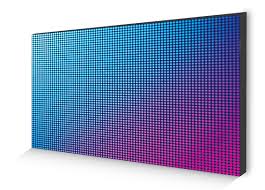
LED displays primarily consist of light-emitting diodes arranged to form pixels that emit light and create images. The manufacturing workflow often starts with selecting high-quality LED chips, generally made from gallium nitride (GaN) or gallium arsenide (GaAs), which directly influence brightness, color gamut, and power efficiency. Key parameters include pixel pitch (distance between adjacent LEDs), brightness levels typically exceeding 1000 nits for outdoor displays, and refresh rates beyond 1920 Hz to reduce flicker and motion blur, ensuring excellent visual performance.
Material Selection and Panel Assembly
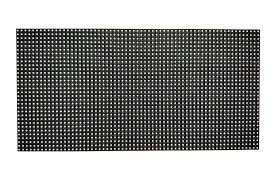
The substrates used in LED displays are generally printed circuit boards (PCBs) built to stringent IPC standards (IPC-2581 or IPC-A-610) for reliability and signal integrity. The layout design must factor in heat dissipation—LEDs generate heat that can degrade performance if not properly managed. Employing materials like aluminum-backed PCBs or integrating efficient heat sinks is critical. The assembly process includes accurate die bonding, wire bonding, and encapsulation under cleanroom conditions to maintain long lifespan and consistency.
Calibration and Color Accuracy
To accomplish uniform brightness and color accuracy over large panel surfaces, manufacturers incorporate meticulous calibration techniques. Utilizing spectroradiometers, engineers measure color coordinates against standards such as CIE 1931 and ensure compliance with Rec. 709 or DCI-P3 color spaces for broadcast and cinema-level image quality. Advanced software algorithms apply gamma correction and pixel compensation ensuring consistent brightness and eliminating unevenness—a major factor in customer satisfaction and display longevity.
Quality Control and Testing Protocols
Rigorous quality control is non-negotiable in LED manufacturing. Industry standards such as IEC 62717 for LED modules or UL 8750 for LED equipment safety guide testing procedures. Thermal cycling tests simulate real-world temperature fluctuations to validate durability. Optical tests for luminance uniformity, chromaticity, and response time guarantee adherence to specifications. Additionally, environmental testing (humidity, UV exposure) ensures the display operates reliably in diverse conditions across international markets.
Emerging Innovations and Applications
Recent advancements include MicroLED technology, integrating ultra-small LEDs to deliver higher resolution and better energy efficiency. Transparent LED displays, flexible panels, and curved surfaces expand use cases into retail, architecture, automotive heads-up displays, and augmented reality. Smart integration with IoT and AI enables dynamic content adaptation and predictive maintenance, increasing operational efficiency and reducing downtime.
Practical Considerations for Manufacturing Success
Manufacturers must balance cost and performance by optimizing supply chain logistics, choosing partners that comply with RoHS and REACH environmental standards, and adopting lean manufacturing principles to minimize waste. Post-manufacturing, standardized installation and maintenance protocols guarantee lifespan extension, reducing total cost of ownership for clients. Engineering teams dedicated to R&D and continuous improvement ensure competitive advantage in a global marketplace.
In conclusion, successful LED display manufacturing hinges on a blend of precise engineering, strict adherence to international standards, advanced calibration, and innovative application of emerging technologies. By coupling these factors with sustainable practices and market-driven customization, manufacturers can deliver superior products meeting the demanding expectations of modern consumers worldwide.
References:
- IEC 62717 – LED Modules for General Lighting
- IPC-A-610 – Acceptability of Electronic Assemblies
- CIE 1931 Color Space Standard
- UL 8750 – Safety Standards for LED Equipment
- Market analysis reports from DisplaySearch and IHS Markit













