

Advanced Techniques and Standards in Modern LED Display Manufacturing
The global LED display market has experienced significant growth over the past decade, driven by advancements in technology, increasing applications across various industries, and rising demand for high-quality visual solutions. As a professional LED display engineer with extensive experience, this article delves into the core aspects of LED display manufacturing, providing a comprehensive overview of technical parameters, industry standards, and cutting-edge techniques that define contemporary LED display production.
Technical Parameters and Their Significance
Precise control over technical parameters is pivotal to the performance and quality of LED displays. Key parameters include pixel pitch, brightness levels, color gamut, viewing angle, refresh rate, and lifespan. Pixel pitch, defined as the distance between the centers of two adjacent LED pixels, greatly influences image resolution and cabinet size. For indoor displays, pixel pitches typically range from 0.9mm to 4mm, whereas outdoor displays generally feature pitches between 4mm and 20mm depending on viewing distance. Industry leaders, such as the International Electrotechnical Commission (IEC 62612) and the Society for Information Display (SID), emphasize standards for luminance, color accuracy, and uniformity to ensure consistency in visual output.
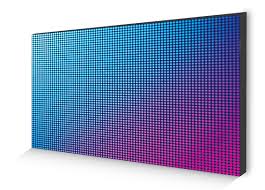
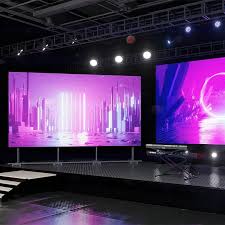
Brightness levels are crucial for ensuring visibility under varying ambient lighting conditions. Outdoor LED displays require luminance values exceeding 5,000 nits to maintain clarity in sunlight, whereas indoor displays operate optimally around 800 to 1,200 nits. The adoption of high refresh rates (typically 3,840 Hz or higher) minimizes flicker and improves visual comfort, especially for applications involving video broadcasting and live events.
Materials and Manufacturing Processes
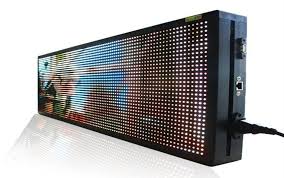
Modern LED displays primarily utilize surface-mounted device (SMD) technology, where red, green, and blue LED chips are integrated onto a single package, providing higher pixel density and superior color blending. The manufacturing process involves rigorous steps: LED chip selection with binning for color and brightness matching, Printed Circuit Board (PCB) fabrication ensuring high thermal conductivity, precise soldering using automated machinery, and encapsulation with silicone or epoxy resins to enhance durability against environmental factors.
Quality assurance protocols employ both automated optical inspection (AOI) systems and human visual inspection to detect defects such as dead pixels, color inconsistencies, and solder joint anomalies. Thermal management design is another critical aspect, with many manufacturers using aluminum backplates and active cooling systems to maintain optimal operating temperatures and prolong LED lifespan, which typically ranges from 50,000 to 100,000 hours depending on usage conditions.
Industry Standards and Certifications
Adherence to international standards enhances product reliability and customer trust. Certifications such as UL (Underwriters Laboratories) for electrical safety, CE for European conformity, and RoHS (Restriction of Hazardous Substances) compliance are mandatory for global market entry. The Digital Signage Federation (DSF) also provides best practices related to installation, maintenance, and energy efficiency. Additionally, proprietary standards developed by manufacturers aim to optimize drivers, power supplies, and control systems for enhanced performance and reduced power consumption.
Case Studies and Practical Applications
In recent years, LED technology has evolved to enable flexible and transparent displays, opening new horizons in architectural design and retail environments. For example, the Tokyo Metropolitan Government building integrated a 1000-square-meter, high-definition LED facade that meets stringent seismic and weather resistance criteria, showcasing the blend of aesthetic appeal and durability. Similarly, transportation hubs worldwide have adopted ultra-high-resolution indoor LED displays (pixel pitch<1.5mm) for real-time information and advertising, demanding impeccable color calibration and synchronization with content delivery networks.
Future Directions and Innovations
Emerging trends include MicroLED and MiniLED technologies, promising improved energy efficiency and contrast ratios surpassing traditional SMD panels. Additionally, Artificial Intelligence (AI)-driven calibration and predictive maintenance systems are being integrated to optimize display performance and reduce operational downtime. The move toward environmental sustainability is evident in the increasing use of recyclable materials and low-power driver electronics, aligning with global efforts to reduce e-waste and carbon footprints.
Conclusion
Manufacturing high-quality LED displays requires a profound understanding of technical parameters, rigorous application of industry standards, and continuous innovation. As global demand surges and use cases diversify, manufacturers must adopt holistic approaches encompassing precision engineering, advanced materials science, and sustainable practices. This convergence not only benefits end-users by delivering superior visual experiences but also propels the LED display industry toward a sustainable and technologically advanced future.
References:
- International Electrotechnical Commission (IEC), IEC 62612:2013 - Measurement methods for the optical properties of LED modules.
- Society for Information Display (SID) standards and whitepapers on LED technology.
- Underwriters Laboratories (UL) Certification Guidelines.
- Digital Signage Federation (DSF) Best Practices Documentation.
- Case Study: LED Facades in Architectural Applications, Display Technology Journal, 2023.













