

Advancements and Best Practices in LED Display Manufacturing: A Comprehensive Industry Guide
The LED display industry has experienced rapid evolution over the past decade, driven by technological advancements, rising demand for high-quality visuals, and expanding applications ranging from advertising and sports arenas to transportation hubs and corporate environments. As a seasoned professional in LED display engineering, this article provides an authoritative and comprehensive overview of LED display manufacturing, combining technical parameters, key processes, quality standards, and emerging trends to present industry practitioners and stakeholders with valuable insights.
Introduction
Light Emitting Diode (LED) displays are essential components in modern digital communication and visualization due to their high brightness, energy efficiency, longevity, and versatility. Unlike traditional LCDs, LED displays leverage directly emissive pixels, enabling superior color reproduction, contrast ratios, and viewing angles. According to the International Electrotechnical Commission (IEC 62717), LED display modules achieve luminance levels upward of 1200 cd/m² in indoor environments and can exceed 6000 cd/m² outdoors, ensuring visibility under diverse lighting conditions.
Technical Foundations
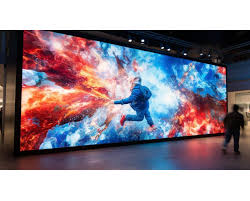
The core of LED display manufacturing lies in precise control over the constituent elements:
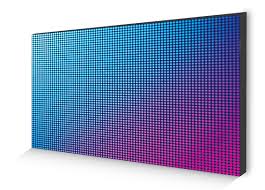
- LED Chips: Typically categorized by light output, wavelength accuracy, and binning uniformity. High-end displays utilize SMD (Surface Mounted Device) LEDs with pixel pitches often ranging from 0.5mm (fine-pitch) to 10mm+ for large-scale outdoor signage.
- Pixel Pitch: This defines the distance between the centers of two adjacent pixels. A smaller pixel pitch (e.g., 0.5–2.5 mm) leads to higher resolution and clarity but demands more complex mounting and thermal management.
- Color Calibration: Advanced displays employ sophisticated color calibration systems adhering to Rec. 709 or DCI-P3 standards for color accuracy, vital for professional broadcasting and medical applications.
- Driving Circuitry: High refresh rates (minimum 1920Hz for video broadcast standard compliance) and grayscale depth (14-bit or higher) are standard features to eliminate flicker and provide smooth imagery.
Manufacturing Processes
1. LED Chip Fabrication: Semiconductor wafers, primarily Gallium Nitride (GaN) based, are grown via Metal-Organic Chemical Vapor Deposition (MOCVD). Precision dicing and testing ensure yield maximization.
2. PCB Assembly: Flexible or rigid printed circuit boards are populated with LEDs using automated pick-and-place machines. Key parameters monitored include solder joint integrity, alignment accuracy (±10 microns tolerance), and thermal pad design.
3. Module Assembly: Modules are configured with front protective layers (high-transmittance optical glass or transparent polyethylene terephthalate - PET), LEDs encapsulation materials (typically silicone-based for optimal light diffusion), and modular frame systems for scalability.
4. Testing and Calibration: Each module undergoes rigorous testing using photometric equipment (e.g., integrating spheres, spectroradiometers) and software algorithms to achieve uniform brightness and color across the array. Burn-in processes lasting 72 hours or more identify latent defects.
Quality Standards and Certifications
Compliance with international standards is crucial. Among the most recognized:
- IEC 62031 for LED modules.
- UL 8750 for electrical safety.
- RoHS for hazardous substances compliance.
- IP ratings (Ingress Protection) defining environmental resistance; IP65 or higher is mandatory for outdoor solutions.
Additionally, environmental sustainability has become a priority. Manufacturers are increasingly adopting lead-free soldering, recyclable packaging, and energy-efficient circuitry to align with global ecological targets.
Common Challenges and Solutions
- Heat Dissipation: LEDs generate heat which adversely affects lifespan and color stability. Advanced heat sinking with aluminum backplates and active cooling techniques (e.g., micro-fans or liquid cooling in ultra-high-brightness displays) mitigate thermal issues.
- Color Consistency: To prevent chromatic aberration, batch-to-batch LED binning controls and real-time color adjustment systems are necessary.
- Mechanical Durability: Outdoor displays must withstand vibration, shock, and UV exposure. Robust structural design using reinforced frames and anti-corrosion coatings extends service life.
- Power Management: Incorporating high-efficiency power supplies with overcurrent protection and surge suppressors ensures reliable operation under fluctuating voltage scenarios.
Emerging Trends
The industry is witnessing notable innovations impacting manufacturing:
- Mini-LED and Micro-LED Technology: These technologies are pushing boundaries in pixel density and contrast ratios, suitable for ultra-high-definition displays and wearable devices.
- Flexible and Transparent LEDs: Enabling curved or unconventional installations without loss of performance.
- AI-driven Calibration: Machine learning algorithms optimize display uniformity in real-time, adapting to aging LEDs and ambient conditions.
- Smart Control Systems: IoT integration allows remote diagnostics, maintenance, and content management, reducing downtime and operating costs.
Case Study: Stadium Installation
A recent installation of a 10,000 m² outdoor LED display for a premier football stadium utilized fine-pitch (4mm) panels with IP68 certification. The installation demanded custom thermal management with active cooling fans and a modular design facilitating rapid replacement of faulty units. The project adhered to IEC and UL standards and achieved an average luminance of 7,500 cd/m², ensuring clear visibility even in direct sunlight. Post-installation analytics showed a 20% increase in advertising revenue, highlighting the commercial impact of high-quality LED display engineering.
Conclusion
LED display manufacturing is a multi-disciplinary arena requiring meticulous attention to material quality, design parameters, manufacturing precision, and adherence to safety and performance standards. With continuous innovations such as micro-LEDs and AI-enhanced calibration, the future promises even higher-quality, more sustainable, and versatile LED solutions. Professionals and manufacturers who integrate these cutting-edge technologies with best practices will lead the market in delivering transformative visual experiences globally.
References
1. International Electrotechnical Commission. "IEC 62717 - LED Modules for General Lighting."
2. Underwriters Laboratories. "UL 8750 Standard for Light Emitting Diode (LED) Equipment for Use in Lighting Products."
3. M. Schubert, "Light-Emitting Diodes," Cambridge University Press, 2006.
4. U.S. Department of Energy Solid-State Lighting Program, "LED Lighting Facts."
5. D. Meagher, "Thermal Management of High Brightness LED Lamps," Journal of Thermal Science, 2021.













