

Advances and Best Practices in LED Display Manufacturing for High-Quality Visual Solutions
In the ever-evolving landscape of display technologies, LED displays have emerged as a dominant choice for both commercial and consumer applications. Their advantages—such as high brightness, superior color reproduction, energy efficiency, and durability—make them indispensable in sectors ranging from advertising and entertainment to industrial monitoring and control rooms. As a professional LED display engineer with extensive experience in LED and LCD manufacturing, I aim to provide a comprehensive overview of contemporary practices, technical parameters, and industry standards that underpin the production of top-tier LED displays.
LED Display Technology Fundamentals
LED (Light Emitting Diode) display technology is based on an array of LEDs acting as individual pixels to form images and videos. The core types of LED displays include Surface-Mounted Device (SMD) and through-hole technologies, with SMD being prevalent in modern designs due to its compact size and superior resolution possibilities.
From a manufacturing perspective, ensuring pixel pitch, brightness, color accuracy, and refresh rate compliance with standards such as IEC 62087 (Digital Television Multimedia Systems - Measurement of the Power Consumption) and UL 8750 (Standard for LED Equipment for Use in Lighting Products) is essential. Pixel pitch, defined as the center-to-center distance between adjacent pixels, heavily influences resolution; smaller pitch values (sub-1mm for fine pitch indoor displays) deliver superior detail optimal for close-viewing applications.
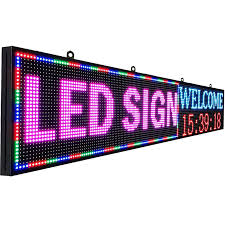
Ensuring High Brightness and Uniformity
Typical LED panels designed for outdoor use range between 5,000 to 10,000 nits (cd/m²) of brightness, which ensures visibility even under direct sunlight. Indoor displays usually maintain brightness levels between 800 and 1,200 nits to preserve comfortable viewing while maintaining energy efficiency.
Manufacturers must implement consistent binning during LED selection to ensure uniform brightness and color temperature across the panel. Binning refers to categorizing LEDs based on their color coordinates and luminance, a process critical for reducing variance and ensuring seamless visual output.
Color Reproduction and Calibration Techniques
Color quality is governed by the display’s ability to reproduce accurate colors according to standards such as BT.709 for HD content or BT.2020 for Ultra HD. Achieving high color gamut percentages (often above 95% NTSC) requires precise LED chip selection and multi-channel calibration processes, including:
- Automated photometric testing to measure each LED's output
- Software-based color correction algorithms to recalibrate aging or environmental effects
- Use of advanced IC drivers that support grayscale and gamma adjustments
Reliability and Durability Considerations
LED displays often operate under harsh environments, especially in outdoor applications. Robustness is ensured through standards compliance like IP65 or higher for ingress protection against dust and water. Additionally, thermal management plays a crucial role; sophisticated heat dissipation mechanisms such as aluminum backplanes and ventilation systems prevent thermal runaway, extending lifespan—typically exceeding 100,000 hours.
LED modules are also designed to conform to RoHS (Restriction of Hazardous Substances) directives, ensuring environmentally friendly production practices.
Manufacturing Best Practices and Quality Control
- Pick-and-Place Precision: Automated SMT machines placing LEDs with ±0.05mm accuracy minimize defects.
- Soldering Technology: Reflow soldering under strict temperature profiles to avert component damage.
- Inline Inspection: AOI (Automated Optical Inspection) systems detect component misalignment, soldering flaws, and dead pixels.
- Burn-In Testing: Continuous operation tests at elevated temperatures identify premature failures before shipment.
Integration with Control Systems
Modern LED displays integrate with control hardware that supports flexible configurations, higher refresh rates (commonly 3840 Hz or above for flicker-free video), and network protocols like TCP/IP or HDMI. Real-time diagnostics and remote monitoring enhance maintenance efficiency.
Case Example: High-Resolution Indoor LED Wall
A recent project involving a 0.9mm pixel pitch indoor LED wall demonstrated the impact of advanced manufacturing and calibration techniques. The result was a near-seamless display delivering 4K resolution over a large form factor, with color accuracy surpassing 98% DCI-P3 gamut, and a refresh rate of 3840 Hz ensuring flicker-free broadcasting. The project adhered strictly to international standards and incorporated redundancy features to maximize uptime in a critical event environment.
Conclusion
Producing high-quality LED displays demands meticulous attention to component selection, precision manufacturing, compliance with global standards, and rigorous testing procedures. Continuous innovation in chip technology, driver ICs, and control systems is driving the evolution of more compact, energy-efficient, and visually impressive screens. For industry stakeholders, integrating these best practices ensures delivery of LED display solutions that meet stringent performance, durability, and aesthetic criteria, catering to the diverse needs of today's global market.
For further reading, relevant standards and authoritative references include:
- IEC 62087: Measurement Techniques for Power Consumption of Display Devices
- UL 8750: LED Equipment Safety Standard
- RoHS Directive (2011/65/EU) for environmental compliance
- BT.709 and BT.2020 color standards as defined by ITU-R
These not only guide manufacturers but also help end-users make informed choices regarding LED display procurement.













