

Latest Advances and Best Practices in LED Display Manufacturing for Superior Performance and Longevity
In the rapidly evolving landscape of digital display technology, LED displays have become a cornerstone in advertising, information dissemination, and entertainment sectors worldwide. As an experienced LED display engineer, I aim to provide an in-depth, authoritative exploration of the latest advances and best practices in LED display manufacturing that ensure superior performance, enhanced reliability, and prolonged lifespan. This article synthesizes industry standards, technical parameters, and case studies to guide manufacturers, designers, and end-users toward optimal LED display solutions.
1. Introduction to LED Display Technologies
Light Emitting Diode (LED) displays utilize arrays of semiconductor light sources to create vibrant, high-contrast visual outputs. Unlike traditional LCD or plasma screens, LED displays offer significant advantages in brightness, power efficiency, color saturation, and durability. They are widely employed in outdoor billboards, indoor signage, sports arenas, transportation hubs, and control rooms.
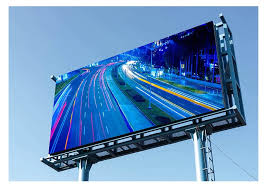
LED displays generally come in two primary configurations:
- Direct View LED (DV-LED): Pixels are individual LEDs emitting light directly, ideal for large-scale installations.
- LED-backlit LCD: LED panels provide backlighting to LCD cells, common in televisions and monitors.
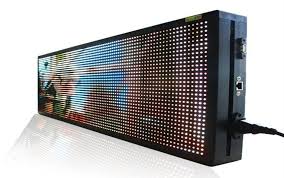
This article focuses on DV-LED technologies, which demand precision engineering for mass production and installation.
2. Core Manufacturing Processes
Manufacturing high-quality LED displays involves multiple critical stages:
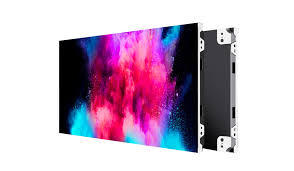
- LED Chip Fabrication: The base semiconductor chips are commonly made using Gallium Nitride (GaN) for blue and green LEDs, and Aluminum Gallium Indium Phosphide (AlGaInP) for red LEDs. Key parameters include wavelength precision, luminous efficacy, and junction temperature management, conforming to standards like JEDEC JESD51-1 for thermal testing.
- Surface Mount Technology (SMT) Assembly: LEDs are mounted on Printed Circuit Boards (PCBs) using automated pick-and-place machines. SMT precision impacts pixel uniformity and heat dissipation, essential for achieving high refresh rates (>3840 Hz) and color accuracy.
- Encapsulation and Phosphor Conversion: For white and certain color LEDs, phosphor layers convert blue LED light to broad-spectrum light. Application techniques affect brightness and color rendering index (CRI), with ideal CRI values above 80 for vivid color reproduction.
- Module Integration: Assembled LED boards are integrated into modules with comprehensive testing of parameters including brightness (often exceeding 5000 nits for outdoor use), viewing angle (typically 140° horizontal and vertical minimum), and contrast ratio.
- Quality Assurance: Implements rigorous tests per IEC 62717 and ISO 9001 processes, including burn-in testing under controlled environmental chambers to assess reliability over 50,000 operational hours.
3. Key Technical Parameters
To achieve superior performance, LED display engineers must optimize specific technical parameters:
- Pixel Pitch: Defined as the distance between centers of adjacent pixels, smaller pixel pitch (e.g., 1.2 mm to 3 mm) is required for close-view indoor displays, significantly improving resolution (up to 4K and beyond).
- Refresh Rate: High refresh rates (≥3840 Hz) minimize flicker effect, ensuring smooth visuals, particularly for video and camera capture compatibility.
- Brightness and Contrast: Outdoor displays demand minimum brightness levels above 5000 nits to overcome ambient light. Contrast ratios above 3000:1 enhance image depth.
- Color Calibration: Precise calibration following ITU-R BT.709 or DCI-P3 standards ensures consistent color reproduction across large display surfaces.
- Thermal Management: Effective heat dissipation via heat sinks and temperature sensors helps maintain stable LED junction temperatures, optimizing lifespan (50,000+ hours) and reducing failure rates.
4. Industry Standards and Certifications
Aligning production with international standards guarantees reliability and market acceptance:
- IEC 62031: Specifies safety requirements for LED modules used in lighting display systems.
- IEC 62717: Details performance requirements for LED modules used in lighting applications.
- RoHS Compliance: Ensures materials used are free from hazardous substances, enhancing environmental sustainability.
- UL Certification: Validates product safety under North American regulations.
- Energy Star: Applicable for energy-efficient LED displays confirming reduced power consumption.
5. Innovations and Emerging Trends
Recent technological breakthroughs are reshaping LED display manufacturing:
- MicroLED Technology: Offers ultra-small pixel sizes (sub-10 µm) and superior energy efficiency, ushering next-generation displays with unmatched brightness and resolution.
- Flexible and Transparent LED Displays: Enabled by advancements in substrate materials such as polyimide and ultrathin glass, expanding application scenarios including automotive dashboards and augmented reality.
- AI-Driven Quality Control: Machine vision systems combined with artificial intelligence detect defects in LED chips and assembled modules in real-time, improving yield rates and reducing downtime.
- Environmentally Friendly Manufacturing: Emphasis on reduced carbon footprint via eco-friendly solder pastes and recycling strategies for LED materials.
6. Practical Case Studies
- Times Square Renovation Project: Replacement of conventional billboards with ultra-high resolution LED panels featuring 2.5 mm pixel pitch and brightness up to 6500 nits, enabling crisp advertising content despite extreme sunlight.
- Indoor Control Center Displays: Deployment of narrow pixel pitch video walls achieving seamless display with refresh rates above 3840 Hz, facilitating critical monitoring operations without flicker, supported by redundant power supplies and sophisticated cooling systems.
- Sports Arena Installation: Custom-designed curved LED surfaces with enhanced viewing angles of 160° to ensure spectators from various locations experience consistent image quality.
7. Best Practices for Manufacturing and Maintenance
- Strict Cleanroom Assembly: Minimizes contamination that could damage sensitive LED chips.
- Comprehensive Testing Protocols: Including accelerated aging, humidity tests, and vibration resistance per MIL-STD-810 standards for rugged installations.
- Modular Design Philosophy: Allows quick replacement of malfunctioning sections reducing downtime.
- Regular Calibration and Servicing: Maintains brightness uniformity and color accuracy over time.
8. Conclusion
Manufacturing top-tier LED displays requires meticulous attention to semiconductor quality, precision assembly, robust testing, and adherence to international standards. By embracing innovations such as MicroLED, AI-powered quality control, and eco-conscious manufacturing, the industry can meet the rising demand for dynamic, high-performance, and sustainable visual solutions globally. Adopting these rigorous engineering methodologies ensures products deliver exceptional brightness, color fidelity, reliability, and lifespan, supporting the diverse applications that drive business and communication forward.
Authoritative References
- International Electrotechnical Commission, IEC 62717: “LED Modules for General Lighting—Performance Requirements”
- JEDEC Standard JESD51-1: “Standard Thermal Test Method for Single Semiconductor Devices”
- ITU Radiocommunication Sector Recommendations, ITU-R BT.709: “Parameter Values for HDTV Standards”
- MIL-STD-810G: Environmental Engineering Considerations and Laboratory Tests
By integrating these proven practices and technical insights, manufacturers and engineers can confidently produce LED displays that set industry benchmarks, delivering outstanding visual impact and durability.













