

Advanced Technologies and Manufacturing Processes in LED LCD Screen Production
The LED LCD industry has witnessed remarkable technological advancements, driven by the growing demand for higher resolution, enhanced color accuracy, and improved energy efficiency. As a professional LED display engineer with extensive experience in the field, I will provide an authoritative and comprehensive overview of the state-of-the-art technologies, critical manufacturing processes, and industry standards shaping contemporary LED LCD screen production. This article aims to equip industry stakeholders, engineers, and technical enthusiasts with practical insights, backed by reliable data and case studies.
Foundational Principles of LED LCD Display Technology
LED LCD screens combine two principal components: the Light Emitting Diode (LED) backlighting system and the Liquid Crystal Display (LCD) panel. Unlike traditional CCFL (Cold Cathode Fluorescent Lamp) backlights, LED backlights provide superior brightness, longevity, and energy efficiency. According to the Society for Information Display (SID) standards, LED-backlit LCDs can achieve luminance levels exceeding 1000 cd/m², significantly improving visibility in various ambient lighting conditions.
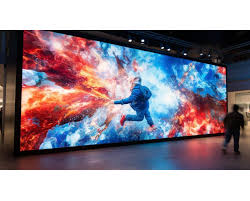
The LCD panel itself consists of millions of liquid crystal cells that modulate light passage to render images. Advances in thin-film transistor (TFT) technology improve pixel control accuracy, resulting in higher contrast ratios. For example, the introduction of In-Plane Switching (IPS) panels has enhanced viewing angles to up to 178°, which is critical for applications such as digital signage and medical displays.
Critical Technical Parameters in LED LCD Manufacturing
A typical LED LCD screen manufacturing process involves multiple stringent controls on parameters such as pixel pitch, refresh rate, and color gamut. Pixel pitch, defined as the distance between the centers of two adjacent pixels, directly influences resolution. For instance, fine-pitch LED LCDs used in close-viewing scenarios often feature pitches below 1 mm, supporting resolutions of 4K and above.
Refresh rate, measured in Hertz (Hz), indicates how frequently the image updates per second. Displays with refresh rates of 120 Hz or more are increasingly standard, particularly for gaming and professional video applications, as they reduce motion blur and provide smoother visuals.
Color gamut—important for color-critical applications—determines the range of colors a display can reproduce. Modern LED LCD screens often cover 95–99% of the DCI-P3 color space, providing excellent color fidelity comparable to cinema standards.
Manufacturing Processes: From Panel Fabrication to Quality Assurance
The manufacturing of LED LCD screens integrates advanced fabrication steps. Initially, wafer processing involves TFT array creation using photolithography, ensuring nanometer precision in transistor placement. This step is followed by panel assembly, where liquid crystal cells are sandwiched between glass substrates, and alignment layers are applied to control liquid crystal orientation.
Backlighting modules employ surface-mounted LEDs arranged in arrays. Engineers carefully select LED types (e.g., SMD LEDs) based on desired brightness and color temperature, commonly standardized at 6500K for natural daylight reproduction.
A critical stage is the integration of the LED backlight with the LCD panel via a light guide plate (LGP). Uniform light distribution is imperative to prevent brightness variance, which can cause visual artifacts. Industry-standard optical simulation software helps in optimizing LGP design to achieve brightness uniformity above 90%, meeting International Electrotechnical Commission (IEC) standards.
Final stages include rigorous testing using spectroradiometers and colorimeters to verify parameters such as luminance, color accuracy, response time, and power consumption. Quality control aligns with ISO 9001 standards to maintain manufacturing consistency and reliability.
Innovations Driving the Future of LED LCD Displays
Recent innovations focus on mini-LED and micro-LED integration, pushing LED LCD performance boundaries. Mini-LED technology uses thousands of smaller LEDs in the backlight, enabling localized dimming zones in the hundreds or thousands. This significantly improves contrast ratios, sometimes exceeding 5000:1, approaching the performance of OLED displays, and is widely adopted in flagship devices.
Micro-LED technology, involving direct-emission tiny LEDs serving as individual pixels, represents the next generation with exceptional brightness, color purity, and infinite contrast. Although still costly and complex to manufacture in large volumes, early commercial applications demonstrate superior reliability and lifespan.
Case Study: Improving Display Quality in Medical Imaging
In medical imaging, precision and color accuracy are paramount. A recent project involved manufacturing custom LED LCDs with 12-bit color depth (4096 levels per channel), 650 cd/m² brightness, and DICOM (Digital Imaging and Communications in Medicine) calibrated luminance curves. The displays underwent stringent tests to ensure compliance with AAPM (American Association of Physicists in Medicine) standards for diagnostic monitors.
The implementation of high-density LED backlights combined with optimized TFT IPS panels provided crisp, accurate images essential for diagnostic confidence. This case underscores the importance of tailored manufacturing and calibration protocols in specialized applications.
Conclusion
The production of LED LCD screens is a convergence of sophisticated technologies and meticulous manufacturing processes. Understanding the fundamental principles, technical parameters, and standards is essential for delivering high-performance displays. Emerging trends like mini-LED and micro-LED demonstrate continuous innovation, bringing new possibilities in brightness, contrast, and color fidelity. As an experienced LED display engineer, I emphasize the importance of adopting international standards (such as IEC, ISO, DICOM, and AAPM), rigorous quality control, and continuous R&D investment to maintain leadership in this dynamic industry.
By integrating technological expertise with practical manufacturing insights, manufacturers can meet the evolving demands of global markets, from consumer electronics to specialized medical and industrial applications.













