

Advances and Best Practices in LED Display Manufacturing for Enhanced Performance and Durability
In the rapidly evolving field of display technology, LED (Light Emitting Diode) displays have emerged as a cornerstone for applications ranging from consumer electronics to large-scale outdoor advertising and professional visualization environments. As a professional LED display engineer, understanding the manufacturing intricacies, technical parameters, and industry standards is crucial to delivering displays that meet high expectations in performance, durability, and visual quality.
Technical Foundations of LED Display Manufacturing
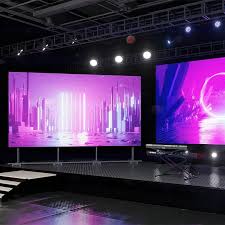
LED displays operate by illuminating millions of tiny diodes controlled by integrated circuits, which collectively generate vibrant and sharp images. Key technical parameters include pixel pitch, pixel density, refresh rate, color accuracy, brightness, and contrast ratio. The pixel pitch, defined as the distance (in millimeters) between the centers of two adjacent pixels, directly influences resolution and viewing distance. For example, fine-pitch LED displays with pixel pitches below 1.5mm are ideal for indoor environments requiring close viewing proximity, such as control rooms and broadcast studios. Contrast this with larger pixel pitches of 10mm or more, suitable for outdoor billboards where viewing distances are significantly greater.
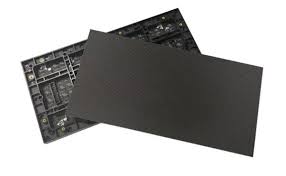
Precision in the assembly process ensures uniform light output and stable signal transmission. Surface-mount technology (SMT) is typically employed to mount LEDs on printed circuit boards (PCBs) with micron-level accuracy. The uniformity of LED chips and binning process — categorizing LEDs based on luminous flux, color temperature, and forward voltage — are critical for minimizing color discrepancies across the display surface. International standards such as the IEC 62368 series outline safety requirements that govern electrical and thermal design to enhance reliability.
Materials and Mechanical Design
High-quality materials and mechanical robustness contribute to the operational lifespan and environmental resilience of LED displays. Aluminum and magnesium alloy frames provide lightweight yet sturdy structures. The use of IP65 or higher rated enclosures protects against dust and water ingress, which is essential for outdoor installations. Additionally, conformal coating on PCBs shields electronics from moisture and corrosion, extending device longevity.
Thermal management is another critical design aspect. Effective heat dissipation prevents temperature-induced degradation of LED performance. Passive cooling methods utilizing heat sinks and ventilation, sometimes complemented by active cooling like fans, maintain optimal operating temperatures. According to studies from the International Display Manufacturing Association (IDMA), maintaining junction temperatures below 85°C significantly enhances LED lifespan, often exceeding 100,000 hours of operation.
Manufacturing Process Control and Quality Assurance
Stringent process controls are mandatory for producing high-quality LED displays. Automated Optical Inspection (AOI) systems verify solder joint connectivity and LED positioning during SMT assembly. In addition, each module undergoes burn-in testing, exposing LEDs to elevated current levels for extended periods to screen out early failures. Calibration processes ensure luminance and chromaticity conformity to standards such as ANSI C82.77-2017 (Guidelines for LED Lighting Devices).
Firmware and driver IC optimizations enable high refresh rates (typically 1920Hz or more), minimizing flicker and motion blur — factors crucial for broadcast and live event displays. Modular designs facilitate easy maintenance and reduce downtime, as individual panels can be serviced or replaced without impacting the entire installation.
Emerging Trends and Industry Innovations
The LED display industry continuously integrates innovations such as Mini-LED and Micro-LED technologies. These advances provide even greater pixel density, improved color gamut, and enhanced energy efficiency. Micro-LED displays, featuring microscopic LEDs individually controlled, hold promise for ultra-high-definition displays with superior brightness and contrast ratios, especially in devices like augmented reality (AR) headsets and next-generation TVs.
Furthermore, sustainability considerations have become integral to LED display manufacturing. Manufacturers are adopting environmentally friendly materials and processes, reducing hazardous substances in compliance with RoHS (Restriction of Hazardous Substances Directive) and WEEE (Waste Electrical and Electronic Equipment Directive).
Conclusion
Mastering LED display manufacturing requires a comprehensive understanding of electronics, mechanical engineering, and quality assurance protocols. By adhering to international standards and employing advanced material technologies and process controls, manufacturers can produce LED displays that are visually stunning, reliable, and durable under various operating conditions. Staying abreast of emerging technologies such as Micro-LED ensures competitiveness in a market driven by innovation and customer demand for superior display experiences.
For professionals and organizations investing in LED display solutions, prioritizing these manufacturing best practices enhances performance and total cost of ownership, establishing a benchmark for excellence in the industry.













