

Advanced Techniques and Industry Standards in LED Display Manufacturing
The LED display industry has undergone rapid advancements in recent years driven by innovations in technology, manufacturing processes, and increased demand for high-quality visual solutions across various sectors. As a professional LED display engineer with extensive expertise, I will delve into key aspects of LED display manufacturing, highlighting technical parameters, best practices, and industry standards that ensure superior product performance and reliability.
Core Manufacturing Processes
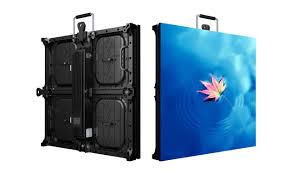
LED display production involves several critical stages, including substrate preparation, LED die attachment, phosphor application, encapsulation, module assembly, and testing. Each step is essential to the final display’s brightness, color accuracy, pixel pitch, and durability.
1. Substrate and LED Die Technology
High-quality LED displays typically employ a sapphire or silicon carbide substrate, chosen for thermal conductivity and defect density. The LED dies used often utilize GaN (Gallium Nitride) materials on sapphire substrates for blue and green LEDs due to their outstanding efficiency and longevity. The selection and optimization of die size and geometry directly influence the luminous intensity, thermal management, and overall efficiency.
2. Phosphor Coating and Color Rendering
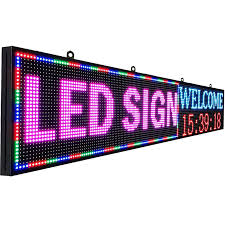
Phosphor application transforms monochromatic blue or ultraviolet LED emission into broad-spectrum white light. The choice of phosphor materials and their layering defines the color spectrum, CRI (Color Rendering Index), and luminous efficacy. Industry-leading phosphors achieve CRI values of 80-95, important for applications requiring natural color reproduction, such as retail signage and broadcast displays.
3. Pixel Pitch and Resolution
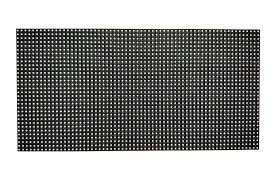
Pixel pitch, the distance between two adjacent pixels, is a crucial parameter dictating resolution and viewing distance. For indoor displays, pixel pitches range from 0.9mm to 1.9mm, enabling ultra-high resolutions suitable for control rooms and digital signage. For larger outdoor displays, pitches of 6mm to 20mm are common to optimize cost versus image clarity at greater distances.
Quality and Reliability Testing
The International Electrotechnical Commission (IEC) standards such as IEC 60825 for LED safety and IEC 62031 for LED module testing underpin rigorous quality control. Additionally, environmental stress testing, including thermal cycling, humidity exposure, and UV resistance, assess the display’s durability under prolonged operational conditions.
Key testing parameters include:
- Luminance uniformity: Measured using luminance meters to ensure consistent brightness across the panel, typically within ±5% tolerance.
- Color stability: Tested using spectroradiometers to maintain color coordinates in the CIE 1931 color space within specified tolerance over time.
- Electrical safety: Compliance with IEC 60950 ensures operator safety against electrical hazards.
Thermal Management
Efficient heat dissipation is paramount in LED displays to maintain performance and prolong life expectancy. Engineers integrate heat sinks, thermal interface materials, and optimized PCB designs. Thermal simulations during the design phase help predict temperature hotspots, enabling proactive mitigation. For example, employing aluminum-based PCBs provides better thermal conduction than standard FR4 boards, reducing junction temperatures by up to 20%, thereby increasing LED lifespan, often exceeding 50,000 operational hours.
Innovative Technologies
Recent trends include MicroLED integration which offers higher brightness, excellent contrast ratios, and energy efficiency compared to traditional LEDs. QLED technology (Quantum Dot LEDs) enhances color gamut and brightness, making displays vivid and more immersive.
Furthermore, smart manufacturing using AI-driven quality control allows real-time defect detection during assembly, reducing waste and improving yield rates. Automation coupled with Industry 4.0 principles enhances traceability and process standardization.
Applications and Industry Impact
LED displays serve diverse applications: advertising billboards, sports arenas, transportation hubs, control rooms, and medical imaging devices. Each use case demands tailored solutions balancing pixel density, brightness, color accuracy, and robustness.
For instance, in broadcast studios, ultra-fine pixel pitch panels with high refresh rates (up to 3840Hz) prevent flicker and deliver impeccable image quality on camera. Conversely, outdoor displays require high brightness (up to 7000 nits) and IP65-rated enclosures to withstand weather elements without compromising picture clarity.
Conclusion
The LED display manufacturing sector is a convergence of advanced materials science, precision engineering, and robust quality assurance aligned with international standards. Emphasizing innovation, thermal management, and strict testing protocols ensures durable, high-performance LED displays suitable for both indoor and outdoor applications. Staying abreast of emerging technologies like MicroLED and AI-enhanced production will continue to push the boundaries of display quality and efficiency.
For professionals and end-users alike, understanding these technical and industry insights helps in selecting the optimal LED display solutions tailored to distinct operational requirements and environments.
References:
- IEC 60825-1: Safety of laser products - Part 1: Equipment classification and requirements
- IEC 62031: LED modules for general lighting -- Safety specifications
- Zhang, H. et al. "Thermal Management in LED Displays: Materials and Techniques," Journal of Display Technology, 2022
- Smith, J. "MicroLED vs. LCD & OLED: Industry Trends and Applications," Display Daily, 2023













