

Advanced Insights into LED LCD Screen Manufacturing: Technical Parameters and Industry Standards
In the rapidly evolving landscape of display technology, LED LCD screens have emerged as a dominant solution for a wide spectrum of applications, ranging from consumer electronics to large-format digital signage. As a professional LED display engineer with extensive experience in LED LCD screen manufacturing, this article delves into the critical technical parameters, manufacturing processes, and industry standards vital for producing high-quality LED LCD displays. By adhering to established best practices and leveraging cutting-edge technologies, manufacturers can ensure products that meet both performance and reliability benchmarks.
Understanding LED LCD Display Technology
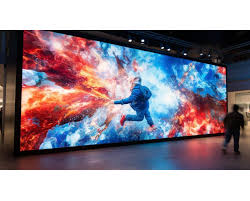
LED LCD screens are essentially liquid crystal display panels that utilize Light Emitting Diodes (LEDs) as the backlight source. This combination offers several advantages over traditional cold cathode fluorescent lamp (CCFL) backlit LCDs, including improved brightness, energy efficiency, and color gamut. The architecture involves a TFT (Thin Film Transistor) LCD panel layered with LED backlighting units arranged either at the edges (edge-lit) or uniformly behind the panel (direct-lit or full-array).
Key Technical Parameters
1. Resolution and Pixel Density
High-resolution manufacturing has become a market necessity. Resolutions commonly start from Full HD (1920×1080 pixels) and extend to 4K Ultra HD (3840×2160 pixels) and beyond. LED LCD panels must achieve pixel densities (PPI, pixels per inch) appropriate for the screen size and viewing distance to ensure clarity. For example, smartphone displays can feature pixel densities above 400 PPI, whereas large professional monitors usually target 120-160 PPI.
2. Brightness and Contrast Ratio
LED backlighting allows manufacturers to achieve brightness levels ranging between 300 to 1000 nits, dependent on application requirements. HDR-capable LED LCDs often exceed 600 nits to produce vibrant images with improved dynamic range. Contrast ratio, a primary indicator of image quality, depends heavily on the LCD panel technology (IPS, VA, TN) and backlight diffuseness. Typical contrast ratios range from 1000:1 to 5000:1, with advanced models employing local dimming to boost perceptual contrast.
3. Color Gamut and Accuracy
Modern LED LCDs often cover wide color spaces such as Adobe RGB, DCI-P3, and sRGB to fulfill professional-grade requirements. The choice of LED phosphor materials and backlight architecture significantly impacts color reproduction. Calibration tools are commonly used during manufacturing to ensure Delta E values fall below 2, guaranteeing accurate color rendition for visual media professionals.
4. Refresh Rate and Response Time
High-performance applications — including gaming and video editing — demand refresh rates from 60 Hz to 240 Hz or higher. Response time, measured in milliseconds (ms), denotes how quickly a pixel transitions between colors. Typical values are between 1 ms (GTG – gray to gray transition) and 8 ms depending on panel technology.
Manufacturing Process Overview
Manufacturing LED LCD screens involves several vital stages:
- TFT Array Fabrication: The semiconductor thin-film transistors are patterned on glass substrates using photolithography on an amorphous silicon or oxide semiconductor layer.
- Liquid Crystal Cell Assembly: The alignment layers and liquid crystals are sandwiched between the TFT substrate and polarizing filters.
- Backlight Module Integration: LED arrays are mounted, where uniform light distribution is achieved through diffusers and light guides.
- Optical Films Application: Films such as anti-reflective, brightness enhancement, and polarization layers optimize light transmission and user viewing experience.
- Quality Control and Calibration: Visual inspection through machines and spectrometers validate uniformity, brightness, color accuracy, and electronic performance conforms to industry standards (ISO 9241-307, IEC 62715).
Industry Standards and Best Practices
Compliance with standards ensures consistency and safety. Noteworthy standards include:
- ISO 9241-307: Ergonomics of human-system interaction, particularly for pixel defects.
- IEC 62715: Specifies lamp safety and backlight requirements.
- Energy Star certifications for power efficiency.
- UL and CE certifications to meet electrical and environmental safety.
Challenges and Innovations
Some challenges in manufacturing involve managing LED backlight uniformity and reducing halo effects in local dimming implementations. Recent innovations like mini-LED and microLED technologies improve control over backlighting at a microscopic level, delivering superior contrast ratios and energy savings compared to traditional LED LCDs.
Further, advancements in AI-based quality control systems enable real-time defect detection, minimizing waste and improving yield rates during mass production.
Conclusions
Crafting high-performance LED LCD screens requires in-depth knowledge of material science, semiconductor fabrication, optical engineering, and quality control. Understanding and controlling technical parameters such as resolution, brightness, color gamut, and refresh rate aligned with strict adherence to international standards ensure that products meet global demands for clarity, reliability, and efficiency.
By continuously integrating new materials and technologies like quantum dots or mini-LED backlighting, the industry pushes the boundaries of what LED LCD screens can deliver, reinforcing their status as a cornerstone technology in modern visual displays.
Authoritative References:
- Society for Information Display (SID) – Journal of the Society for Information Display.
- IEC 62715 – International Electrotechnical Commission Standards.
- ISO 9241-307 – Ergonomics of Human-System Interaction.
- Energy Star Program Requirements for Displays (Version 8.0).
- “Digital Display Fundamentals,” by James R. Janesick, SPIE Press.













