

Advanced Technologies and Best Practices in LED Screen Manufacturing for Superior Performance
The manufacturing of LED screens stands at the forefront of display technology, merging sophisticated engineering with precision manufacturing processes to deliver products capable of vibrant visuals and enduring reliability. As a seasoned LED display engineer with extensive experience across international markets, this article delves into the technological advancements, stringent quality standards, and practical considerations critical to producing cutting-edge LED screens tailored for diverse applications.
Understanding LED Screen Core Components and Parameters
LED screens—ranging from small indoor panels to vast outdoor billboards—are fundamentally built on Light Emitting Diodes that offer high brightness, fast refresh rates, and excellent color performance. Key parameters defining LED displays include:
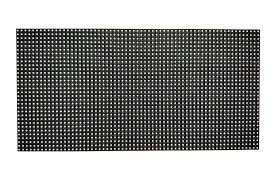
- Pixel Pitch: Distance between the centers of two adjacent pixels, typically from 0.8mm to 20mm, dictating resolution and viewing distance.
- Brightness: Measured in nits (cd/m²), with indoor screens usually between 800 to 1500 nits and outdoor screens exceeding 5000 nits for daylight visibility (IEC 62817 standard).
- Refresh Rate: Minimum 1920 Hz or above is essential for flicker-free video and smooth motion rendering.
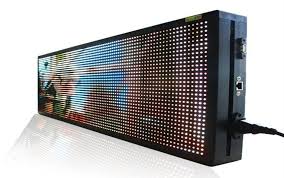
- Color Accuracy: High color gamut coverage with 16-bit color depth ensures vibrant and natural images.
- Viewing Angle: Typically ≥160° horizontally and vertically, allowing uniform image quality from multiple viewpoints.
Advanced Manufacturing Techniques Enhancing Quality and Performance
The opaque barrier to elevated performance fundamentally depends on manufacturing precision. Using Surface-Mount Technology (SMT) for component placement enhances signal integrity and reliability. Automated optical inspection (AOI) and solder paste inspection (SPI) systems uphold stringent defect reduction. Furthermore, employing High-Definition (HD) masks during the LED packaging process ensures consistent diode illumination and color uniformity.
Incorporation of thermal management solutions such as copper-clad substrates, integrated heat sinks, and active airflow systems optimizes thermal dissipation. This is particularly critical given LEDs’ sensitivity to temperature, as a 10°C rise typically halves the lifespan of the diodes, influencing overall product longevity significantly.
Industry Standards and Compliance
Adherence to international standards such as IEC 62276-200 (Outdoor LED Screens), RoHS, and CE certification assures product safety, environmental compliance, and electromagnetic compatibility (EMC). These thresholds not only safeguard end-users but also maintain brand credibility and supply chain integrity.
Case Study: Implementing High Refresh Rate in Sports Venue Displays
In collaboration with a major European stadium, a 1.5 mm pixel pitch LED display with a refresh rate exceeding 3840 Hz was installed. This innovation eradicated flicker even when broadcasted at slow-motion replays, enhancing the global viewing experience. The project highlighted that meticulous cabinet design using injection-molded frames, combined with precise calibration algorithms, drastically reduced color discrepancies and brightness gradients across the large curved screen.
Optimizing Supply Chain and Quality Assurance
From sourcing high-grade gallium nitride (GaN) LEDs to integrating automated calibration tools, control over every supply chain phase ensures consistent final product quality. Lifetime testing protocols exceeding 30,000 hours simulate real-use scenarios, screening for potential points of failure. Additionally, software innovations in diagnostics allow real-time monitoring and predictive maintenance, reducing operational downtime.
Future Directions and Emerging Trends
Emerging innovations include MicroLED displays offering exceptional pixel density and energy efficiency, and advanced quantum dot enhancements for wider color spectrums. The integration of AI-based calibration and adaptive brightness controls promises even better user experiences while reducing power consumption.
In summary, the interplay of advanced engineering, rigorous manufacturing protocols, and compliance with international standards defines the LED screen industry’s continual evolution. By focusing on technical depth, industry benchmarks, and practical case studies, manufacturers and end-users alike can achieve displays that deliver unmatched visual excellence and operational reliability.













