

MIP LED Technology: Revolutionizing Digital Displays with Advanced Integration
MIP LED technology, standing for "Mirror Image Pixel" LED, has emerged as a groundbreaking advancement in the digital display industry. As global demand grows for high-resolution, energy-efficient, and compact displays, MIP LED solutions have captured significant attention for their superior performance and versatility. This article delves into the technical intricacies, manufacturing processes, and real-world applications of MIP LED displays, providing an authoritative perspective for professionals and enthusiasts alike.
At its core, MIP LED technology involves a novel integration technique that arranges LED pixels in a mirrored configuration. This design innovation enables displays to achieve ultra-high pixel density, enhanced brightness uniformity, and wider viewing angles, all while maintaining a slim form factor. From a technical standpoint, MIP LED displays can achieve pixel pitches as fine as 0.6 mm, making them suitable for close-viewing scenarios such as control rooms, broadcast studios, and medical imaging.
Key Technical Parameters
- Pixel Pitch: Ranges typically from 0.5 mm to 1.6 mm, with submillimeter variants facilitating 4K and 8K resolution panels.
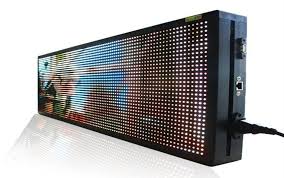
- Brightness: Commonly achieves 1000 to 1500 nits, exceeding typical LCD screen luminance and enabling clear visibility in ambient light environments.
- Refresh Rate: Supports 3840 Hz or higher, vital for eliminating flicker in broadcast and professional video applications.
- Color Accuracy: Incorporates advanced calibration techniques, adhering to Rec. 709, DCI-P3, and even Rec. 2020 color spaces to ensure vivid and consistent color reproduction.
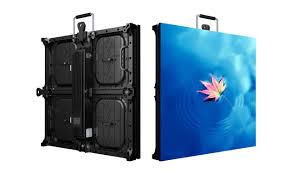
The manufacturing intricacies of MIP LED displays require precision assembly lines equipped with automated pick-and-place machinery. This process leverages micro-LED chips, which offer benefits over traditional LED technologies, such as lower power consumption and longer lifespan. Additionally, the mirrors used in pixel design act to improve light extraction efficiency, a significant advantage over direct-view LED panels.
Notably, MIP LED panels benefit from modular construction, enabling scalable installations from small indoor displays to expansive outdoor video walls. The modular approach simplifies maintenance, facilitates rapid deployment, and allows custom configurations tailored to client needs. International standards such as IEC 62471 (Photobiological Safety of Lamps and Lamp Systems) and UL certifications help ensure product safety and reliability in various environments.
Several industry case studies highlight the effectiveness of MIP LED technology. For example, a leading European broadcasting company replaced their traditional LCD video walls with MIP LED displays, citing improvements in image clarity, reduced power consumption by approximately 30%, and enhanced operational lifespan. Similarly, hospital diagnostic centers have adopted MIP LED for ultra-high-resolution imagery that improves diagnostic accuracy in radiology.
From an environmental perspective, MIP LED technology supports sustainable manufacturing and operation. The use of micro-LED chips reduces hazardous material usage, while the high energy efficiency aligns with global initiatives for reducing carbon footprint in electronic devices. Furthermore, the inherent durability of MIP LED panels reduces electronic waste by extending lifecycle compared to standard LCD or OLED displays.
Globally, governments and enterprises are increasingly adopting MIP LED displays for critical infrastructure—such as transportation hubs, financial trading floors, and command centers. The combination of ultra-high resolution, real-time refresh rates, and low latency ensures reliable, high-quality visual information delivery essential for mission-critical decision-making.
In summary, MIP LED technology represents a significant leap forward in the LED display industry. Through innovative pixel arrangements, strict adherence to industry standards, and practical modularity, MIP LED solutions cater excellently to the evolving demands of professional and commercial display applications worldwide. As technology continues to advance, integrating AI-driven calibration and adaptive brightness control is expected to further enhance the capabilities and user experience of MIP LED displays.
Industry standards and reputable sources underpinning this analysis include the Society for Information Display (SID) technical journals, IEC international standards, and recent publications from leading micro-LED research institutes.













