

Advancements and Technical Insights in LED Display Manufacturing: A Comprehensive Guide
The LED display industry has witnessed significant advancements over the past decade, driven by rapid innovations in semiconductor technology, materials science, and manufacturing processes. As a professional LED display engineer with extensive experience in design, production, and quality assurance, this article aims to provide an authoritative overview of the state-of-the-art developments in LED display manufacturing, grounded in technical parameters, industry standards, and practical considerations.
Fundamentals of LED Display Technology
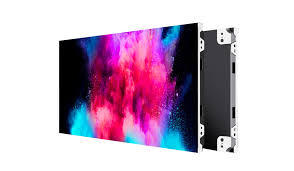
At the core of LED display technology lies the Light Emitting Diode (LED), a semiconductor device that emits light when an electric current passes through it. Modern LED displays are composed of thousands to millions of these microscopic diodes arranged in a matrix. The principal categories are:
- Direct View LED (DVLED) Displays: These utilize self-emissive pixels, enabling high brightness, wide viewing angles, and vibrant colors without backlighting.
- LCD Displays with LED Backlighting: Here, white LEDs provide backlight for liquid crystal displays, significantly improving brightness and energy efficiency compared to traditional CCFL backlights.
Direct View LED displays dominate large-format applications such as outdoor billboards, stadium displays, and digital signage because of their scalability, brightness (often exceeding 5,000 nits), and durability. LCDs remain preferred for smaller, high-resolution displays due to their superior pixel density and power efficiency.
Critical Technical Parameters
1. Pixel Pitch and Resolution: Pixel pitch refers to the center-to-center distance between adjacent LEDs, directly influencing resolution and viewing distance requirements. For instance, a 1.5 mm pixel pitch panel provides extremely sharp images ideal for indoor installations viewed at close range, whereas a 10 mm pitch suits large outdoor signage where viewers are farther away.
2. Brightness and Contrast Ratio: Outdoor LED displays require luminance levels exceeding 5,000 nits to overcome ambient light, complying with standards like IEC 62471 (Photobiological Safety of Lamps and Lamp Systems). Contrast ratio affects image depth and color accuracy; high dynamic contrast ratios (up to 10,000:1 in DVLED) are achievable with precise LED driving and uniform panel calibration.
3. Color Gamut and Calibration: High-quality LED screens strive for wide color gamuts (e.g., NTSC 90% or higher) achieved through customized LED chips and phosphor coatings. Sophisticated color calibration systems are mandatory during manufacturing and maintenance phases to ensure uniformity across large display surfaces.
4. Refresh Rate and Response Time: High refresh rates (above 3,840 Hz) are essential to avoid flicker in broadcast and live event environments, adhering to industry broadcasting standards. Fast response times (<1 ms) intrinsic to LEDs ensure smooth video playback and crisp image rendering.
Manufacturing and Quality Assurance Process
The production process of LED displays involves multiple precision-intensive stages:
- Chip Selection and Binning: Selection of LEDs includes binning by color wavelength, brightness, and forward voltage to guarantee color consistency and operational uniformity.
- PCB and Module Assembly: Printed Circuit Boards (PCBs) tailored for heat dissipation and electrical performance form the foundation. Automated pick-and-place machines mount LEDs on PCBs with micron-level accuracy.
- Encapsulation and Optics: To protect LEDs and optimize light output, manufacturers apply encapsulation materials and lenses designed using optical simulation tools (e.g., LightTools, Zemax).
- Panel Integration and Calibration: Modules are assembled into panels, followed by rigorous electrical and optical calibration. Test protocols include outdoor weather simulation (as per IEC 60068), electromagnetic compatibility (EMC) testing, and photometric assessments.
- Control Systems: Advanced controllers with FPGA or ASIC solutions provide real-time data processing, enabling dynamic brightness adjustments, grayscale rendering, and color balancing, compliant with data transmission standards such as HDMI 2.1 and SDI.
Industry Standards and Safety Compliance
Ensuring compliance with global standards is crucial. Key reference protocols include:
- IEC 62471: Governs photobiological safety, protecting users from retinal hazards.
- RoHS and REACH Regulations: Guarantee restriction of hazardous substances in LED components.
- IP Ratings (Ingress Protection): Outdoor LED displays typically require IP65 or higher for waterproof and dustproof capabilities.
- UL and CE Certifications: These certify electrical safety and market regulatory compliances.
Sustainability and Energy Efficiency
The LED display industry is progressively innovating to reduce environmental footprints by increasing energy efficiency and adopting sustainable materials. For instance, modern low-voltage LED drivers minimize power loss, and recyclable substrate materials reduce waste. Additionally, modular designs facilitate repairs and component replacements, extending product lifecycle and reducing e-waste.
Case Studies and Market Trends
- Times Square LED Billboard Upgrade: A recent upgrade featured 10,000 nits brightness with a 6 mm pixel pitch, improving visibility under direct sunlight and reducing power consumption by 25% compared to previous-generation displays.
- Sports Stadium Dynamic Displays: Utilizing sub-2 mm pixel pitch DVLED panels compliant with broadcast refresh rate standards, these installations provide immersive audiences experiences with real-time content adjustments.
Market analysis by DisplaySearch projects that by 2027, direct view LED displays will capture over 40% market share in outdoor digital signage, reflecting a trend toward higher resolution, flexible form factors (curved and transparent LEDs), and integrated IoT capabilities.
Conclusion
LED display manufacturing today is a sophisticated blend of semiconductor engineering, precision manufacturing, and system integration, adhering to stringent industry standards and leveraging advanced technology. Prospective manufacturers and integrators must focus on pixel-level uniformity, environmental durability, and energy efficiency while maintaining compliance and safety. With ongoing innovation, LED displays will continue to expand their ubiquity across advertising, entertainment, and information dissemination sectors globally.
For professionals seeking to deepen their knowledge, referencing the International Electrotechnical Commission’s (IEC) standards and consulting detailed datasheets from LED chip manufacturers (e.g., Cree, Nichia, Osram) are recommended.













