

Advanced LED Display Technology and Manufacturing Process: A Comprehensive Guide for Industry Professionals
In the rapidly evolving world of display technology, Light Emitting Diode (LED) displays stand at the forefront due to their exceptional brightness, energy efficiency, and versatility. As global demand for high-quality visual solutions increases in sectors ranging from advertising and sports arenas to indoor digital signage and control rooms, a thorough understanding of advanced LED display technologies and their manufacturing processes becomes essential for industry professionals and stakeholders.
Understanding LED Display Technology
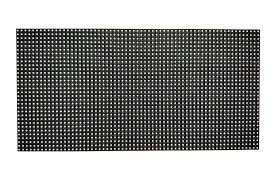
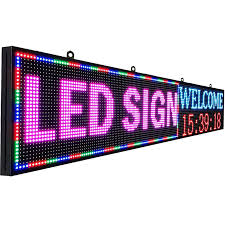
At its core, an LED display consists of numerous tiny light-emitting diodes that serve as individual pixels. These diodes emit light when electrically activated, producing vivid images with high contrast ratios and broad viewing angles. Unlike traditional Liquid Crystal Displays (LCDs), LED displays do not require backlighting, which grants superior efficiency and thinner form factors.
Key Technical Parameters
- Pixel Pitch: This denotes the distance in millimeters between the centers of adjacent LEDs. It directly influences resolution and viewing distance. For example, a pixel pitch of 1.2mm is often used for indoor fine-pitch displays, offering HD clarity at closer ranges.
- Brightness: Measured in nits (cd/m²), brightness determines visibility. Indoor displays typically have 800-1500 nits for optimal viewing without glare, whereas outdoor displays may exceed 5000 nits to combat sunlight.
- Refresh Rate: Expressed in Hertz (Hz), refresh rate impacts video smoothness. Professional-grade displays generally operate at a minimum of 1920Hz to prevent flickering during slow-motion capture or high-frame-rate video playback.
- Color Depth: A higher color depth (commonly 16-bit or greater) contributes to more precise color reproduction and smoother gradient transitions.
Types of LED Displays
Industry professionals primarily encounter several categories based on usage and LED technology:
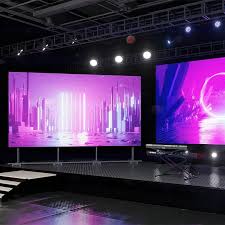
1. LED Video Walls: Modular in design, these large-format displays combine multiple panels seamlessly, popularly used in stadiums, concerts, and broadcasting studios.
2. Fine-Pitch Indoor LED Displays: Characterized by pixel pitches under 2.5mm, these displays offer exceptional image fidelity for close-range viewing in corporate and retail environments.
3. Outdoor LED Displays: Engineered for weather resistance and high brightness, they incorporate IP65-rated enclosures against dust and water ingress.
4. Transparent LED Displays: Featuring semi-transparent panels, these displays enable dynamic content integration on glass facades without obstructing natural light.
Manufacturing Process: From PCB to Final Assembly
The fabrication of high-quality LED displays involves meticulous attention to detail and precision engineering, governed by industry standards such as IPC-A-600 for PCB acceptance and ANSI C63.4 for electromagnetic compatibility.
- Step 1: PCB Fabrication
The substrate printed circuit board (PCB) is manufactured with a specific pad layout corresponding to the LEDs’ arrangement. High-TG (glass transition temperature) PCB materials are preferred to endure the thermal load during soldering.
- Step 2: LED Chip Selection and Binning
LED chips undergo stringent binning processes to classify them by luminosity, wavelength, forward voltage, and chromaticity. Consistency here is crucial for uniform display brightness and color.
- Step 3: SMT (Surface Mount Technology) Assembly
Automated pick-and-place machines precisely position the LEDs onto the PCB pads, followed by reflow soldering. Assembly lines utilize high-precision optical inspection systems to detect faulty solder joints.
- Step 4: Module Encapsulation and Optical Enhancement
Modules may incorporate diffusion layers, lenses, or black matrix coatings to enhance contrast and viewing angles. These optical elements adhere to Xicato and Cree LED manufacturer guidelines for optimal light distribution.
- Step 5: Cabinet Assembly
Multiple modules are integrated into a frame or cabinet with mechanical fixtures ensuring flatness and alignment within ±0.1 mm tolerances to guarantee seamless image rendering.
- Step 6: Rigorous Testing Procedures
Quality assurance involves aging tests (typically 72 hours at elevated temperatures), environmental stress tests for humidity and vibration, and electrical safety checks conforming to IEC 62368-1.
Emerging Innovations
Recent advances encompass Mini-LED and Micro-LED technologies, significantly reducing pixel pitch and enabling more compact, ultra-high-definition displays with superior color gamut and energy efficiency. Additionally, developments in quantum dot enhancement films (QDEF) further refine color accuracy and brightness.
Case Study: Stadium LED Display Upgrade
A European football stadium replaced its aging LED system with fine-pitch, weatherproof LED video walls featuring 3.9mm pixel pitch and 7000 nits brightness. The new installation leveraged advanced image processing chips achieving 3840Hz refresh rates, substantially improving broadcast quality and spectator experience. Maintenance costs declined due to modular design facilitating swift on-site repairs.
Industry Standards and Best Practices
Complying with recognized standards such as IEC 60529 for ingress protection and UL 8750 for LED safety ensures reliable and durable product performance. Adhering to a systematic maintenance regime—including regular calibration and cleaning—extends operational life and preserves visual accuracy.
Conclusion
The LED display industry combines precise engineering, rigorous quality control, and continuous innovation to meet the diverse demands of contemporary visualization applications. Understanding the intricate manufacturing processes, technical parameters, and material selections is indispensable for manufacturers, engineers, and end-users aiming to deploy reliable, high-performance LED display systems worldwide.
Investing in state-of-the-art equipment, sourcing certified components, and following industry standards underpin the success of LED display solutions in an ever-competitive global market.
References:
- International Electrotechnical Commission (IEC) Standards
- IPC-A-600 Acceptability of Printed Boards
- UL 8750 – Safety of LED Equipment
- Cree Inc., Xicato LED product specifications
- Wang, L. et al., "Advances in Micro-LED Display Technology," Journal of Display Technology, 2022.
- Smith, J., "Industry Trends in Outdoor LED Displays," Display Daily, 2023.













