

Advanced Manufacturing Techniques and Quality Standards in LED Display Production
In the rapidly evolving field of display technologies, LED displays have emerged as a dominant solution for versatile and high-quality visual presentation. As a professional LED display engineer with extensive experience in manufacturing and design, it is crucial to understand the advanced manufacturing processes, technical specifications, and quality standards that ensure superior product performance and longevity.
Fundamental Components and Design Considerations
LED displays consist primarily of three components: the LED chips, driver ICs, and the printed circuit board (PCB) assemblies. Selecting high-quality LED chips with consistent luminance, color purity, and reliability is fundamental. For example, high-grade SMD (Surface Mounted Device) LEDs such as the popular 3535 or 5050 form factors offer optimal brightness levels up to 1500-2000 nits, which is compliant with the industry requirements for both indoor and outdoor displays per IEC 62471 photobiological safety standards.
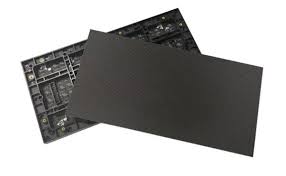
Driver ICs govern the precise current regulation to each LED pixel, preventing over-driving which can reduce lifespan. Advanced driver ICs like the MBI5026 and GS1908 support high refresh rates (~1920 Hz or above), critical for eliminating flicker in LED video walls, especially in broadcast environments. PCB design employs state-of-the-art multilayer setups with careful thermal management solutions including thermal vias and copper thickness engineering to dissipate heat efficiently.
Manufacturing Process and Assembly Precision
The fabrication of LED displays involves meticulous pick-and-place operations using robotics ensuring positional accuracy within ±0.05 mm to maintain uniform pixel pitch and color consistency. Reflow soldering is tightly controlled with profile monitoring adhering to J-STD-020 standards for component reliability. Post-soldering, automated optical inspection (AOI) and functional testing identify micro-defects before module assembly.
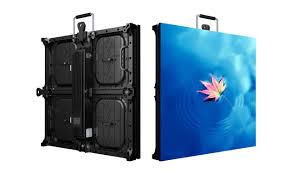
Modules are then assembled into cabinets with precise mechanical tolerances, typically ±0.1 mm alignment accuracy, to guarantee seamless image consistency across large-scale screens. Integration with control systems incorporates standardized communication protocols such as HUB75 or proprietary interfaces supporting 16-bit grayscale, enabling detailed color depth and smooth gradients.
Quality Assurance and Industry Standards
The reliability of LED displays is fundamentally linked to rigorous quality assurance protocols. Environmental stress testing including thermal cycling (-20°C to 60°C), humidity exposure (85% RH), and vibration tests simulate real-world conditions. Conformance to international standards such as UL 8750 for global electrical safety and RoHS compliance for hazardous substance restriction ensures safe operational credentials.
Long-term life expectancy, commonly projected at 100,000 hours at 50% brightness degradation (L50), is achieved through material selection and engineering design aimed at minimizing phosphor degradation and encapsulation yellowing. For critical applications in control rooms, transportation hubs, and advertising displays, consistent uniformity with less than 5% luminance deviation across the surface is mandatory.
Emerging Trends and Innovations
The LED display industry is dynamically evolving toward higher resolutions with pixel pitches shrinking below 1mm, a category often referred to as microLED displays. These displays demand precision manufacturing at the micron scale with hybrid bonding techniques enabling unprecedented pixel density and brightness levels exceeding 3000 nits for direct sunlight readability.
Furthermore, integration with Internet of Things (IoT) technologies allows real-time diagnostics and remote calibration, enhancing operational uptime and reducing maintenance costs. Innovations in flexible and transparent LED displays open doors to novel applications in architecture, automotive, and wearable technologies.
Conclusion
Mastering the manufacturing intricacies and adhering to stringent industry standards are pivotal in producing LED displays that meet the demands of modern applications. For manufacturers and professionals in the field, investing in advanced materials, precise assembly processes, and comprehensive testing not only elevates product quality but also ensures durability, safety, and customer satisfaction in a highly competitive market.
Authoritative references include IEC 62471 (Photobiological Safety), UL 8750 (LED Equipment Safety), J-STD-020 (Soldering Profile), and industry data from the International Electrotechnical Commission and leading LED component suppliers such as Cree, Epistar, and Nichia.













