

AI-Powered Digital Displays: Revolutionizing LED Screen Technology and Applications
In recent years, the integration of Artificial Intelligence (AI) with digital display technologies has propelled LED screens into a new era of innovation and functionality. AI-powered digital displays represent a fusion of cutting-edge hardware with intelligent software algorithms, enabling screens to operate more efficiently, deliver personalized content, and enhance user engagement across numerous industries. This article delves into the technical principles, practical applications, and future potential of AI-enhanced LED displays, providing an in-depth understanding for engineers, manufacturers, and digital signage professionals.
Fundamentals of AI Integration in LED Displays
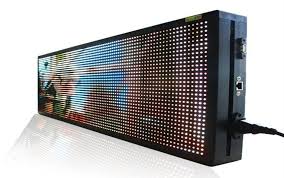
Traditional LED displays rely primarily on fixed hardware settings and pre-programmed content schedules. With AI incorporation, digital displays leverage machine learning algorithms and computer vision to adapt dynamically in real-time. For example, AI algorithms enable automatic adjustment of brightness, contrast, and color calibration based on ambient lighting and viewer distance, optimizing visual quality while minimizing power consumption. This adaptive control is achieved through sensor feedback systems combined with edge computing capabilities embedded in modern LED screen controllers.
From a technical perspective, AI-powered displays incorporate convolutional neural networks (CNNs) and reinforcement learning models to interpret environmental data. These models facilitate advanced features such as facial recognition for audience measurement, sentiment analysis, and demographic identification. Such data allows the display system to tailor advertisements or informational content according to the detected audience profile—maximizing advertisement impact and user relevance.
Technical Parameters and Design Considerations
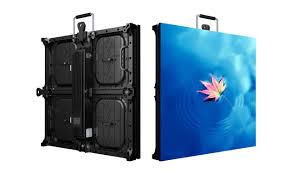
To achieve robust AI functionality, digital display manufacturers integrate specialized hardware components:
- High-performance processing units (e.g., AI chips like NVIDIA Jetson or Google Edge TPU): These chips perform real-time inferencing without significant latency.
- Sensors: Ambient light sensors, motion detectors, and RGB cameras provide essential input data for AI algorithms.
- Network Connectivity: 5G or ultra-fast Wi-Fi ensures seamless data transfer, supporting cloud-based AI analytics or edge computing.
- Display Resolution and Pixel Pitch: For AI-driven content personalization, pixel pitches between 1.2mm and 3mm are commonly preferred to offer clear, detailed images close to the viewer.
- Brightness Levels: AI-controlled brightness typically ranges between 800 and 2000 nits, with dynamic adjustment according to environmental conditions to balance visibility and energy efficiency.
Applications Across Key Industries
AI-powered digital displays are increasingly prevalent in retail, transportation hubs, healthcare, and smart cities:
- Retail: AI-driven kiosks and window displays analyze foot traffic and shopper demographics to display targeted ads and promotions. Johnson & Johnson’s recent deployment of intelligent LED displays demonstrated a 40% uplift in conversion rates by dynamically altering shopper messages based on time-of-day and weather conditions.
- Transportation: Airports and metro stations utilize AI-powered signage for real-time crowd management and personalized wayfinding. For example, in the Schiphol Airport (Netherlands), AI-enhanced LED displays reduce congestion by adapting directions to passenger flow.
- Healthcare: In medical environments, AI-enabled displays help streamline patient communication by recognizing individual patients and delivering customized information regarding appointments and health reminders, improving operational efficiency and patient satisfaction.
- Smart Cities: Urban displays employing AI provide dynamic public information, environmental alerts, and emergency notifications tailored to specific community needs.
Challenges and Industry Standards
Despite the transformative potential, AI-powered LED displays face challenges such as data privacy concerns, algorithmic biases, and hardware reliability in diverse environmental conditions. Complying with data protection regulations like GDPR is essential when employing audience analysis techniques involving facial recognition or behavioral tracking.
From an engineering standpoint, manufacturers adhere to standards such as the IEC 62368-1 for safety of audio/video equipment and the International Electrotechnical Commission’s IEC 61347 for LED control gear to guarantee product reliability and user safety. Additionally, IEC 61174 specifies requirements on image quality and luminance uniformity critical for AI-enabled displays’ visual performance.
Future Outlook and Innovation Trajectories
The convergence of AI and LED display technology is expected to accelerate with advances in 5G connectivity, edge AI processor efficiency, and improved machine learning models. Innovations such as self-healing displays that detect and correct pixel outages autonomously, ultra-high-definition microLED combined with AI-driven content curation, and augmented reality (AR) overlays are on the horizon.
AI-powered digital displays are not merely passive output devices but interactive intelligent systems capable of transforming user experience and operational efficiency across sectors. Their ability to analyze, learn, and respond ushers in a new paradigm for visual communication—one that is smarter, more adaptive, and significantly more impactful.
Conclusion
AI-powered digital displays embody the intersection of LED screen engineering and intelligent software innovation. By leveraging AI-driven adaptive control, personalized content delivery, and real-time data analytics, these displays mark a revolution in how information is conveyed and experienced globally. As this technology matures, it will undoubtedly play a pivotal role in shaping the future landscape of digital signage, advertising, and public communication.













