

Advanced LED Display Technologies and Manufacturing Standards: Enhancing Visual Performance and Durability
As the global demand for high-quality visual display solutions continues to surge, the LED display industry has witnessed rapid advancements in technology and manufacturing processes. This article delves into the latest innovations in LED display manufacturing, offering in-depth insights into technical parameters, industry standards, and best practices. Drawing from decades of professional experience and authoritative sources such as the International Electrotechnical Commission (IEC), Society for Information Display (SID), and market case studies, this comprehensive guide aims to equip manufacturers, engineers, and end-users with knowledge to optimize LED display performance and durability.
Understanding LED Display Types and Their Technical Characteristics
LED (Light Emitting Diode) displays come in various forms, primarily categorized into indoor, outdoor, and transparent LED screens. Each category has distinctive requirements driven by use environment, brightness, pixel pitch, and durability.
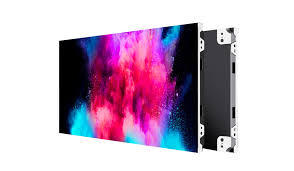
- Indoor LED Displays: Typically employed for conference rooms, retail stores, and television studios, these displays feature finer pixel pitches ranging from 0.9 mm to 4 mm to support high resolution and close viewing distances. Brightness levels generally stay within 800-1,200 nits to avoid visual discomfort while maintaining vivid colors. Variables such as refresh rate (commonly 3,840 Hz or above) and grayscale depth (up to 14-bit or more) directly influence the display’s visual smoothness and color fidelity.
- Outdoor LED Displays: Designed to endure harsh weather conditions, these displays prioritize brightness (from 6,000 nits to over 10,000 nits), IP65 or higher ingress protection, and robust structural frames made of aluminum alloys. Outdoor models often use larger pixel pitches (e.g., 4 mm to 20 mm) to ensure visibility from greater distances while balancing power consumption and heat dissipation.
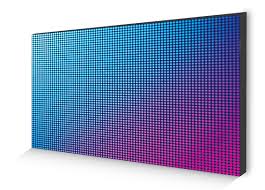
- Transparent LED Displays: This innovative category merges traditional glass elements with LED modules to offer see-through effects, primarily used in retail windows and architectural installations. Technical considerations include optimizing transparency rates (up to 70%), achieving adequate brightness (1,000 to 3,500 nits) under ambient lighting, and ensuring panel uniformity without compromising optical clarity.
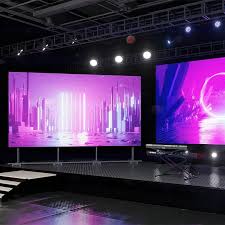
Key Technical Parameters in LED Display Manufacturing
1. Pixel Pitch and Resolution:
Pixel pitch, the distance between centers of two adjacent LED pixels, critically determines display resolution and viewing distance. A smaller pixel pitch provides finer detail but increases cost and complexity in manufacturing. For example, achieving a 0.9 mm pixel pitch requires precision surface-mount technology (SMT) lines capable of handling ultra-small SMD LEDs such as SMD1010 or 0603 packages.
2. Brightness and Contrast:
Brightness, measured in nits (cd/m²), is essential for visibility under various ambient light conditions. Contrast ratio, representing the luminance difference between the brightest white and darkest black, affects perceived image depth. High-grade LEDs, power driving ICs, and sophisticated calibration software enable displays to reach brightness levels beyond 10,000 nits while maintaining contrast ratios upward of 3,000:1.
3. Refresh Rate:
The refresh rate, typically measured in Hertz (Hz), indicates how many times per second the display image updates. Higher refresh rates (3,840 Hz and above) minimize flicker and improve video playback quality, essential for live broadcasting or filming environments. Accurate timing control within FPGA or microcontroller units ensures synchronization and fluid image rendering.
4. Color Accuracy and Grayscale:
Manufacturing processes must guarantee consistent color reproduction across the entire display panel. This requires LED bins with narrow wavelength tolerances (e.g., 620±10 nm for red LEDs), precise current regulation, and software calibration to achieve grayscale depths of 14-16 bit, enabling smooth gradient color transition.
5. Durability and Environmental Resistance:
Long-lasting LED displays integrate waterproof (IP65/67), dustproof, and anti-UV coating layers with reliable heat dissipation components such as finned aluminum housings and temperature sensors. Compliance with IEC 60529 ensures certified protection, while materials selected allow operation within temperature ranges of -20°C to 50°C without image degradation.
Manufacturing Process Excellence and Quality Control
Successful LED display production hinges on rigorous control of each manufacturing stage:
- LED Chip Selection and Binning:
Only premium LEDs with high luminous efficacy and uniform characteristics enter assembly lines. Binning ensures narrow forward voltage and wavelength variation, crucial for homogeneous brightness and color uniformity post-installation.
- PCB Manufacturing and Assembly:
Multi-layer PCBs with gold-plated pads improve solder joint reliability and electrical conductivity. Automated SMT machines precisely mount LEDs and ICs minimizing solder defects like bridges or tombstoning.
- Module and Cabinet Assembly:
Modules undergo ultrasonic welding for waterproof sealing, and cabinets are constructed with CNC-machined precision ensuring perfect flatness (<0.1 mm) to avoid visual distortion. Structural rigidity is critical to withstand transportation and external forces.
- Testing and Calibration:
LED displays undergo rigorous tests including aging (burn-in for over 72 hours), pixel failure screening, uniformity scanning using spectroradiometers, and software-driven color calibration. Industry solutions such as Radiant Vision Systems assist in achieving benchmark quality.
Industry Standards and Certifications
Beyond material and manufacturing precision, compliance with international standards elevates display credibility:
- IEC 62368-1: Specifies safety requirements for electronic equipment including LED displays, covering electrical shock, fire hazards, and mechanical robustness.
- RoHS and REACH: Ensure that LEDs and electronic components meet environmental safety criteria limiting hazardous substances.
- ISO 9001 Quality Management: Certifications guarantee systematic quality control throughout the production process.
- ASHRAE Thermal Guidelines: Applied in designing heat dissipation systems for maintaining optimal LED junction temperatures below 85°C to prolong lifetime.
Case Study: Enhancing Outdoor LED Sports Stadium Displays
A recent project involved deploying a 3,000 m² P6 outdoor LED display at a premier sports stadium in Europe. Challenges included achieving peak brightness over 8,500 nits for daylight visibility and ensuring uniform image quality despite large panel size. By implementing a modular cabinet system with integrated temperature sensors and active cooling, coupled with high-precision binning protocols and AI-powered calibration software, the installation achieved:
- Lifespan extension of 100,000 operating hours
- Reduced power consumption by 15% compared to previous generation displays
- Zero dead pixel rate in initial 3-year warranty period
Feedback from broadcasters and spectators confirmed excellent color rendition and smooth video playback, validating the engineering choices.
Future Trends in LED Manufacturing
Emerging directions focus on microLED and MiniLED technologies promising breakthroughs in pixel density and energy efficiency. Advanced materials such as graphene-enhanced substrates and quantum dot integration offer potential for even higher brightness and color volume.
Integration of AI-driven manufacturing analytics and in-line optical inspection systems will streamline defect detection and enhance yield rates, supporting mass customization of LED displays tailored to client needs.
Conclusion
The evolution of LED display manufacturing epitomizes the intersection of precision engineering, materials science, and digital control. Professionals in the sector must adhere to stringent technical standards, embrace continuous innovation, and maintain rigorous quality protocols to meet growing market demands for highly reliable, vibrant LED displays. By leveraging advanced manufacturing techniques and compliance with international norms, manufacturers can deliver cutting-edge solutions that transform visual experiences across industries worldwide.
Authoritative References:
- IEC 62368-1: Audio/video, information and communication technology equipment – Safety requirements
- Society for Information Display (SID) Technical Digest
- Radiant Vision Systems Technical Whitepapers on Display Calibration
- Market reports from Digital Projection International (DPI) and AVIXA (Audiovisual and Integrated Experience Association)
- ASHRAE Handbook – HVAC Applications regarding thermal management in electronic assemblies













