

Comprehensive Guide to LED Dis...
Comprehensive Guide to LED Display Manufacturing: Technology, Standards, and Industry Insights
The LED display industry has experienced monumental growth over the past decade, driven by continuous technological advancements and expanding applications in sectors ranging from advertising and sports arenas to transportation hubs and corporate environments. As a professional LED display engineer with extensive experience in design, manufacturing, and deployment, this article offers a comprehensive exploration of the critical aspects governing modern LED display production. Grounded in industry standards such as IEC 62368, ANSI/IES RP-27, and incorporating case studies from leading manufacturers, the article aims to provide authoritative, practical insights into LED display technologies, quality assurance protocols, and emerging trends that define the competitive landscape of this dynamic sector.
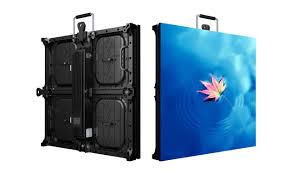
Understanding LED Display Technology and Its Core Components
At its essence, an LED display consists of an array of light-emitting diodes (LEDs) arranged to form pixels that collectively render images and videos. Key technical parameters that extensively impact display quality are pixel pitch, brightness, refresh rate, viewing angle, color accuracy, and reliability.
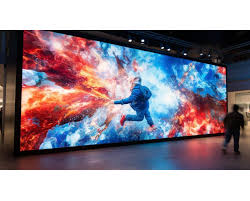
- Pixel Pitch: Measured in millimeters, pixel pitch represents the distance between the center of two adjacent pixels. Smaller pixel pitches (e.g., 0.9mm to 2.5mm) are typical for indoor fine-pitch LED displays requiring high resolution, while larger pitches (above 5mm) are used for outdoor screens where viewing distances are greater. For instance, Samsung's IF series LED display offers pixel pitches starting from 0.9mm, enabling ultra-high-definition rendering suitable for control rooms and broadcast studios.
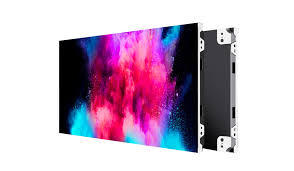
- Brightness: Outdoor LED displays require high brightness levels, usually in the range of 5,000 to over 10,000 nits, to ensure daylight visibility under direct sunlight. Indoor displays generally range from 800 to 1,200 nits. Recent advances in LED encapsulation and phosphor materials have enhanced luminous efficacy, thereby enabling better brightness levels without proportional increases in power consumption.
- Refresh Rate: A high refresh rate reduces flicker and motion blur, critical for video playback and live broadcasting. Contemporary LED panels commonly offer refresh rates of 3,000 Hz or higher, thereby facilitating flicker-free images suitable for HD video content and camera capture without interference or banding.
- Viewing Angle: Wide viewing angles are essential, especially for public displays. LED technology developments have enhanced horizontal and vertical viewing angles up to 160°–170°, facilitating consistent image quality across large audiences.
- Color Accuracy: Achieving precise color reproduction necessitates strict calibration and the use of advanced LED chips with consistent color binning. International standards such as IEC 61966-2-1 and sRGB color space are typically adopted in the manufacturing process to ensure uniformity and color fidelity.
Manufacturing Processes and Quality Assurance
Manufacturing LED displays involves intricate, multi-stage processes to ensure performance and durability:
1. LED Chip Selection and Binning
Selecting LEDs with uniform spectral characteristics and luminous intensities is crucial. LED binning processes classify LEDs by color wavelength and brightness to meet tight tolerances, minimizing color variation in the final display.
2. Module Assembly
LED chips are mounted on printed circuit boards (PCBs) with careful attention to thermal management and electrical interconnections. Automated pick-and-place machines improve accuracy and efficiency. The use of rigid-flex PCBs helps optimize display flexibility without sacrificing signal integrity.
3. Optical Lens Integration
Optical lenses mold the emitted light for optimal dispersion and enhanced brightness. Precision molding techniques, frequently using polycarbonate or PMMA materials, help in achieving consistent beam angles, critical for wide viewing uniformity.
4. Panel Encapsulation and Environmental Protection
Outdoor LED displays face harsh environmental conditions. Manufacturers employ IP65 or higher rated encapsulation techniques, including silicone potting and conformal coating, to protect LEDs and PCBs from moisture, dust, and chemical corrosion.
5. System Testing and Calibration
Comprehensive testing protocols, conforming to IEC 62368-1 (Safety Requirements for Audio/Video and Information Technology Equipment), cover electrical safety, thermal management, and electromagnetic compatibility (EMC). Calibration processes fine-tune color balance, grayscale, and brightness uniformity using spectroradiometers and colorimeters, ensuring visual consistency.
Industry Standards and Compliance
Compliance with international standards ensures LED displays meet global quality and safety benchmarks. Key standards include:
- IEC 62368-1: This safety standard supersedes previous standards by emphasizing hazard-based safety design, covering electrical, mechanical, thermal, and radiation safety related to LED displays.
- ANSI/IES RP-27: Provides guidelines for photobiological safety of lamps and lamp systems, crucial for ensuring displays do not pose risks such as retinal hazard from intense light sources.
- RoHS Directive: Restricts hazardous substances in electronic components, ensuring environmental sustainability in manufacturing.
- UL 2108 Standard: Covers low voltage lighting systems and is often referenced for indoor LED modules and power supplies.
Manufacturers also pursue certifications such as CE, FCC, and ETL to validate compliance with regional regulatory requirements.
Case Studies and Industry Applications
Several leading-edge installation projects highlight LED display technology capabilities:
- Times Square Media Tower, New York
Utilizing fully outdoor-rated, modular LED panels with pixel pitch of 8mm and brightness over 8,000 nits, this project underscores the importance of scalability, high brightness, and robustness in high-traffic urban environments.
- Olympic Broadcast Centres
High-refresh-rate, ultra-fine pitch (1.5mm or below) LED walls are deployed for live event broadcasting and control centers, showcasing precision, image clarity, and reliability under extensive operational hours.
- Smart Transportation Hubs
Dynamic wayfinding and information displays employ medium pixel pitch LED panels with IP65-rated sealing, tailored for varying ambient conditions and fast content updates utilizing networked control systems.
Emerging Trends in LED Display Manufacturing
The industry is rapidly evolving with innovations that enhance both functionality and sustainability:
- Mini-LED and Micro-LED Technologies
Offering significantly smaller pixel sizes, these technologies create ultra-high-definition displays with superior brightness and energy efficiency, suitable for premium TVs and VR applications.
- AI-Powered Calibration and Predictive Maintenance
Leveraging AI and machine learning for automated calibration and fault prediction improves display longevity and minimizes maintenance downtime.
- Flexible and Transparent LED Displays
Flexible substrates and transparent LEDs enable novel form factors, including curved or window-integrated displays, expanding application possibilities.
- Energy-Efficient Designs
Incorporating advanced driver ICs and power management, along with LEDs with higher luminous efficacy, reduces overall power consumption and environmental footprint.
Conclusion
The manufacturing of LED displays demands a fine balance of advanced technology, rigorous quality control, and adherence to international standards. By integrating deep expertise in LED binning, optical engineering, electrical safety, and environmental protection, manufacturers create robust displays that fulfill the diverse needs of global applications. Continuous innovation typified by mini-LED developments and AI-enhanced production processes further propels the industry forward, ensuring LED displays remain at the forefront of visual communication technology.
For industry professionals and stakeholders, understanding the complexities inherent in LED display manufacturing is vital for making informed decisions regarding product selection, design customization, and deployment strategies. By conforming to established standards and embracing technological advancements, the LED display sector is poised for sustainable growth and expanded international reach.
References:
- International Electrotechnical Commission (IEC) 62368-1: Audio/video, information and communication technology equipment – Safety requirements.
- American National Standards Institute/Illuminating Engineering Society (ANSI/IES) RP-27: Photobiological Safety of Lamps and Lamp Systems.
- Samsung Display Technical Documentation.
- UL Standards for LED Lighting Systems (UL 2108).
- ROHS Directive 2011/65/EU Regulations.
- Case studies from Leyard and Unilumin LED projects.
LED display manufacturing, pixel pitch, LED display brightness, LED display industry standards, LED technology innovations
Explore comprehensive insights into LED display manufacturing, covering critical technical parameters like pixel pitch, brightness, and refresh rate, alongside industry standards such as IEC 62368. Learn about manufacturing processes, quality assurance, and emerging trends in mini-LED and AI integration for advanced, reliable LED display solutions.













