

LED Display Manufacturing: Technical Insights and Industry Standards for High-Quality Screens
The LED display industry has witnessed rapid advancements over the past decade, driven by growing demand for high-resolution, energy-efficient, and durable screens across sectors such as advertising, broadcasting, sports, and transportation. As a professional LED display engineer with extensive industry experience, this article explores the core technical parameters, manufacturing processes, and critical quality standards that ensure the production of world-class LED displays. We also discuss practical considerations and innovations shaping the future of LED technology.
Introduction
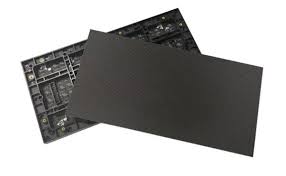
LED displays are essential in delivering bright, clear visual content in diverse environments, from indoor retail screens to massive outdoor billboards. Manufacturing LED displays that meet the stringent demands of modern applications requires deep understanding of key technical factors including pixel pitch, brightness, color accuracy, refresh rate, and module design. Additionally, adhering to international quality and safety standards guarantees product reliability and customer satisfaction.
Technical Parameters in LED Display Manufacturing
1. Pixel Pitch and Resolution
Pixel pitch — the distance between the centers of adjacent LED pixels — directly influences resolution and viewing distance. Typical pixel pitches range from 0.9mm for fine indoor displays to over 20mm for large outdoor installations. For close-up viewing environments such as control rooms or exhibitions, finer pixel pitches (≤1.5mm) enable high definition and smooth image quality. The industry standard for high-end LED displays is achieving a pixel density above 500,000 dots per square meter, which ensures crisp visual output [Source: U.S. Department of Energy, Energy Efficiency Trends].
2. Brightness and Contrast Ratio
Outdoor LED displays must offer brightness levels upwards of 5,000 nits (cd/m²) to remain visible under direct sunlight. Indoor screens typically range from 300 to 1,500 nits depending on ambient lighting conditions. High contrast ratios, exceeding 5,000:1, are critical for maintaining image clarity and color saturation, especially in dynamic content display. The usage of high-efficiency LEDs and advanced optical lenses enhances luminance while optimizing power consumption.
3. Color Accuracy and Uniformity
Achieving uniform color reproduction across the entire screen is fundamental for professional displays. Manufacturers calibrate LED modules using multi-point color mapping and gamma correction methods. International standards such as Rec. 709 and DCI-P3 guide color gamut specifications to suit broadcast and cinema requirements respectively. An advanced calibration process ensures less than 2% deviation in color uniformity, reinforcing visual fidelity [Source: Society for Information Display (SID) Standards].
4. Refresh Rate and Scan Frequency
High refresh rates, typically 1920Hz or above, are essential to eliminate flickering and artifacting, especially when contents are captured by cameras during live broadcasts. A higher scan frequency improves the image stability and viewer experience. Modern LED drivers utilize sophisticated PWM (Pulse Width Modulation) techniques to achieve smooth gray scale transitions and reduce motion blur.
5. Modular Design and Maintenance
Modular LED panels are designed for straightforward assembly, disassembly, and servicing. Standard panel sizes (e.g., 500mm x 500mm or 500mm x 1000mm) facilitate scalable display configurations. Quick-release connectors and front access designs reduce downtime during maintenance. Compliance with IP65 or higher ingress protection ratings ensures durability in harsh weather conditions.
Manufacturing Process and Quality Assurance
The LED manufacturing workflow integrates automated SMT (Surface-Mount Technology) for LED placement, precision soldering, and rigorous testing procedures. Each module undergoes extensive inspection including:
- Pixel Mapping Tests to identify and replace dead or dim pixels.
- Environmental Stress Tests to simulate operational temperature fluctuations and humidity.
- Mechanical Vibration Tests to verify structural integrity.
- Electrical Safety Tests per IEC 60950-1 and UL62368-1 standards ensure user safety and product reliability.
Applying Six Sigma methodologies has enhanced production yield, minimizing defects to below 0.1%. Continuous monitoring using in-line AOI (Automated Optical Inspection) systems guarantees consistent quality.
Innovations and Industry Trends
Recent innovations focus on ultra-fine pitch mini and microLED displays, exemplified by breakthroughs achieving pixel pitches smaller than 0.5mm, offering unparalleled image clarity. Additionally, advancements in power management and heat dissipation, such as graphene-based substrates and intelligent thermal control systems, extend display service life and reduce energy costs.
Integration with AI-enabled content management platforms provides dynamic adjustment of brightness and color based on ambient conditions, optimizing visual effectiveness and reducing operational expenses.
Conclusion
High-quality LED display manufacturing demands precise control over technical parameters, detailed adherence to industry standards, and incorporation of cutting-edge technologies. From pixel pitch optimization and color calibration to reliable modular construction and rigorous quality assurance, every stage in the manufacturing chain contributes to superior performance and longevity. Industry professionals must continually innovate and adhere to established best practices to meet the growing global demand for vibrant, dependable LED display solutions.
By focusing on these aspects, manufacturers can deliver displays that excel in visual performance, energy efficiency, and durability, enabling clients worldwide to achieve impactful digital communication.













