

Advanced Technologies and Industry Standards in LED Display Manufacturing
The LED display industry has experienced rapid transformation over recent decades, driven by advancements in semiconductor technology, materials science, and manufacturing processes. As a professional LED display engineer, I have witnessed firsthand how the convergence of innovation, rigorous quality control, and adherence to global standards has positioned LED screens as a premier choice for diverse applications such as digital signage, broadcasting, sports arenas, and corporate environments.
Technical Foundations of LED Displays
At the core of an LED display lies the Light Emitting Diode, a semiconductor device that emits light when electrically stimulated. Modern full-color LED displays typically employ a triad of red, green, and blue LEDs per pixel, arranged in configurations such as surface-mount technology (SMT) or chip-on-board (COB). The choice affects visual performance, cost efficiency, and reliability.
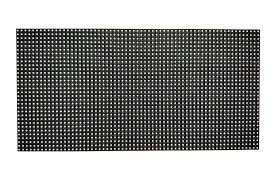
Critical technical specifications that define the quality of LED displays include:
- Pixel Pitch: This defines the distance between the centers of adjacent LED pixels, usually measured in millimeters. Smaller pixel pitches (e.g., 1.2 mm) offer superior resolution suitable for close-viewing environments, while larger pitches (e.g., 10 mm+) suit large venues where viewers are farther away. According to the International Committee for Display Metrology (ICDM), pixel pitch is a key metric for comparing display clarity.
- Brightness: Measured in nits (cd/m²), it ranges commonly from 800 nits for indoor displays up to 6,000 nits or more for outdoor units. High brightness is essential for maintaining visibility under direct sunlight or bright ambient light conditions.
- Refresh Rate: Modern displays target refresh rates of at least 1920 Hz, reducing flicker and ensuring smooth motion reproduction, especially critical for video playback and broadcasting applications.
- Color Gamut and Accuracy: Using standards such as ITU-R BT.709 or BT.2020, manufacturers calibrate displays for accurate color representation, which is vital for media production environments and advertising.
Manufacturing Processes and Quality Assurance
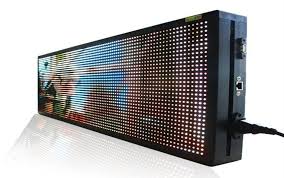
LED display manufacturing combines precision electronics assembly with advanced optical engineering. Beginning with rigorous wafer-level testing of LEDs to select only those meeting chromatic and luminance tolerances, manufacturers then proceed with PCB assembly, module fabrication, and system integration.
Surface Mount Device (SMD) technology remains the prevalent manufacturing method, favored for its miniaturization and efficiency. However, the emergence of COB technology allows densely packed LEDs directly bonded onto a substrate, enhancing thermal management and display uniformity.
Quality control protocols adhere to internationally accepted standards, including:
- ISO 9001: Ensuring consistent product quality management systems.
- IEC 62368-1: Safety requirements for audio/video and information communication technology equipment.
- RoHS Directive: Limiting the use of hazardous substances in electronics.
Manufacturers also execute in-process inspections—such as automated optical inspection (AOI) and electrical testing—to detect variances or defects early. Final product testing includes environmental stress screenings (ESS), validating reliability under varying temperature and humidity conditions.
Trends and Innovations
The LED industry is evolving through the integration of intelligent control systems and modular panel designs. Current innovations include:
- Mini-LED and Micro-LED Technologies: Offering superior brightness, contrast, and energy efficiency by utilizing smaller LED chips, enabling ultra-high-resolution displays with HDR capabilities.
- Flexible and Transparent LED Displays: Incorporating pliable substrates to deploy displays on curved surfaces or providing partial transparency for architectural integration.
- AI and IoT-Enabled Displays: Introducing smart diagnostics and remote management, reducing downtime while enhancing user experience.
Case Studies Demonstrating Best Practices
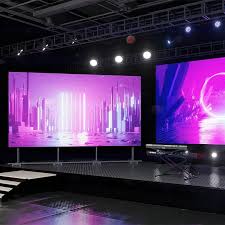
A recent project involved fabricating a 500-square meter outdoor LED display with 6 mm pixel pitch, achieving 7,000 nits brightness and 3840 Hz refresh rate. Adhering to IEC safety standards and employing advanced COB modules enabled the client to deploy this display in a high-traffic urban environment with guaranteed durability and visual impact.
Another case entailed producing an indoor broadcast studio display with a 1.5 mm pixel pitch and 120% NTSC color gamut coverage. Accurate tuning per ITU-R BT.2020 facilitated true-to-life color reproduction critical for live television.
Conclusion
In a global LED display marketplace where quality, innovation, and adherence to standards determine success, understanding the nuances of design, manufacturing, and testing is paramount. Professional expertise ensures that end-users receive displays that not only meet technical parameters but also provide reliability and superior aesthetic experiences across diverse applications.
By integrating cutting-edge technologies, complying with international standards, and optimizing manufacturing workflows, the LED display industry continues to expand its capabilities, setting new benchmarks for visual communication.













