

Comprehensive Guide to LED Display Manufacturing: Technical Insights and Industry Standards
LED display technology has become a cornerstone in modern visual communication, spanning applications from digital billboards to high-resolution video walls in stadiums and corporate venues. As an experienced LED display engineer, this article delves deeply into the manufacturing process, technical parameters, quality control, and industry standards that govern the production of high-performance LED screens.
Understanding LED display manufacturing begins with the selection of high-quality components. The core element, the LED lamp, varies mainly across DIP (Dual In-line Package), SMD (Surface Mounted Device), and COB (Chip on Board) technologies. Among these, SMD LEDs dominate the market due to their versatility, narrower pixel pitch options, and superior color uniformity. Industry-standard specifications dictate luminous intensity for the LEDs, typically ranging from 6000 to 18000 mcd, ensuring brightness levels suitable for both indoor and outdoor environments (International Electrotechnical Commission IEC 62031).
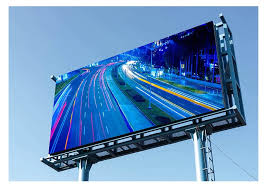
Pixel pitch plays a critical role in image clarity and resolution. Smaller pixel pitches—measured in millimeters—correlate to higher resolution displays but increase production complexity and cost. For example, a 1.2mm pixel pitch LED screen offers ultra-fine resolution ideal for close-viewing indoor applications, while 10-20mm pixel pitches are common for large-format outdoor displays viewed from a distance (Society for Information Display, SID).
The manufacturing process integrates precise PCB (Printed Circuit Board) design, where tightly controlled trace routing minimizes electrical interference and heat dissipation challenges. Thermal management is a significant consideration; effective heat sinks and airflow management prevent LED degradation and enhance lifespan, often surpassing 100,000 operational hours at 75% brightness. Manufacturers comply with RoHS (Restriction of Hazardous Substances) for environmental safety and IPC standards for PCB assembly reliability.
Quality control protocols in LED display production are rigorous. Automated optical inspection (AOI) systems verify coil soldering, LED placement accuracy, and color uniformity. Calibration using photometric equipment measures luminance, chromaticity coordinates, and contrast ratio—parameters essential for maintaining the display’s visual fidelity. The contrast ratio is typically above 3000:1 for direct-view LED displays, ensuring vivid image reproduction even in bright ambient conditions.
A robust LED display system also requires sophisticated control electronics. Driving ICs (Integrated Circuits) are selected based on refresh rate capabilities and grayscale control. High refresh rates, typically above 1920Hz, prevent flicker and image artifacts, critical for broadcast and live event applications. Grayscale levels of at least 14 bits provide smooth color transitions and gradient reproduction.
Integration with software solutions enables real-time content management, diagnostics, and network control. Open protocols such as DVI, HDMI, and proprietary asynchronous control systems facilitate seamless synchronization across multi-module configurations, allowing for large, scalable video walls.
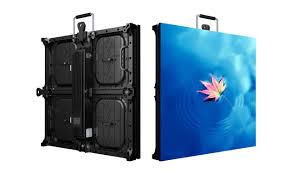
Case studies from industry leaders like Samsung and Leyard exemplify state-of-the-art practices, emphasizing modular design for ease of installation and maintenance. Modular cabinets, built with die-cast aluminum frames, provide both structural integrity and simplified access for repair, aligning with the SMPTE (Society of Motion Picture and Television Engineers) standards for display assembly.
In conclusion, manufacturing a world-class LED display demands not only precision engineering and adherence to international standards but also an in-depth understanding of optical, electronic, and mechanical integration. Adhering to these principles ensures high reliability, vibrant image quality, and longevity essential for the diverse applications of LED display technology worldwide.













