

Advanced Technologies and Quality Standards in LED LCD Screen Manufacturing
The manufacturing of LED LCD screens represents a sophisticated convergence of cutting-edge technology, stringent quality control, and innovative material science. As the demand for vibrant displays with high resolution, energy efficiency, and durability grows worldwide, manufacturers must adhere to advanced industry standards and utilize precise engineering techniques to meet and exceed consumer expectations.
LED LCD screens combine Liquid Crystal Display (LCD) technology with Light Emitting Diode (LED) backlighting to produce vivid, energy-efficient visual output. The fundamental structure involves a liquid crystal layer sandwiched between polarizing filters and glass substrates, with LED backlight units (BLUs) providing uniform illumination. The key to exceptional display quality lies in the integration of high-quality components, precise assembly processes, and rigorous testing protocols.
Technical Parameters and Engineering Considerations
A typical modern LED LCD display boasts several critical technical specifications:
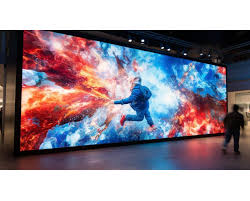
- Resolution: Full HD (1920x1080 pixels) is commonplace, with 4K UHD (3840x2160 pixels) increasingly prevalent in premium segments. Higher pixel density enhances image sharpness and detail.
- Brightness: Typical brightness levels range from 250 to 1000 nits, depending on usage scenarios. High Dynamic Range (HDR) support demands brightness peaks above 600 nits.
- Contrast Ratio: An essential metric for image clarity, the static contrast ratio in quality displays typically exceeds 1000:1. Advanced local dimming backlights can further enhance this ratio.
- Color Gamut: Utilizing LED backlights helps achieve wider color spaces such as DCI-P3 or Adobe RGB, essential for professional-grade displays and accurate color reproduction.
- Response Time: For applications involving motion video or gaming, response times under 10 milliseconds are vital to reduce motion blur.
Manufacturing Process Innovations
The manufacturing workflow stresses precision and minimized contamination. The liquid crystal materials are highly sensitive to impurities; thus, cleanroom environments adhering to ISO Class 5 or better are standard. Key manufacturing phases include:
- Substrate Preparation: Using ultra-clear glass substrates with anti-reflective coatings.
- Thin Film Transistor (TFT) Layer Fabrication: High-quality amorphous silicon or oxide TFT layers are deposited by photolithography to control pixel states accurately.
- Liquid Crystal Injection and Alignment: The liquid crystal mixture is injected evenly within micron-level cell gaps between substrates, then aligned through advanced polymer coating techniques ensuring uniform orientation.
- Backlight Unit Assembly: LED arrays must be carefully selected for uniform luminance and color temperature, employing diffuser plates and prism sheets to achieve consistent light distribution.
Quality Assurance and Industry Regulations
Systematic quality assurance is achieved through adherence to international standards, such as IEC 62368-1 for safety and ISO 9001 for overall quality management. Manufacturers conduct extensive testing protocols including:
- Electro-Optical Testing: Verifying brightness, contrast, color accuracy, and uniformity.
- Environmental Stress Testing: Assessing performance under temperature extremes, humidity, and mechanical shock conditions.
- Reliability Testing: Ensuring lifespan and reducing screen burn-in by evaluating LED degradation and liquid crystal stability.
Incorporating advanced automation into inspection processes reduces human error and increases throughput. Examples include machine vision systems for detecting pixel defects and spectral analyzers for color calibration.
Case Example and Industry Insight
A notable example comes from Samsung Display’s implementation of Quantum Dot LED backlighting (QLED) integrated with LCD technology. This hybrid approach optimizes color volume and brightness, meeting the DLPA (Display Lighting Performance Alliance) standards and pushing boundaries in consumer television markets.
Industry data from the International Display Manufacturing Association (IDMA) reveals trends toward thinner panel profiles and adaptive refresh rates, integrating AI algorithms to balance power consumption and performance dynamically.
Conclusion
Producing high-quality LED LCD screens requires a harmonious blend of advanced material science, precision engineering, and strict adherence to international standards. The continuous evolution of LED backlighting techniques and liquid crystal technologies enhances display performance, energy efficiency, and longevity. Manufacturers who prioritize robust quality assurance systems and incorporate innovative production methods will remain competitive in the global display market.
SEO Keywords: LED LCD manufacturing, display technology standards, LED backlighting, liquid crystal display quality, screen resolution engineering
SEO Description: Explore advanced technologies and quality standards in LED LCD screen manufacturing, including technical specifications, manufacturing processes, and industry best practices for superior display performance.













