

Advanced Techniques and Best Practices in LED Display Manufacturing for High-Quality Screen Production
In the rapidly evolving domain of LED display technology, achieving superior product quality and operational reliability depends heavily on informed manufacturing processes and advanced engineering practices. With the increasing demand for LED displays across industries—ranging from commercial advertising to stadium-grade large formats—manufacturers must adopt rigorous standards and cutting-edge techniques to maintain competitive advantage.
Understanding LED Display Manufacturing Fundamentals
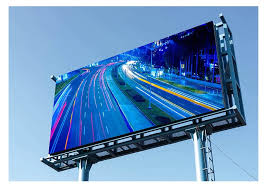
At its core, the production of LED displays incorporates several critical stages: substrate preparation, LED chip placement, encapsulation, driver circuit integration, and module assembly. The precise control of each step influences the final screen’s brightness, color accuracy, lifespan, and energy efficiency.
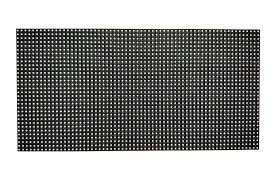
The LED chips themselves, typically made from gallium nitride (GaN) or indium gallium nitride (InGaN), must meet stringent quality criteria. High-quality chips offer superior luminous efficacy, commonly exceeding 150 lumens per watt, enabling displays to achieve brightness levels above 1,500 nits—a necessity for outdoor visibility conforming to industry standards such as IEC 62717.
Precision in Assembly and Calibration
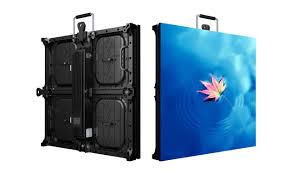
The placement accuracy of LED chips on printed circuit boards (PCBs) is paramount. Modern pick-and-place machinery combined with machine vision algorithms ensures positional tolerances within ±10 microns, directly affecting uniformity and pixel pitch quality. Pixel pitch, often ranging from 0.9 mm for fine-pitch indoor displays to 10 mm or more for outdoor applications, determines visual clarity and viewing distance.
Encapsulation using silicone or epoxy helps protect the LEDs from moisture and mechanical stress. The refractive index of encapsulants must be optimized (~1.4) to maximize light extraction efficiency. Furthermore, using tempered glass or optical films enhances contrast ratios and reduces glare, abiding by Military Standard MIL-STD-810G for durability in harsh environments.
Thermal Management and Power Efficiency
Thermal dissipation is a critical factor in LED display longevity. Excessive heat can degrade LED performance and reduce lifespan. Incorporating aluminum-based PCBs with thermal conductivity exceeding 2.0 W/m·K, alongside active or passive heat sinks, mitigates heat accumulation. Intelligent current-driving circuits, often employing constant current drivers with efficiencies above 90%, help maintain consistent brightness while minimizing energy consumption.
Energy efficiency aligns with global regulations like the Energy Star program and promotes sustainability. Studies indicate that incorporating pulse-width modulation (PWM) dimming and dynamic refresh rates reduces power consumption by up to 30% without sacrificing display integrity.
Rigorous Testing Protocols
Conformance to international standards such as IEC 62087 (methods of measurement for power consumption) and UL 8750 (safety standard for LED equipment) ensures compliance and safety. Manufacturers routinely perform burn-in tests lasting 72 hours at elevated temperatures (~85°C) to identify premature failures.
Color calibration, through techniques leveraging spectroradiometers, guarantees color gamut coverage in line with Rec. 709 or DCI-P3 standards for vivid imagery. Uniformity testing ensures luminance variance remains under 5%, crucial for professional-grade displays intended for broadcasting or control rooms.
Industry Case Studies and Practical Insights
Leading companies like Samsung and LG have integrated quantum dot enhancement films (QDEF) in their latest LED-backlit LCD products to extend color performance, while TrendForce reports that the Mini LED market is growing at a CAGR exceeding 20%, highlighting the shift towards higher definition and smaller pixel size solutions.
A practical case involved deploying a stadium LED display with a 6 mm pixel pitch and brightness exceeding 5,000 nits. By employing robust thermal management and high IP65-rated sealing, the display maintained optimal performance across temperature ranges from -20°C to 50°C, confirming the necessity of environmental considerations in engineering design.
Future Trends and Opportunities
The transition towards Micro LED technology promises even greater improvements in pixel density, power efficiency, and durability, though manufacturing complexity remains challenging. Advances in automation, AI-assisted quality control, and scalable flexible substrates are transforming production methodologies.
Manufacturers should prioritize integrating Industry 4.0 paradigms to leverage data-driven predictive maintenance and optimize yield. Continued adherence to rigorous standards combined with innovative materials and process engineering will be essential in meeting the demands of increasingly sophisticated global markets.
Conclusion
Successful LED display manufacturing hinges on a comprehensive understanding of materials science, precision engineering, and robust quality assurance aligned with globally recognized standards. By maintaining strict control over production parameters—such as chip selection, thermal design, optical calibration, and environmental sealing—manufacturers can deliver durable, high-performance LED screens that meet the diverse application requirements worldwide.
References
- IEC 62717: LED Modules for General Lighting – Performance Requirements
- IEC 62087: Methods of Measurement for Power Consumption of Audio, Video and Related Equipment
- UL 8750: Standard for Safety of Light Emitting Diode Equipment for Use in Lighting Products
- TrendForce Market Research Reports on LED and Mini LED Industry Trends, 2023
- Samsung Display Whitepapers on Quantum Dot and Mini LED Technologies













