

Advanced Techniques and Best Practices in LED Display Manufacturing for Enhanced Performance
LED display technology has become a cornerstone in modern digital visualization, playing a critical role across various sectors including advertising, broadcasting, transportation, and entertainment. As an industry expert with extensive experience in LED and LCD display manufacturing, this article delves into the essential manufacturing techniques and best practices that ensure high performance, durability, and reliability of LED displays, while meeting stringent international industry standards.
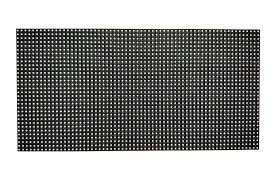
LED displays are composed of millions of light-emitting diodes arranged in a matrix, where each pixel can be controlled individually to generate vibrant images. The manufacturing process encompasses multiple stages such as LED chip selection, module assembly, circuit design, calibration, and final quality testing. A meticulously controlled process flow and adherence to technical parameters are vital for producing displays that deliver superior image quality and long operational life.
Key Manufacturing Considerations
1. LED Chip Quality and Bin Sorting: The foundation of any LED display lies in the quality of its semiconductor chips. Utilizing high-grade InGaN (Indium Gallium Nitride) and AlGaInP (Aluminum Gallium Indium Phosphide) chips for blue/green and red LEDs respectively ensures optimal luminous efficacy. Bin sorting, which categorizes LEDs by brightness, wavelength, and forward voltage, is critical to maintaining color uniformity across the display. According to the industry guideline JEDEC JESD22-A104C, precise binning minimizes visual color shifts and extends display lifespan.
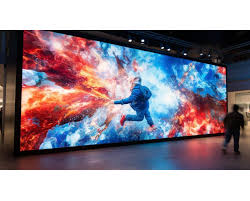
2. Pixel Pitch and Resolution: The pixel pitch, defined as the distance between two adjacent LED pixel centers, heavily influences resolution and viewing distance. Common pixel pitches range from 0.9mm for fine-pitch indoor displays up to 20mm or greater for outdoor applications. For example, a 1.2mm pixel pitch LED display achieves 4K resolution at close viewing distances, suitable for control rooms and broadcast studios. Industry standard IEC 62368-1 demands specific luminous intensity and uniformity thresholds depending on application and ambient light conditions.
3. Thermal Management: LED lifespan and brightness are sensitive to operating temperature. Effective thermal dissipation design — employing heat sinks, thermally conductive substrates such as aluminum clad PCBs, and active cooling mechanisms — is essential. Data from case studies in the Journal of Solid-State Lighting demonstrate that reducing junction temperature from 85°C to 60°C can improve LED longevity by over 50%. The use of conformal coatings also protects electronic components from moisture and environmental contaminants, complying with IP-rating standards like IP65 for outdoor protection.
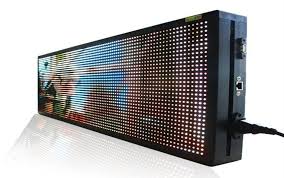
4. PCB and Circuit Design: High-quality Printed Circuit Boards (PCBs) with multi-layer configurations facilitate stable electrical performance and noise immunity. Precision laser soldering techniques ensure reliable connections, reducing thermal resistance. Controlled impedance and signal integrity become paramount as pixel pitch shrinks, to avoid image flicker and data transmission errors.
5. Calibration and Software Compensation: Post-assembly calibration using automated photometric equipment helps achieve luminance uniformity within ±5%, crucial for seamless image display. Gamma correction and color calibration compensate for manufacturing inconsistencies and environmental effects. Advanced calibration software utilizes SPI (Serial Peripheral Interface) or DVI (Digital Visual Interface) protocols to modulate brightness and color temperature in real time according to ambient light sensors.
6. Quality Control and Testing Procedures: Comprehensive testing protocols conform to industry standards such as ANSI/IES RP-27 for solid-state lighting and IEC 60529 for ingress protection. Tests include pixel defect rate analysis, burn-in testing spanning over 72 hours to detect premature failures, and vibration/shock tests ensuring mechanical robustness. Spectroradiometric measurements verify color coordinates fall within the CIE 1931 color space accuracy limits.
Practical Applications and Industry Impact
Modern LED display solutions have revolutionized the retail and advertising industry by enabling dynamic content with HDR capabilities reaching peak brightness above 3000 nits for outdoor visibility in sunlight. The LED video wall market size is projected to grow significantly due to these robust manufacturing improvements. Notably, industry leaders such as Samsung and Leyard utilize these best practices to achieve displays with contrast ratios exceeding 5000:1 and refresh rates above 3840Hz, eliminating flicker in broadcast applications.
Conclusion
In summary, excellence in LED display manufacturing demands a holistic approach integrating high-quality semiconductor materials, precision engineering, thermal management, and stringent quality control. Adopting international standards and leveraging technological advancements ensures the production of LED displays that deliver vivid colors, durability, and consistent performance in diverse environments. This rigorous attention to manufacturing detail not only enhances user experience but also drives innovation and expansion in the LED display industry globally.













