

Advanced LED Display Manufacturing: Technical Insights and Industry Standards
In the rapidly evolving landscape of display technology, LED (Light Emitting Diode) displays have emerged as the cornerstone of visual communication across various sectors including advertising, broadcast, transportation, and entertainment. As a seasoned LED display engineer with extensive expertise in LED and LCD manufacturing, this article delves into the critical technical parameters, manufacturing processes, and industry standards that govern quality and performance in LED displays.
Fundamentals of LED Display Technology
At the core, an LED display consists of numerous diodes arranged to form pixels that emit light when an electric current passes through. Unlike LCDs, LEDs provide self-illumination, offering superior brightness, contrast, and energy efficiency. Key technical parameters include pixel pitch, brightness levels, color accuracy, viewing angles, and refresh rates.
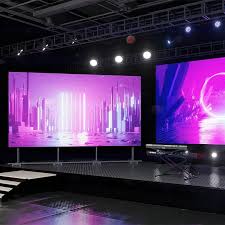
- Pixel Pitch: Defined as the distance between the centers of two adjacent pixels, pixel pitch directly impacts resolution and viewing distance. Smaller pixel pitches (e.g., 1.2 mm to 2.5 mm) are preferred for indoor applications requiring high resolution, such as control rooms and broadcast studios, while larger pitches (e.g., 10 mm or more) suit outdoor advertising where viewers are further away.
- Brightness: Measured in nits (cd/m²), the brightness levels for indoor LED displays generally range from 800 to 1500 nits, whereas outdoor displays require higher brightness, often exceeding 5000 nits, to ensure visibility under direct sunlight. This is supported by adhering to standards such as the Illuminating Engineering Society (IES) guidelines.
Manufacturing Process and Quality Control
The manufacturing process involves multiple stages: from substrate preparation, die bonding, phosphor coating, encapsulation, to final assembly. High precision machinery ensures uniformity and reliability. Specialized processes such as COB (Chip on Board) technology enable higher pixel density and enhance thermal dissipation.
Quality control is governed by internationally recognized standards, including ISO 9001 for quality management and IPC-A-610 for electronic assembly workmanship. Electrical and optical testing such as luminance uniformity, color calibration, hue consistency, and environmental stress testing (temperature, humidity, vibration) assure product durability and performance integrity.
Industry Standards and Compliance
Compliance with industry standards guarantees compatibility, safety, and longevity. International standards like IEC 62368-1 for safety requirements, RoHS (Restriction of Hazardous Substances) for environmental compliance, and UL certifications ensure product reliability and environmental responsibility.
Technical Innovations and Future Directions
Recent innovations include MicroLED technology, offering improved brightness, contrast ratios beyond 1,000,000:1, and reduced energy consumption by approximately 30-50% compared to conventional LEDs. Flexible and transparent LED panels expand the design possibilities for architectural integration and wearable displays.
Case Study: Ultra-High Definition LED Display for Control Rooms
A recent project involved manufacturing a 4K ultra-high definition LED display with a 1.2 mm pixel pitch for a major broadcast control room. The display featured brightness of 1200 nits, a refresh rate of 3840 Hz ensuring flicker-free operation on camera, and was engineered using COB technology for enhanced reliability. Rigorous calibration and testing ensured color uniformity within Delta E< 2, meeting the stringent broadcast standards (SMPTE RP 431-2).
Conclusion
The LED display industry’s continuous technological advancements underscore the importance of precision manufacturing backed by stringent quality controls and adherence to global standards. By understanding and optimizing key technical parameters such as pixel pitch, brightness, and refresh rate, manufacturers can deliver LED displays that meet diverse operational requirements internationally. Advanced manufacturing techniques and compliance with regulatory frameworks ensure products that combine high performance, durability, and environmental sustainability.
References:
- Illuminating Engineering Society (IES) Lighting Standards
- SMPTE RP 431-2: High Definition Electronic Production Display Systems
- IEC 62368-1: Audio/Video, Information and Communication Technology Equipment Safety
- IPC-A-610: Acceptability of Electronic Assemblies
- UL Standards for Display Products













