

Advanced Technologies and Quality Control in LED LCD Screen Manufacturing
In the evolving landscape of display technology, LED LCD screens have emerged as a cornerstone for applications ranging from consumer electronics to professional signage. As a seasoned LED display engineer with extensive experience in manufacturing and quality assurance, I will provide an authoritative overview of the critical technologies, production methodologies, and quality control measures that define industry-leading LED LCD screen manufacturing.
Core Technology Background
LED LCD screens combine liquid crystal display (LCD) technology with light-emitting diode (LED) backlighting to improve image quality, color accuracy, and energy efficiency. The transition from traditional cold cathode fluorescent lamp (CCFL) backlighting to LED backlighting marked a significant advancement, enabling thinner panels, longer lifespan, and enhanced brightness uniformity. According to the Society for Information Display (SID), LED backlit LCDs are now the dominant technology due to these substantial benefits (SID, 2022).
Manufacturing Process Overview
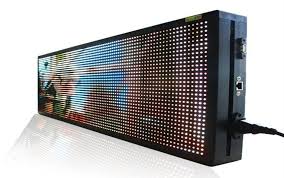
The manufacturing process for LED LCD screens involves several key stages: substrate preparation, TFT array fabrication, liquid crystal cell assembly, backlight module integration, and final module testing. Each step employs precision engineering techniques and stringent quality control:
- Substrate and TFT Array Fabrication: High-quality glass substrates undergo deposition of amorphous silicon or low-temperature polysilicon thin-film transistors (TFTs), essential for pixel switching and screen resolution control. Advanced photolithography and etching techniques ensure tight tolerances, typically achieving pixel pitches as small as 0.1 mm for Ultra HD displays.
- Liquid Crystal Cell Assembly: The liquid crystals are sandwiched between the TFT array and an upper glass panel with precise gap control (commonly 3–5 microns) critical to electro-optical performance. Uniform alignment layers guarantee consistent response times and viewing angles, adhering to International Electrotechnical Commission (IEC) standards IEC 62087 and IEC 62368 for electrical safety and display performance.
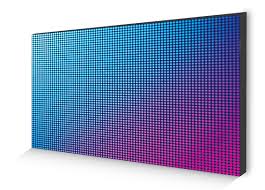
- Backlight Module Integration: The LED backlight module commonly uses edge-lit or direct-lit architectures. Edge-lit designs offer thinner form factors with reflective light guide plates, while direct-lit arrays provide superior brightness uniformity and local dimming capabilities. Manufacturers often deploy InGaN blue LEDs combined with phosphor coatings to achieve wide color gamuts, typically targeting the DCI-P3 color space with luminance exceeding 500 cd/m² for commercial-grade displays.
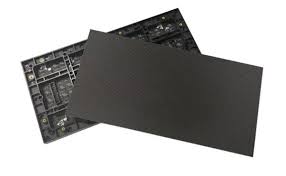
- Module Assembly and Encapsulation: Advanced cleanroom environments (ISO Class 5 or better) mitigate particulate contamination. Optical bonding using optically clear adhesives reduces internal reflections and improves robustness. Robust electrical connections via flexible printed circuits (FPC) and integrated driver ICs enable high refresh rates and low power consumption.
Quality Assurance and Industry Benchmarks
Quality control is paramount, involving inline inspection and end-of-line testing. Commonly deployed test methodologies include:
- Uniformity Testing: Utilizes photometric instruments to verify brightness and color consistency across the panel, ensuring delta E values under 3 for color accuracy.
- Environmental Stress Testing: Compliance with standards like MIL-STD-810G verifies resistance to temperature cycles, humidity, vibration, and shock — critical for industrial and outdoor signage applications.
- Lifetime and Reliability Testing: LED backlight modules are tested for Mean Time Between Failures (MTBF) often exceeding 50,000 hours, validated through accelerated aging tests.
- Electromagnetic Compatibility (EMC): Screens must meet EMC directives and FCC Part 15 to prevent interference, requiring comprehensive shielding and filtering during design.
Recent Innovations and Trends
The integration of Mini-LED and Micro-LED technologies is pushing the envelope, promising even greater contrast ratios, localized dimming zones, and energy savings. For example, recent Mini-LED LCD TVs offer over 2,000 dimming zones, resulting in contrast ratios above 1,000,000:1, blazing new trails in HDR performance. Furthermore, adaptive refresh rates and wide color volume technologies align with HDR10+ and Dolby Vision standards, enhancing consumer and professional viewing experiences.
Environmental and Sustainability Considerations
Modern manufacturing processes emphasize sustainability, incorporating lead-free soldering (RoHS compliance), efficient recycling of glass substrates, and energy-saving production lines. The industry is also adopting environmentally benign phosphors and exploring flexible substrates for next-generation displays.
Conclusion
Expertise in LED LCD screen manufacturing merges materials science, electrical engineering, precision manufacturing, and rigorous quality control. This multidisciplinary approach ensures high-performance, durable, and energy-efficient displays capable of meeting diverse industry requirements. Adhering strictly to international standards and continuously adopting emerging technologies are vital for maintaining competitive advantage and delivering superior visual experiences worldwide.
For practitioners and industry stakeholders, staying abreast of these advancements and maintaining comprehensive quality assurance frameworks is indispensable for success in the competitive LED display market.
References:
- Society for Information Display (SID), 2022, "LED Backlight Technologies: Trends and Innovations"
- IEC 62087 and IEC 62368 standards, International Electrotechnical Commission
- MIL-STD-810G, U.S. Department of Defense Test Method Standard













