

Advanced Manufacturing Techniques and Quality Control in LED Display Production
In today’s rapidly evolving digital display industry, LED technology has become the cornerstone for high-performance visual solutions across diverse sectors — from advertising billboards and sports arenas to control rooms and retail signage. As a professional LED display engineer with extensive experience in the manufacturing process, this article explores advanced production methodologies, critical technical parameters, and rigorous quality control standards that ensure the delivery of reliable, durable, and visually stunning LED screens.
The manufacturing of LED displays hinges on the precise assembly of millions of tiny Light Emitting Diodes (LEDs), which work in concert to produce vibrant images with exceptional brightness and color accuracy. Key parameters influencing performance include pixel pitch (the distance between LED pixels), brightness levels measured in nits, contrast ratio, refresh rate, and color gamut coverage. For indoor displays, pixel pitches typically range from 1.2mm to 4mm, offering high resolution and clarity up close. Outdoor displays, designed for greater viewing distances, often utilize pitches from 6mm to 20mm, balancing resolution with environmental durability.
1. Component Selection and Material Standards
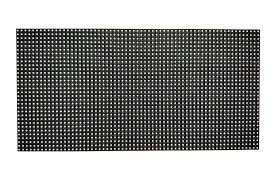
The foundation of any LED screen is the quality of its core components: LED chips, Printed Circuit Boards (PCBs), power supplies, and driver ICs. Industry standards, such as the International Electrotechnical Commission (IEC) 62368 for safety and IPC-A-600 for PCB workmanship, provide benchmarks for component reliability and safety compliance. Selecting LEDs from reputable manufacturers like Nichia or Cree ensures superior luminous efficacy and color uniformity.
High-quality PCBs with excellent thermal conductivity and minimal signal attenuation are crucial for stable operation under continuous use. Engineers must also consider encapsulation materials that protect LEDs from moisture ingress and mechanical stress, especially in outdoor environments where IP65 or higher ingress protection ratings are mandatory.
2. Precision SMT and Soldering Processes
Surface Mount Technology (SMT) automation governs the placement and soldering of LEDs on PCBs with micron-level accuracy. State-of-the-art pick-and-place machines, combined with controlled reflow soldering ovens, ensure consistent connections, reducing the risk of cold solder joints and improving mean time between failures (MTBF).
Meticulous process control includes monitoring solder paste deposition thickness, reflow profiles, and component alignment using Optical Character Recognition (OCR) and X-ray inspection systems. These techniques reduce defects, increasing production yield and enhancing long-term durability.
3. Calibration and Color Uniformity Optimization
One of the critical challenges in LED display manufacturing is achieving consistent color and brightness across the entire screen. This is attained through an automated calibration process that adjusts individual LED outputs using integrated photometric sensors and Intelligent Driver ICs capable of grayscale compensation.
Advanced software algorithms perform gamma correction and color calibration adhering to standards like Rec.709 and DCI-P3, which are essential for professional video playback and broadcast applications. Uniformity in Gamma, chromaticity coordinates, and luminance directly impacts the viewer’s experience, especially when multiple LED modules are tiled together to create large video walls.
4. Thermal Management and Structural Integrity
Continuous operation generates heat, which, if not dissipated effectively, can degrade LED lifespan and cause color shift. Heat sinks, thermal interface materials, and strategically designed airflow pathways in LED cabinets form an integral part of the thermal management strategy. Materials with high thermal conductivity, such as aluminum alloys, are preferred for cabinet construction due to their durability and lightweight properties.
Mechanical design also accounts for wind load and vibration resistance for outdoor installations, complying with standards like the American National Standards Institute (ANSI) or Eurocodes. Robust structural integrity ensures that LED modules maintain alignment without warping over time, preserving image quality.
5. Comprehensive Testing and Quality Assurance
Final product validation involves an array of testing protocols ranging from electrical safety, environmental stress screening, to photometric and colorimetric testing using spectroradiometers and goniophotometers. Manufacturers typically perform aging tests, running displays continuously for 72 hours at maximum brightness to identify early failures.
International quality management systems such as ISO 9001:2015 guide organizational processes, ensuring consistent product quality and traceability. Additionally, certifications like CE, FCC, and RoHS compliance are mandatory for global market distribution, attesting to meeting regulatory requirements for electromagnetic compatibility and hazardous substance restriction.
6. Case Study: Scaling Excellence in Large-Format LED Screens
A notable industry example involves the deployment of a 500-square-meter LED video wall for a major sports stadium in Europe, designed to operate continuously under diverse weather conditions. The project leveraged pixel pitch optimization at 10mm for unrestricted viewing distances exceeding 50 meters, with enhanced waterproofing (IP67) and robust thermal management systems.
The manufacturing process integrated inline Automated Optical Inspection (AOI) and real-time calibration, enabling seamless video playback with color uniformity within Delta E<3, a threshold perceptually indistinguishable to the human eye. Client feedback highlights not only aesthetic performance but also low maintenance costs owing to modular design and plug-and-play replacement capability.
Conclusion
LED display manufacturing is a highly intricate and technologically advanced process that marries precision engineering with sophisticated quality assurance protocols. Success in this field hinges on deep expertise in component selection, process automation, color science, and structural engineering, all underpinned by adherence to international standards. Through continuous innovation and process optimization, the LED display industry continues to expand its impact, delivering immersive visual experiences worldwide.
For engineers, manufacturers, and end-users alike, understanding these nuanced factors is vital to choosing and creating LED solutions that are not only visually outstanding but also reliable, durable, and fit for purpose in demanding operational environments.
References:
- International Electrotechnical Commission (IEC) 62368-1: Audio/video, information and communication technology equipment – Safety requirements
- IPC-A-600: Acceptability of Printed Boards Standard
- ISO 9001:2015 Quality Management Systems
- Data from Nichia Corporation and Cree Inc. technical datasheets
- SMPTE (Society of Motion Picture and Television Engineers) standards for video calibration
- Case study material from multiple LED display projects reviewed through industry white papers













