

Advanced Technologies and Best Practices in LED Display Manufacturing for Optimal Performance
In the rapidly evolving field of LED display manufacturing, achieving superior performance, durability, and visual quality requires a deep understanding of both the technology and best engineering practices. As international demand for LED displays surges across applications such as digital signage, indoor/outdoor advertising, sports arenas, and control rooms, manufacturers face growing pressure to integrate cutting-edge techniques and meet stringent global standards.
Understanding LED Display Technologies
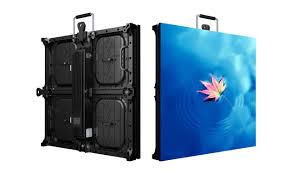
LED displays predominantly utilize Light Emitting Diodes arranged in pixel matrices to render dynamic images. The two primary categories—direct-view LED and LED-backlit LCD displays—have different production processes and performance characteristics.
- Direct-view LED displays consist of individual LEDs per pixel, enabling high brightness levels (up to 7000 nits for outdoor models), wide color gamuts (NTSC > 90%), and wide viewing angles (typically 160° horizontal and vertical). Their modular design facilitates scalable sizes and high refresh rates (≥1920 Hz), reducing flicker and improving video smoothness.
- LED-backlit LCD displays employ LED arrays as backlighting sources for liquid crystals, enhancing contrast ratios (>3000:1) and energy efficiency compared to older CCFL backlights. They offer deeper blacks and slimmer profiles, suitable for indoor applications requiring finer pixel pitches (0.5 mm to 1.5 mm).
Key Manufacturing Parameters and Materials
Quality LED display production hinges on meticulous control over technical parameters and materials:
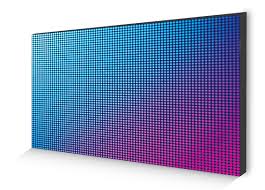
- Pixel pitch: Defined as the distance between adjacent LEDs, smaller pitches (≤1.5 mm) deliver higher resolution, critical for close viewing environments like control rooms or broadcast studios.
- Brightness and contrast: Outdoor installations require ultra-high brightness (≥5000 nits) and robust contrast to combat ambient sunlight, while indoor displays focus on optimal color temperature (typically 6500K) and uniformity.
- Refresh rate: Higher refresh rates (≥1920 Hz) ensure flicker-free images on camera and improve user experience, especially in live broadcasting or sports venues.
Materials such as high-grade semiconductor dies (often GaN-based for blue and green LEDs), precision PCBs with controlled impedance, and durable encapsulation resins (to prevent moisture ingress and UV degradation) directly impact lifespan and performance. Industry standards such as IEC 62717 specify the photometric and electrical requirements critical for consistent output.
Advances in Manufacturing Processes
Adopting automation and strict quality control has transformed LED display fabrication. Surface Mount Technology (SMT) precision enables ultra-small pitch panels with reliable soldering and component placement. Thermal management improvements—incorporating heat sinks, copper alloys, and advanced ceramics—enhance operational life above 100,000 hours at recommended temperatures (≤40°C ambient).
At the backend, rigorous binning processes categorize LEDs by luminous flux, chromaticity, and forward voltage to ensure uniform display appearance. Calibration and testing follow procedures defined by standards like IEC 62087 to verify power consumption, luminance, and color metrics.
Challenges and Solutions in Environmental Resistance
Outdoor LED displays must resist harsh environmental factors—including temperature extremes (-30°C to +50°C), humidity, dust, and UV radiation—without compromising performance. Waterproof ratings (IP65 and above) involve sealing techniques utilizing silicone gels and robust enclosures with corrosion-resistant metals (e.g., anodized aluminum) to ensure IP65/IP67 compliance.
Furthermore, innovative coatings and nanomaterials help combat degradation, prolonging operational integrity and reducing maintenance.
Case Study: Stadium LED Display Implementation
A recent installation of a 500 square meter direct-view LED videoboard in a major stadium illustrates best practices. Employing a 10 mm pixel pitch for optimal viewing distance, the display achieved:
- Brightness levels exceeding 6000 nits for daylight visibility
- Color calibration adhering to Rec. 709 standards for broadcast compliance
- Modular design allowing rapid servicing and component replacement
The project adhered to safety regulations per UL 8750 and IEC 60335, ensuring reliability during intense operational conditions.
Future Trends and Industry Outlook
Looking ahead, innovations such as micro-LED display technology promise resolutions far exceeding current models while reducing power consumption. Integration with IoT for real-time diagnostics and adaptive brightness control further enhances energy efficiency.
Sustainability initiatives focusing on recyclable materials and reducing hazardous substances align with global directives like RoHS and WEEE, reflecting an industry shift towards environmentally responsible manufacturing.
Conclusion
Mastering LED display manufacturing entails combining advanced materials, precise engineering, rigorous quality assurance, and compliance with international standards. By leveraging these elements, manufacturers can produce high-performance, reliable, and visually exceptional LED displays that meet diverse global market needs while pushing the boundaries of display technology.













