

Advanced LED Display Manufacturing: Technical Insights and Industry Standards for Superior Quality Screens
The LED display industry has undergone significant advancements, driven by technological innovation, evolving consumer demands, and stringent quality standards. As a professional LED display engineer, this article provides a comprehensive examination of modern LED display manufacturing processes, incorporating critical technical parameters, industry standards, and practical insights that guarantee superior performance and reliability.
Understanding the Core Components and Specifications
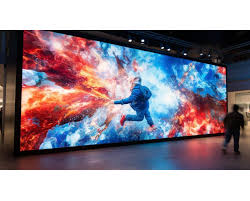
LED displays consist primarily of three critical elements: LED modules, driving ICs, and the control system. The modules are composed of individual light-emitting diodes arranged in pixels, where pixel pitch defines resolution and image sharpness. According to the International Electrotechnical Commission (IEC 62368 standard), maintaining uniformity in pixel structure is essential for consistent brightness and color accuracy.
Pixel pitch, measured in millimeters (mm), determines the spatial distance between LED centers and directly affects resolution and viewing distance. For instance, a 1.2mm pixel pitch LED screen is optimal for close-range viewing in control rooms, while a 10mm pitch serves well in outdoor advertising where visibility from longer distances is crucial.
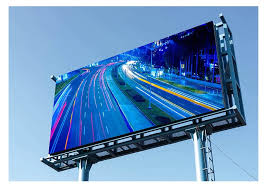
Brightness, another vital metric, is measured in nits (cd/m²). High-end indoor LED displays typically operate within 800 to 1500 nits, ensuring vivid images under controlled lighting. Outdoor displays demand higher brightness levels, often exceeding 5000 nits, to combat ambient sunlight. The industry standard ANSI/NEMA recommends dynamic brightness adjustment features to enhance energy efficiency and prolong lifespan.
Optoelectronic Parameters and Color Fidelity
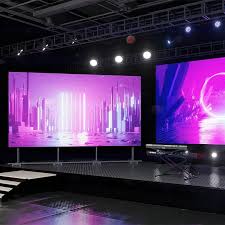
Color reproduction in LED displays is governed by the color gamut and color accuracy. The Rec. 709 and DCI-P3 color spaces are benchmarks for industry color standards. High-quality LED displays achieve over 95% coverage of the DCI-P3 spectrum, ensuring vibrant and realistic colors critical for applications such as digital cinema and broadcast.
Moreover, LED binning practices classify LEDs by luminous intensity and chromaticity coordinates to minimize color deviation across modules. This binning process is fundamental for impeccable uniformity, reducing visible color inconsistencies, which are particularly noticeable on large-scale video walls.
Thermal Management and Reliability
Effective thermal dissipation directly influences the operational life and performance stability of LED modules. According to JEDEC standards (JESD51 series), an optimal heat dissipation design maintains the LED junction temperature below 85°C. This involves heat sinks composed of aluminum alloys with thermal conductivity exceeding 200 W/m·K, combined with active cooling measures such as integrated fans or liquid cooling for large-format or high-brightness displays.
Humidity and ingress protection ratings also shape reliability. IP65-rated LED cabinets ensure resistance against dust and water jets, pivotal for outdoor applications exposed to harsh environmental conditions. Ensuring conformal coating on PCBs further enhances moisture resistance, mitigating corrosion risks.
Manufacturing Workflow and Quality Control
State-of-the-art manufacturing involves precise surface-mount technology (SMT) for LED placement and automated optical inspection (AOI) systems ensuring defect-free assembly. Industry best practice recommends achieving a yield rate above 98% to optimize cost efficacy while maintaining quality.
Quality assurance protocols encompass rigorous testing including calibration with spectrophotometers for color consistency, flicker testing compliant with IEEE 1789 standards to reduce eye strain, and lifespan evaluations under accelerated aging to simulate operational longevity exceeding 100,000 hours.
Case Study: Implementation in Digital Signage
A recent application involved a 5000-square-foot outdoor LED display installation in a metropolitan transit hub. Utilizing 10mm pixel pitch modules with 6500 nits brightness and IP65 cabinet ratings, the display demonstrated exceptional visibility under direct sunlight and adverse weather. Thermal management through finned aluminum heat sinks and automatic brightness control achieved reliable operation year-round.
Additionally, pixel-level calibration ensured homogeneous color distribution even under wide viewing angles, significantly enhancing user engagement and advertiser ROI. The project emphasized adherence to industry standards such as IEC 60950-1 for electrical safety and ISO 9001 for manufacturing quality management.
Future Trends and Innovations
Emerging trends in LED display manufacturing include MicroLED technology, delivering unprecedented pixel density and energy efficiency, and AI-assisted calibration for real-time display optimization. Advances in flexible substrates also pave the way for curved and foldable screens, expanding application possibilities.
In conclusion, mastering the intricate balance of technical parameters, adherence to international standards, and robust manufacturing processes is critical to delivering LED displays that meet modern usage demands. Continuous innovation backed by empirical testing and quality control ensures LED technologies will maintain their pivotal role in visual communication for years to come.













