

Advances and Best Practices in LED Display Manufacturing: Ensuring Quality and Performance
The LED display industry has undergone significant transformation over the past decade, driven by advancements in semiconductor technology, materials science, and manufacturing processes. As a professional LED display engineer with over a decade of experience in LED and LCD screen manufacturing, it is essential to understand both the technical parameters and production methodologies that ensure superior display quality and operational reliability. This article explores the critical factors influencing LED display manufacturing, including pixel pitch, color accuracy, luminance, and thermal management, while referencing industry standards and best practices.
At the core of LED display technology is the light-emitting diode itself, whose size, arrangement, and encapsulation determine display resolution, brightness, and color gamut. Pixel pitch, defined as the distance from the center of a pixel to the center of the adjacent pixel, is a primary determinant of display resolution, influencing clarity and visual experience. For indoor LED displays, common pixel pitches range from 1.2mm to 4mm, allowing high-resolution imagery suitable for close viewing distances. In contrast, outdoor displays typically employ larger pixel pitches, ranging from 6mm to 20mm, balancing viewing distance with cost-effectiveness. According to the Society for Information Display’s industry guidelines (SID, 2023), tighter pixel pitches improve resolution but impose stricter requirements on manufacturing precision and quality control.
Color accuracy and consistency are equally paramount in LED display manufacturing. Each pixel comprises red, green, and blue (RGB) subpixels, and variations in luminous efficacy or spectral properties among subpixels can lead to color shifts and degraded image quality. To address this, manufacturers employ binning processes—sorting LEDs based on luminous intensity and wavelength—to assemble pixels with matched subcomponents. The International Electrotechnical Commission’s standard IEC 62717 outlines testing protocols ensuring chromaticity coordinates fall within acceptable tolerances. Furthermore, advanced calibration systems use onboard sensors and software algorithms to dynamically adjust color balance, compensating for LED aging and environmental changes.
Luminance, or brightness, is another critical parameter, particularly in outdoor LED displays exposed to direct sunlight. Achieving luminance levels above 5,500 nits ensures visibility under bright conditions while avoiding excessive power consumption or heat generation. Thermal management plays a pivotal role here; without efficient heat dissipation, LED lifespan and color stability degrade significantly. Manufacturers utilize heat sinks, thermal interface materials, and optimized PCB designs to maintain junction temperatures within recommended limits—typically below 85°C as per JEDEC standards (JESD51-2). Advanced designs incorporate forced-air cooling or liquid cooling in large-format displays to enhance reliability further.
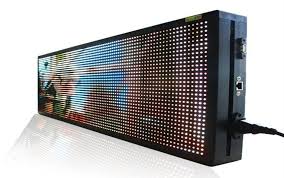
From a manufacturing perspective, surface-mount technology (SMT) is the prevalent assembly method for placing LEDs onto printed circuit boards with high precision. Achieving accurate alignment is essential for minimizing pixel defects and ensuring uniform luminance. Automated optical inspection (AOI) systems verify placement accuracy and solder quality during production. Following assembly, rigorous burn-in testing—often 72 hours under operational conditions—is conducted to detect early-life failures and ensure long-term durability.
Quality assurance extends beyond production to include compliance with international certifications such as CE, RoHS, and FCC, signifying adherence to safety, environmental, and electromagnetic compatibility standards. Implementing a comprehensive quality management system, such as ISO 9001:2015, strengthens process control and continuous improvement.
In conclusion, manufacturing high-performance LED displays demands meticulous attention to technical parameters—pixel pitch, color accuracy, luminance, and thermal management—combined with stringent process controls and quality assurance protocols. Advances in calibration technology, materials, and thermal design consistently push the boundaries of display quality and reliability. By adhering to internationally recognized standards and leveraging state-of-the-art manufacturing techniques, LED display professionals can deliver products that meet evolving market demands, from immersive indoor installations to robust outdoor signage. Such commitment not only enhances visual experiences but also ensures sustainability and customer satisfaction in a competitive industry landscape.













