

Comprehensive Insights into LED Display Technology: Applications, Advantages, Challenges, and Emerging Trends
LED display technology has revolutionized visual communication across multiple industries due to its superior brightness, energy efficiency, and versatility. As a professional LED display engineer with extensive experience in manufacturing and system integration, I present an in-depth examination of LED displays, highlighting practical applications, technical advantages, common challenges, and the latest industry trends.
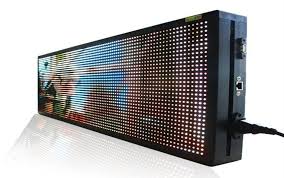
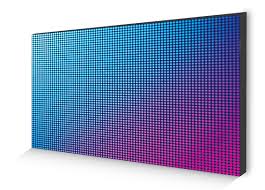
At the core of LED display technology lies the use of Light Emitting Diodes arranged in modular panels. These panels vary in pixel pitch—a crucial technical parameter defined as the distance between adjacent pixels, typically measured in millimeters (mm). Pixel pitch directly influences resolution and viewing distance: smaller pitches (e.g., 1.2mm to 2.5mm) are ideal for indoor venues requiring close-up viewing, such as control rooms and retail environments, while larger pitches (e.g., 4mm to 10mm and beyond) serve outdoor advertising billboards, stadiums, and transportation hubs effectively due to their visibility at long distances.
Practical Applications
LED displays have found expansive use across sectors:
- Advertising and Public Information: High brightness levels enable outdoor LED billboards to operate under direct sunlight, maintaining image clarity and color accuracy. For instance, the use of outdoor LED screens in Times Square, New York, demonstrates reliable 24/7 performance under harsh weather conditions.
- Broadcast and Event Production: Indoor LED video walls with pixel pitches below 2.5mm deliver vibrant, smooth visuals essential for television studios and live events.
- Corporate and Retail Settings: Interactive LED displays facilitate immersive customer experiences and effective digital signage.
- Transportation Systems: LED markers and information panels guide passengers in airports and railway stations with high readability and minimal maintenance.
- Control and Command Centers: Ultra-fine pitch LED screens present critical data with exceptional detail, enhancing operational decision-making.
Advantages of LED Displays
Several distinct benefits justify LED’s dominance:
- High Brightness and Contrast: LED technology achieves luminance levels exceeding 5,000 nits for outdoor models, far outperforming traditional LCDs for daylight readability.
- Energy Efficiency: Advances such as COB (Chip On Board) LEDs significantly reduce power consumption by improving light distribution and reducing heat.
- Durability and Longevity: Typical LED modules exhibit operational lifespans exceeding 100,000 hours, supported by ruggedized construction for vibration and moisture resistance.
- Color Accuracy and Wide Viewing Angles: State-of-the-art LED displays meet or exceed Rec.709 and DCI-P3 color spaces, providing consistent image quality from wide viewing angles (up to 160° horizontal and vertical).
- Modularity and Scalability: LED panels can be seamlessly tiled to create custom-sized displays, enabling versatile installations from small kiosks to large-scale stadium screens.
Common Challenges
Despite its strengths, LED technology faces several technical issues:
- Thermal Management: Excess heat generated by high-brightness LEDs requires efficient cooling strategies (passive heatsinks or active fans) to prevent color degradation and extend lifespan.
- Uniformity Issues: Achieving consistent brightness and color calibration across large displays necessitates sophisticated sensor feedback and linked calibration protocols as defined by standards such as ISO 9241-307.
- Pixel Failure and Maintenance: Dead or stuck LEDs can impair visual integrity; thus, front-serviceability and redundancy designs are critical.
- Cost Considerations: Higher-resolution LED modules entail substantial initial investment and intricate installation processes.
- Environmental Exposure: Outdoor LEDs must comply with IP rating standards (typically IP65 or higher) to guarantee resistance against dust and moisture ingress.
Latest Trends in LED Display Technology
The LED display industry is dynamically evolving, led by several noteworthy innovations:
- MicroLED Displays: A breakthrough enabling self-emissive pixels at micron scales, microLEDs combine OLED-like image quality with LED’s robustness, promising ultra-high resolution and ultra-low power consumption.
- Mini and Fine-Pitch LED Advancements: Improvements in driver ICs and manufacturing precision allow pixel pitches below 1mm, ushering in applications previously restricted to LCD or OLED technologies.
- Transparency and Flexibility: Transparent LED displays integrate seamlessly into glass facades for augmented reality installations, while flexible, curved LED panels enable creative architectural designs.
- Smart Integration: IoT-enabled LED displays equipped with sensors and AI-driven content management enable dynamic, context-aware visual communication, enhancing user engagement.
- Sustainable Manufacturing: The adoption of eco-friendly materials and recyclable components aligns LED technology with global sustainability goals.
In conclusion, LED display technology offers a robust, versatile solution for varied visualization needs. By understanding the balance of technical parameters, environmental considerations, and advancing trends, engineers and stakeholders can optimize deployments and anticipate future market directions. As LED manufacture continues evolving under rigorous standards and innovation, the role of professional expertise in design, quality control, and system integration remains paramount to delivering high-performance, reliable displays worldwide.
References:
- International Electrotechnical Commission (IEC) standards IEC 62087 (TV and video measurements) and IEC 62717 (LED modules)
- Society for Information Display (SID) technical brochures
- Case studies published by NovaStar Technologies and Leyard Optoelectronics
- "Advances in MicroLED Display Technology," Journal of the Society for Information Display, 2023
- ISO 9241-307: Ergonomics of human-system interaction — Displays — Part 307: Optical laboratory measurement of displays













