

Advanced Techniques and Quality Standards in LED LCD Screen Manufacturing
The LED LCD screen manufacturing industry has experienced remarkable advancements over the past decade, driven by innovations in materials, fabrication processes, and quality control methodologies. As a professional LED display engineer with extensive hands-on experience and profound industry insight, this article delves into the critical technical parameters, manufacturing best practices, and industry benchmarks that define the quality and performance of modern LED LCD screens.
Understanding the Core Technology
LED LCD screens utilize liquid crystal display (LCD) panels backlit by light-emitting diodes (LEDs). The integration of LEDs as the backlighting source offers superior brightness, energy efficiency, and longer lifespan compared to traditional cold cathode fluorescent lamps (CCFLs). The typical LED backlight configuration involves an array positioned either as an edge-lit or direct-lit solution, impacting both the display uniformity and thickness.
Technical Parameters Defining Quality
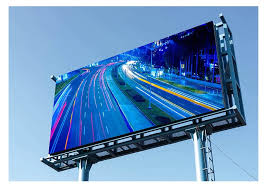
Several key parameters establish the performance profile of an LED LCD screen:
1. Brightness: Measured in nits (cd/m²), high-end displays offer brightness levels ranging from 400 to 1500 nits. For outdoor or sunlight-readable screens, brightness beyond 1000 nits is imperative to maintain visibility under direct sunlight (reference: IEC 61966-2-1 color spaces standard).
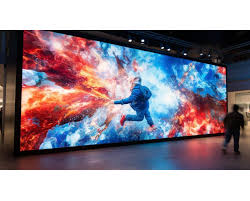
2. Contrast Ratio: The ratio between the brightest white and the darkest black on the display directly influences image depth. A typical LED LCD achieves contrast ratios between 1000:1 and 5000:1, with advancements in local dimming enhancing effective contrast.
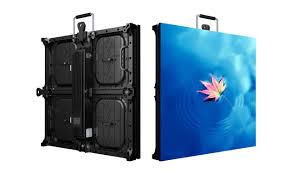
3. Color Accuracy and Gamut: Using standards such as sRGB, Adobe RGB, or DCI-P3, color gamut coverage and color calibration processes are crucial. Professional-grade panels achieve over 95% DCI-P3 coverage, enabling vivid, true-to-life images.
4. Refresh Rate and Response Time: Refresh rates commonly range from 60Hz to 240Hz, affecting motion smoothness. Response times under 5 milliseconds are critical for applications such as gaming and broadcast.
5. Viewing Angle: IPS (In-Plane Switching) technology typically ensures wide viewing angles of up to 178°, minimizing color and contrast shift across different perspectives.
Manufacturing Best Practices
Manufacturing LED LCD screens involves multiple complex stages that demand precision and high-quality standards:
- Substrate Preparation: The glass substrates undergo meticulous cleaning and surface treatment to prevent contamination, critical for pixel alignment and longevity.
- Thin-Film Transistor (TFT) Layer Fabrication: Utilizing photolithography and etching, TFT arrays form the active matrix controlling pixel states. Advances in amorphous silicon (a-Si) and low-temperature polycrystalline silicon (LTPS) enhance mobility and resolution.
- Liquid Crystal Cell Assembly: The alignment layers and spacers must be uniformly deposited to maintain reliable liquid crystal orientation and cell gap consistency, typically maintained at 3–5 microns.
- Backlight Integration: LED modules are assembled with precise diffuser layers and optical films to achieve uniform luminance. Quality control focuses on color temperature consistency, often standardized at 6500K (D65 white point).
- Encapsulation and Sealing: To protect against moisture and mechanical damage, robust sealing processes using UV-curable adhesives or epoxy are implemented, significantly impacting panel durability.
Quality Control and Testing Standards
Adherence to international standards ensures product reliability and market acceptance. The following are widely adopted:
- ISO 9241-307: Specifies methods for measuring display contrast and luminance.
- JEITA ED-2401: Describes stress testing for temperature, humidity, and mechanical shock.
- RoHS and REACH compliance: Ensures environmental safety by limiting hazardous substances.
- Burn-in and Image Retention Tests: Critical for detecting long-term degradation, especially in panels using OLED-like localized dimming regions.
Case Studies and Industry Examples
A prominent global manufacturer recently optimized their manufacturing line by integrating real-time optical inspection equipped with AI-powered defect recognition. This approach reduced pixel defect rates by over 30% and shortened production cycle times by 15%. Another case involves a specialized outdoor LED LCD display optimized for sunlight readability by implementing high-brightness direct LED backlighting and robust anti-reflective coatings, achieving over 1200 nits brightness and 98% visibility in ambient light exceeding 100,000 lux.
Emerging Trends Impacting Manufacturing
The adoption of mini-LED and micro-LED technologies challenges traditional LED LCD manufacturing by offering finer backlighting control and superior contrast ratios. These innovations require new manufacturing tolerances, driver electronics, and thermal management solutions.
Moreover, the environmental push towards sustainability encourages manufacturers to adopt lead-free soldering processes, recyclable materials, and energy-efficient production equipment.
Conclusion
The production of high-performance LED LCD screens involves a delicate balance of sophisticated materials science, precision engineering, and stringent quality control. Staying abreast of technological advancements, compliance with international standards, and continuous process optimization are paramount for delivering displays that meet the demanding requirements of today’s diverse applications—from consumer electronics to industrial instrumentation and large-format outdoor signage.
For professionals and manufacturers alike, understanding the intricate aspects of LED LCD screen technology and maintaining rigorous manufacturing discipline are essential to uphold industry leadership and technological innovation.













