

Advancements and Practical Applications of AI-Powered Digital Displays in Modern LED Screen Technology
In recent years, the integration of artificial intelligence (AI) into digital display technology has revolutionized the LED screen industry. AI-powered digital displays leverage machine learning algorithms, computer vision, and sensor data to enhance visual performance, optimize energy consumption, and personalize content delivery. As global demand for high-resolution, dynamic, and interactive displays continues to grow, the fusion of AI and LED technology delivers unprecedented benefits across diverse applications such as advertising, smart cities, retail, and transportation.
Technical Evolution of AI-Powered Digital Displays
Traditional LED displays operate primarily based on static input signals, providing fixed content with limited adaptability. However, AI-powered systems introduce intelligent processing capabilities that analyze real-time data to adjust brightness, contrast, and color calibration dynamically. Advanced models employ convolutional neural networks (CNNs) to perform ambient light sensing, enabling displays to maintain optimal visibility under varying environmental conditions. For example, adjusting the luminance range (measured in nits) between 500 and 2000 nits ensures readability both in indoor and bright outdoor settings, meeting industry standards such as the International Electrotechnical Commission’s IEC 61966-2-1 for colorimetry.
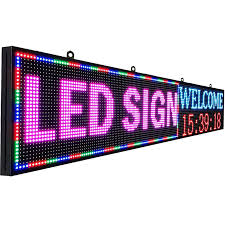
Moreover, AI-driven content management systems utilize predictive analytics to schedule advertising content based on viewer demographics and behavioral patterns. Companies like Samsung and LG have developed AI-powered LED screens incorporating edge computing devices that process data locally with ultra-low latency. This architecture adheres to standards like IEEE 802.1 for time-sensitive networking, ensuring reliable real-time content adjustments.
Key Technical Parameters Impacted by AI
- Resolution and Pixel Pitch: AI helps optimize rendering at resolutions from Full HD (1920x1080 pixels) to 8K (7680x4320 pixels), fine-tuning pixel pitch—ranging typically from 0.9mm for indoor displays to 10mm or greater for large outdoor billboards—to ensure image clarity while balancing cost and energy trade-offs.
- Refresh Rate and Latency: AI algorithms manage refresh rates above 60Hz to prevent image flicker and reduce latency, vital for interactive touchscreens and immersive experiences.
- Power Efficiency: Using AI-based adaptive power control, LED displays reduce energy consumption by up to 30% by dynamically dimming LEDs or switching off inactive segments, complying with ENERGY STAR standards where applicable.
Case Studies Demonstrating AI-Integrated LED Displays
In the transportation sector, AI-powered digital signage offers real-time adaptive routing information. For example, the smart transit system in Singapore employs AI-enabled LED displays to update bus arrival times and crowding levels, improving commuter experience and operational efficiency. Similarly, retail giants are utilizing facial recognition and behavioral analytics integrated into LED displays to personalize advertisements in-store, significantly boosting customer engagement and sales conversion rates as reported in Digital Signage Today’s 2023 study.
Smart city projects worldwide also showcase AI-driven LED screens as essential tools for public communication and environmental monitoring. By interfacing with IoT sensors, these displays dynamically present air quality data, weather alerts, and emergency information, making public spaces more responsive and safer.
Challenges and Future Directions
Despite these advances, integration of AI raises concerns regarding data privacy, cybersecurity, and system complexity. Industry bodies such as the Consumer Technology Association (CTA) emphasize the importance of secure AI deployment frameworks to mitigate risks while maximizing benefits. Looking forward, the development of standardized AI model interoperability and enhanced edge AI processors will further expand the capabilities of digital LED displays.
In summary, AI-powered digital displays represent a transformative milestone in display technology. Their ability to deliver adaptive, intelligent, and energy-efficient visual communication systems paves the way for smarter environments across commercial, public, and industrial domains. As this technology matures, international standards and ethical guidelines will shape its responsible growth, ensuring AI-driven LED displays become indispensable tools in the digital age.













