

Advanced LED Display Technology: Innovations, Performance Parameters, and Industry Best Practices
In the evolving landscape of digital signage and visualization technologies, LED (Light Emitting Diode) displays stand at the forefront offering unparalleled brightness, color fidelity, and operational longevity. As a professional LED display engineer with extensive experience in the manufacturing, testing, and deployment of LED and LCD screens, this article delves deep into the technical parameters, innovations, and industry standards shaping modern LED display technology.
1. Introduction to LED Display Technology
LED displays utilize semiconductor diodes that emit light when electrically charged. These displays come in various architectures, including surface-mount device (SMD) and direct-view LEDs, each having specific applications based on pixel pitch, brightness requirements, and viewing distance. The industry has witnessed remarkable advancements in pixel density, power efficiency, and color reproduction in recent years. According to the International Electrotechnical Commission (IEC 62717), high brightness LED modules must maintain luminance above 900 nits for outdoor applications, a benchmark often exceeded by state-of-the-art panels today.
2. Technical Parameters and Their Impact
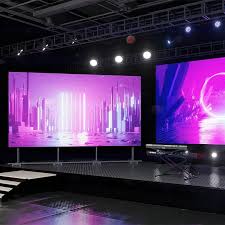
When assessing LED display panels, several critical parameters must be considered:
- Pixel Pitch: Defined as the center-to-center distance between adjacent pixels, commonly ranging from 0.7 mm (fine pitch) to over 10 mm (large-scale outdoor displays). Fine pixel pitch (<1.5 mm) displays deliver superior image sharpness, crucial for close viewing distances such as control rooms and broadcast studios.
- Brightness (Luminance): Outdoor displays typically require luminance levels of 5,000 to 7,500 nits to maintain visibility under direct sunlight. Indoor applications range from 800 to 1,200 nits, balancing visibility and eye comfort. The use of high-lumen LEDs combined with effective optical diffusion and anti-glare coatings increases overall image quality.
- Refresh Rate and Gray Scale: Displays with refresh rates above 3,000 Hz significantly reduce flickering and motion blur, especially critical for video broadcasting and dynamic content. The grayscale depth (10-bit or higher) enhances color gradients and detail.
- Viewing Angle: Measured in degrees, wide viewing angles (typically 140° horizontally and vertically) ensure consistent color and brightness perception over a large audience area.
- Power Consumption and Thermal Management: Efficient power regulation circuits and effective heat dissipation systems—such as aluminum backplanes and fans—are vital for prolonging LED lifespan (often rated above 100,000 hours) and maintaining stable brightness.
3. Manufacturing Processes and Quality Control
Manufacturing LED displays involves several precision processes to ensure pixel uniformity, durability, and environmental resilience.
- SMD Assembly: Pick-and-place machines place thousands of microscopic LEDs onto PCB modules with ±10 micron accuracy. This precision reduces dead pixels and enhances overall display uniformity.
- Encapsulation and Sealing: Particularly for outdoor installations, LED modules undergo rigorous encapsulation using conformal coatings and IP65 or IP67 rated sealed enclosures to protect against moisture, dust, and UV radiation.
- Calibration and Testing: Automated optical testing validates color accuracy (using colorimeters), luminance uniformity, and electrical parameters post manufacturing. Standards like ISO 9241-303 specify display color and luminance uniformity metrics essential for quality assurance.
4. Innovations and Emerging Trends
The LED display industry continuously innovates, driven by consumer and commercial demands for better performance and aesthetic integration.
- Mini-LED and Micro-LED Technologies: Mini-LED backlighting enhances LCD panels by increasing backlight zones, improving contrast ratios and HDR performance. Micro-LED technology, with pixel sizes below 100 micrometers, enables ultra-high-definition displays with superior brightness and energy efficiency, potentially revolutionizing future display industries.
- Flexible and Transparent LED Displays: These novel displays utilize flexible substrates and innovative encapsulation to enable curved, foldable, and see-through solutions, expanding applications in retail, automotive, and architectural sectors.
- Artificial Intelligence (AI) and IoT Integration: Smart LED displays equipped with AI-powered content management, sensor feedback for brightness adaptation, and remote diagnostics are becoming standard. This integration improves energy management and operational uptime, especially in large-scale outdoor advertising setups.
5. Case Studies: Effectiveness in Different Applications
- Outdoor Advertising (DOOH): In metropolitan centers like Times Square and Shibuya Crossing, LED billboards deliver vibrant images visible under all weather conditions. Samsung's 'The Wall' series employs fine pitch and micro-LED technologies featuring peak brightness upwards of 2,000 nits and 120 Hz refresh rates. The modular design enables scalability to tens of thousands of square feet with consistent color calibration across tile boundaries.
- Control Rooms and Broadcast Studios: Fine-pitch LED panels with pixel pitches as low as 0.9 mm provide critical real-time data visualization with extremely low latency and color precision. According to studies published in the IEEE Transactions on Visualization and Computer Graphics (2021), these displays enhance operator response times by up to 25% during complex tasks.
- Sports Arenas and Stages: Ultra-high brightness LED screens with refresh rates exceeding 3,000 Hz eliminate flicker on slow-motion broadcasts, enhancing fan experience both on-site and via media coverage.
6. Maintenance and Longevity
LED panels require preventive maintenance including routine cleaning of optically critical surfaces, periodic firmware updates, and module-level testing for early detection of pixel failure or power supply degradation. Most modern panels leverage hot-swappable components minimizing downtime.
7. Environmental and Regulatory Compliance
As LED manufacturing involves rare-earth elements and electronic components, adherence to RoHS (Restriction of Hazardous Substances Directive), WEEE (Waste Electrical and Electronic Equipment Directive), and energy efficiency standards like ENERGY STAR is mandatory. Sustainable recycling programs and conflict-free sourcing of materials improve corporate social responsibility metrics.
Conclusion
The LED display industry today exemplifies a blend of sophisticated semiconductor physics, high-precision manufacturing, and smart system integration. Navigating among parameters such as pixel pitch, brightness, refresh rate, and thermal management is essential for engineers to architect displays tailored for distinct environments and user expectations. Continuous innovation—from micro-LED breakthroughs to AI-driven control—ushers in a new era of vivid, reliable, and intelligent visual communication systems.
For professionals and stakeholders in digital signage, broadcasting, and architectural visualization, understanding these technical and manufacturing dynamics ensures optimized deployment and future-proof investments.
References:
- International Electrotechnical Commission (IEC) 62717: LED modules for general lighting
- ISO 9241-303: Ergonomics of human-system interaction – Visual display requirements
- IEEE Transactions on Visualization and Computer Graphics, 2021: "Impact of Fine Pitch LED Displays in Control Room Efficiency"
- Samsung Display Technical Specifications: The Wall Series
- RoHS and WEEE Directives - European Union Regulatory Frameworks













