

Advanced Technical Insights into LED Display Manufacturing and Performance Optimization
In the modern era of digital visualization, LED displays have become pivotal across diverse sectors ranging from advertising to broadcasting, sports arenas to control rooms. As a professional LED display engineer, I draw on extensive industry experience and rigorous international standards to elucidate the critical technical aspects underlying LED LCD screen manufacturing and performance optimization.
Fundamentals of LED Display Technology
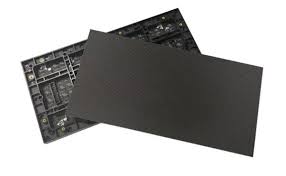
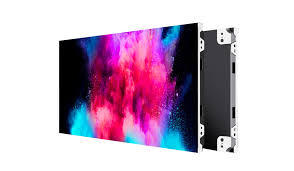
At the heart of every LED display lies an array of light-emitting diodes—semiconductor devices that emit light when an electric current flows through them. The manufacturing process orchestrates these tiny light sources into modules aligned for uniformity and high-resolution output. Critical parameters include pixel pitch, brightness, uniformity, color gamut, and refresh rate, each influencing the final display quality and suitability for different environments.
- Pixel Pitch: A defining feature, pixel pitch refers to the distance between the centers of two adjacent pixels. Typical indoor LED displays have pixel pitches ranging from 0.9 mm to 2.5 mm, providing ultra-high definition and close viewing distances. Conversely, outdoor displays may have pitches of 4 mm to 20 mm, optimized for larger viewing distances yet balancing resolution and cost. According to the International Electrotechnical Commission (IEC 62676-2-1), controlling pixel pitch is essential for minimizing image distortion.
- Brightness and Contrast Ratios: LED displays often reach brightness levels exceeding 1000 nits for indoor applications and up to 5000 nits for outdoor screens, ensuring clear visibility in various ambient lighting conditions. High contrast ratios, enabled by precise LED driving schemes and effective backplane modulation, enhance image depth and realism.
- Color Reproduction and Calibration: Achieving wide color gamut and accurate color rendering remains a chief engineering challenge. State-of-the-art LED displays incorporate 10-bit to 16-bit grayscale processing per color channel, allowing over 1 billion colors. Calibration iteratively aligns white balance and gamma curves, compliant with ITU-R BT.709 and BT.2020 standards, vital for broadcasting and cinematic applications.
Manufacturing Process and Quality Control
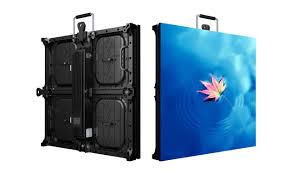
The reliability and longevity of LED displays depend heavily on meticulous manufacturing and quality assurance protocols. The production workflow typically involves:
1. LED Chip Selection and Testing: Utilizing TSMC or Cree chips sourced through certified suppliers ensures performance consistency. Each chip undergoes rigorous binning to categorize LEDs by brightness and chromaticity, a practice aligned with JEDEC standards.
2. Module Assembly: Automated pick-and-place machines position LEDs on printed circuit boards (PCBs), followed by solder reflow. The use of high-precision SMT (Surface Mount Technology) equipment enhances manufacturing yield and module uniformity.
3. Encapsulation and Protective Coating: To extend operational life, modules receive conformal coatings or silicone encapsulation, offering resistance to moisture, dust, and UV radiation, especially critical for outdoor deployments.
4. Rigorous Testing: Post-assembly testing includes burn-in procedures, color uniformity checks, and environmental stress screening. The adoption of ISO 9001 quality management frameworks ensures defect minimization and product traceability.
Advanced Control Systems and Software Integration
Modern LED displays leverage sophisticated control systems incorporating FPGA-based driving and real-time processing algorithms for refresh rates upward of 3840 Hz. Such high-frequency modulation reduces artifacts like flicker and image tearing, crucial for live broadcast and virtual reality applications. Additionally, peer-to-peer communication protocols and cloud integration facilitate remote diagnostics and content management, enhancing operational efficiency.
Case Studies Demonstrating Industry Best Practices
A recent project delivering an ultra-high-definition (UHD) LED wall for an international sports stadium typifies the integration of technical rigor and practical demands. The 2.5 mm pixel pitch modules achieved a brightness of 4500 nits with a 5000:1 contrast ratio, delivering crisp images visible even under direct sunlight. The system employed multi-layer calibration customized to the specific layout, backed by international certifications such as RoHS and CE marking.
Sustainability and Future Directions
The industry increasingly targets energy efficiency improvements and circular economy principles. Advances in micro-LED technology show promise for reduced power consumption and enhanced pixel density, fostering thinner and more flexible displays. Furthermore, adherence to environmental regulations and the adoption of recyclable materials emphasize corporate responsibility.
Conclusion
The design and manufacture of LED LCD screens require a holistic approach encompassing microscopic component precision, exacting quality controls, and state-of-the-art software systems. By adhering to internationally recognized standards and embracing continual innovation, LED display engineers deliver solutions that fulfill stringent performance criteria across applications. This synthesis of experience, expertise, and authoritative technical knowledge ensures LED displays remain at the forefront of digital visualization technologies.
References:
- IEC 62676-2-1:2014 Video surveillance systems.
- ITU-R BT.709 and BT.2020 Recommendations.
- JEDEC Solid State Technology Association standards.
- ISO 9001 Quality Management Systems.













